The Cat in the Hat internet hoax is triggering widespread school closures and police investigations across the United States.

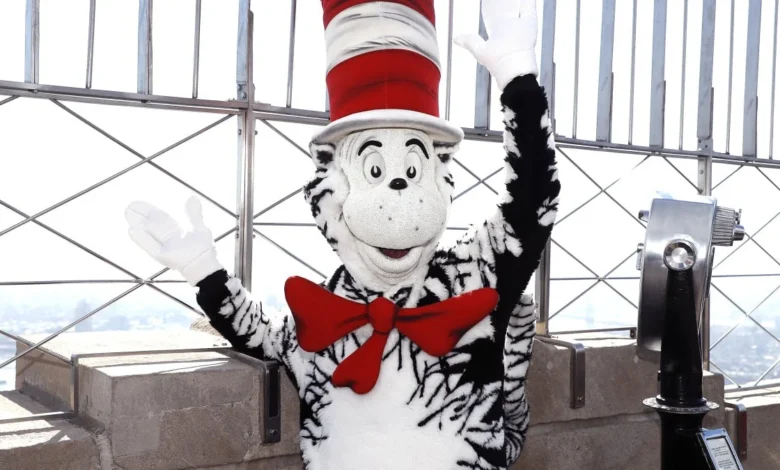
What began as a niche piece of digital dark comedy has rapidly devolved into a nationwide security concern, forcing law enforcement agencies and school administrators to grapple with the blurred lines between viral misinformation and actionable threats. The phenomenon involves the dissemination of AI-generated and digitally manipulated imagery featuring a life-sized, unsettling iteration of the Dr. Seuss character. These visuals, often inspired by the 2003 film adaptation starring Mike Myers, are being weaponized to target specific local communities, resulting in a cascade of school lockdowns, heightened police presence, and at least one formal juvenile arrest.
The Genesis of a Digital Nightmare
The origins of this trend can be traced back to late June, when a TikTok user paired a clip of the 2003 film’s titular character with a distorted, ominous soundtrack. The post, which garnered over four million views in its first week, established the aesthetic template for what would become a series of increasingly disturbing memes. The source material gained unexpected traction when the original, weathered costume from the 2003 movie appeared on the secondary auction market. High-resolution images of the hollow-eyed, worn-out suit provided content creators with a photorealistic, albeit nightmarish, canvas.
By mid-summer, the trend had evolved from simple parody into a form of digital horror fiction. Users began constructing elaborate, false narratives regarding a "Cat in the Hat serial killer" stalking neighborhoods in the United Kingdom and Ireland. Using sophisticated AI tools, creators generated imagery of the character looming in driveways, pressed against residential windows, or lurking on darkened streets—content designed to mimic the grainy, low-light aesthetic of doorbell camera footage. The efficacy of these posts relied on their localization; by placing a familiar, recognizable character in the mundane setting of a suburban driveway, the creators were able to trigger a visceral, localized fear.
Chronology of Escalation
The progression from international meme to domestic security threat followed a predictable yet rapid trajectory. Throughout August, the trend migrated from the UK to the United States, where it underwent a qualitative shift. Rather than remaining a vague, atmospheric horror story, the content became hyper-personalized.
In late August, social media platforms—predominantly TikTok and Snapchat—saw a surge in posts that moved beyond general "sighting" claims. Accounts began naming specific high schools, elementary schools, and, in some cases, individual students, accompanied by explicit warnings such as "you’re next" or "don’t leave your window open."
By the final week of August, the disruption reached a fever pitch. On Monday, August 31, Assumption High School in Louisville, Kentucky, suspended in-person instruction and transitioned to remote learning following an influx of threats tied to the trend. Similar warnings emerged in Oldham and Bullitt counties, forcing districts to deploy emergency communication protocols to reassure parents and students. The fear was not merely abstract; it was disruptive to the fundamental operation of educational institutions.
Data and Regional Impact
The scope of the phenomenon is evidenced by the geographical diversity of the incidents. Law enforcement and educational authorities have confirmed disruptions in at least five states:
- Kentucky: The epicenter of the domestic crisis. Multiple districts faced lockdowns, leading to an arrest of a juvenile in Allen County for the dissemination of threatening digital content.
- Texas: School districts implemented increased security patrols after specific student names were linked to threats, causing significant alarm among the student body and faculty.
- Michigan: A high school initiated a precautionary perimeter lockdown after a direct, localized threat was issued via a social media account.
- Oklahoma: Following a concerning Snapchat post, officials in Hugo conducted a comprehensive sweep of the high school campus and increased the presence of law enforcement.
- Tennessee: The state’s Office of Homeland Security has established a formal tracking mechanism for posts related to the trend, categorizing the behavior as a public safety issue.
Official Responses and Law Enforcement Perspectives
The response from authorities has been uniform: these sightings are entirely fabricated. The Wexford Garda in Ireland were among the first to formally debunk the claims, noting that the images were clearly generated by AI to exploit common fear triggers.
In the United States, police departments have adopted a "zero-tolerance" posture. Louisville Metro Police, while stating that their current investigations have not uncovered a "credible, physical threat," have nevertheless tasked their Homeland Security Units with monitoring the accounts. The rationale for this heightened response is rooted in the difficulty of discerning intent. When an account uses the name of a specific student or identifies a physical school building, law enforcement must treat the communication as a legitimate threat, regardless of the user’s underlying motivation.
"Even if an individual believes they are participating in a harmless, viral joke, the moment that content contains a threat against a school or a person, it crosses the legal threshold," said a spokesperson for regional law enforcement. "We are seeing students face real-world consequences—including expulsion and criminal charges—for what they might describe as a ‘prank.’"
The "Killer Clown" Precedent
Sociologists and digital security experts have drawn parallels between the current Cat in the Hat panic and the infamous "killer clown" sightings of 2016. During that period, reports of individuals dressed as clowns terrorizing neighborhoods spread rapidly across the US and UK. However, the current trend represents a significant evolution in digital misinformation.
In 2016, the hoax required physical participation; someone had to purchase a costume and physically occupy a space. The 2026 iteration, facilitated by generative AI, requires no physical presence. A teenager in one state can generate a photorealistic image of a monster in a driveway in another state in a matter of seconds. This decoupling of the "threat" from the "perpetrator" makes the phenomenon significantly harder to police, as there is no physical individual to intercept at the scene.
Broader Implications for Digital Literacy
The Cat in the Hat trend serves as a stark case study on the fragility of local community security in an era of high-fidelity generative AI. The trend exploits the "uncanny valley"—the psychological discomfort caused by something that looks human but is clearly "off"—to bypass the critical thinking filters of social media users.
The implications for school administrators are profound. As the cost of generating high-quality disinformation drops to zero, the administrative burden of verifying every digital threat increases exponentially. This places an unsustainable strain on school resources and creates an environment of perpetual anxiety for students and parents.
Furthermore, the trend highlights a growing gap in digital literacy. While many adults can identify the AI-generated nature of the videos, younger users—the primary demographic for platforms like TikTok and Snapchat—are more susceptible to the amplification of these threats. The fact that an arrest has already been made serves as a warning that law enforcement agencies are increasingly capable of tracing digital footprints back to individual devices, regardless of the anonymity offered by social media platforms.
As the situation continues to evolve, officials are urging the public to exercise extreme caution. The advice from the Tennessee Office of Homeland Security is reflective of the national consensus: report, do not interact, and do not share. By engaging with these posts, even to debunk them, users inadvertently feed the algorithm, increasing the visibility of the threats and, by extension, the level of panic within the community.
The irony of the situation is not lost on observers. Dr. Seuss’s original character was a catalyst for chaotic, yet ultimately harmless, household disruption. Today, his modern digital avatar has become a catalyst for a very real, very serious disruption of the public order. The events of the past few weeks underscore a sobering reality: in the age of generative AI, the distinction between a harmless meme and a dangerous, localized threat has effectively vanished.