The Moon as a Cosmic Archive: Searching for Alien Technosignatures in Lunar Regolith

For decades, the Search for Extraterrestrial Intelligence (SETI) has been defined by the pursuit of electromagnetic signals. Since the mid-20th century, radio telescopes have scanned the heavens, operating under the assumption that an advanced civilization would broadcast its presence, either intentionally or as a byproduct of its communications. However, this traditional methodology is hampered by the "synchronicity problem." Given that the Milky Way galaxy is approximately 13.6 billion years old, the probability that a human civilization existing for a mere blink of cosmic time would overlap with an active, broadcasting alien society is statistically minuscule. A new paper, authored by Lewis J. Pinault of the SETI Institute and his colleagues, proposes a paradigm shift: rather than listening for transient radio waves, humanity should search for physical, long-lived artifacts left behind by extraterrestrial activity, using the Moon as an ancient, undisturbed repository of galactic history.
The Lunar Surface as a Preservation Vault
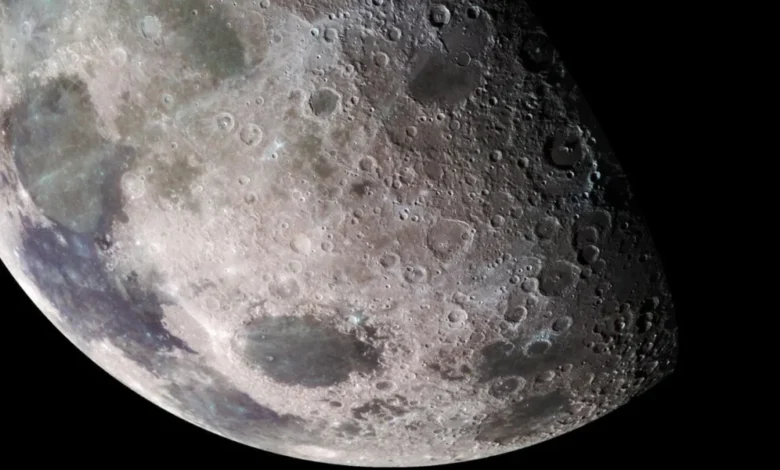
The Moon possesses unique geological and environmental characteristics that make it an ideal "garbage collector" for the solar system. Unlike Earth, which is subject to aggressive erosion through plate tectonics, atmospheric weathering, and a pervasive water cycle, the lunar surface is relatively static. Any object deposited on the Moon billions of years ago remains largely in situ, preserved in the vacuum of space.
The lunar regolith—the layer of loose, heterogeneous superficial deposits covering solid rock—is constantly subject to "impact gardening." Over eons, micrometeorite strikes churn the top few meters of the lunar surface. This process acts as a natural burial mechanism, shielding potential artifacts from the harsh solar radiation and cosmic rays that would otherwise degrade them over time. While Earth is a larger target for incoming debris, its active geology effectively recycles the crust, erasing the history of external impacts. The Moon, by contrast, functions as a stable, long-term archive.
Categorizing Technosignatures: Arkhipov and Bracewell Particles
The research team identifies two primary classifications of physical technosignatures that might be embedded within the lunar soil. The first, designated as "Arkhipov Particles," honors the work of Ukrainian astronomer Alexei Arkhipov, who first proposed the theory in the 1990s. These are effectively industrial byproducts. If a technologically advanced civilization constructs a mega-structure, such as a Dyson swarm—a massive array of solar collectors orbiting a star—it is statistically inevitable that such structures would sustain damage or degradation over time. Fragments of these structures, ejected by stellar winds or collisions, could drift through the interstellar medium for millions of years before being captured by our solar system.
The second category, "Bracewell Particles," named after physicist Ronald Bracewell, refers to intentionally deployed probes or "smart dust." Bracewell famously theorized that autonomous, self-replicating probes would be the most efficient method for an extraterrestrial intelligence to monitor the galaxy. Such particles, designed to survive the vacuum and radiation of interstellar transit, may have reached our solar system at various points throughout the galaxy’s history.
Survival and Velocity: The Physics of Interstellar Transit
The journey to the Moon is fraught with challenges. Interstellar matter is subject to constant bombardment by high-energy particles. However, the study suggests that grains composed of "refractory materials"—such as advanced ceramics, graphene, or titanium-tungsten superalloys—could withstand these conditions for periods ranging from 100 million to 1 billion years.
A critical hurdle is the velocity at which these particles would enter the inner solar system. Accelerated by the Sun’s gravitational well, objects can reach velocities of approximately 42 km/s by the time they reach 1 astronomical unit (AU). An impact on the lunar surface at speeds exceeding 5 km/s typically results in vaporization. To survive the impact, particles would need to be decelerated. The paper suggests that solar radiation pressure, acting upon particles of specific mass and density, could theoretically act as a braking mechanism, slowing these objects sufficiently to allow for their preservation upon contact with the lunar regolith.
The Technological Challenge of Detection
Identifying microscopic technosignatures within lunar soil is a task of extreme complexity. A single cubic meter of regolith consists of roughly 1.5 tonnes of material, containing trillions of micron-sized grains. Manual inspection is impossible; therefore, the researchers propose the implementation of high-resolution scanning electron microscopy (SEM) integrated with advanced computer vision models.
The team points to "YOLO-ET" (You Only Look Once – Extraterrestrial), an AI-driven object detection system capable of identifying anomalous patterns or geometries in images that deviate from natural geological formations. Once the AI identifies a candidate particle, further analysis would involve Focused-Ion-Beam (FIB) milling or nano-CT scanning to determine the internal structure and chemical composition of the sample.
Implications of a Null Result
The researchers emphasize that even a "null result"—the failure to find any evidence of alien technology in a sample—would provide significant scientific value. By quantifying the amount of lunar soil analyzed, scientists can establish upper limits on the prevalence of extraterrestrial activity in the galaxy.
For example, if an analysis of one cubic meter of regolith reveals zero evidence of technology, it effectively rules out scenarios where Sun-like stars in the Milky Way have dispersed more than 0.1 Earth masses of artificial material throughout galactic history. While 10% of Earth’s mass is a substantial amount, in the context of a Type II Kardashev civilization (which captures the total energy output of its host star), such a loss of material would be a negligible fraction of their total infrastructure. Similarly, a null result would place a statistical cap on the rate at which civilizations might be launching probes, effectively narrowing the parameters for future SETI efforts.
Chronology and the Future of Astrobiology
The quest to find evidence of extraterrestrial life has evolved significantly since the first SETI experiments in the 1960s. The shift toward "technosignatures"—detectable evidence of technology—represents a maturation of the field.
- 1960: Frank Drake conducts Project Ozma, the first radio search for extraterrestrial intelligence.
- 1990s: Alexei Arkhipov proposes the existence of interstellar industrial debris in the solar system.
- 2010s: The rise of deep learning and computer vision begins to revolutionize astronomical data processing.
- 2024–2025: Research into lunar technosignatures moves into the pre-print stage, proposing specific, actionable protocols for sample analysis.
As humanity enters a new era of lunar exploration—with missions like the Artemis program planning for sustained human presence on the Moon—the opportunity to collect and analyze pristine regolith samples increases. The proposal to sift through this soil for signs of non-human technology is no longer the domain of fringe science; it is a calculated, statistically grounded approach to one of the most profound questions in human history.
Conclusion: Are We Alone?
The search for microscopic technosignatures is inherently a high-stakes, low-probability endeavor. However, the potential reward—the discovery that we are not the first or only technological civilization in the Milky Way—justifies the rigorous scientific effort. By treating the Moon as a cosmic "hard drive" containing the records of billions of years of galactic history, the SETI Institute and its partners are expanding the reach of astrobiology beyond the immediate present.
Whether or not the lunar regolith contains the remnants of alien industry, the process of searching will inevitably refine our understanding of the solar system’s history and the limits of technological expansion. As lunar exploration intensifies, the prospect of finding a needle in a cosmic haystack becomes slightly less daunting, turning our gaze toward the dust beneath our feet as a potential window into the vast, ancient history of our galaxy.
Related posts: