Tesla Teases Long-Awaited Second-Generation Roadster Launch for October 1 Following Years of Delays and Design Overhauls

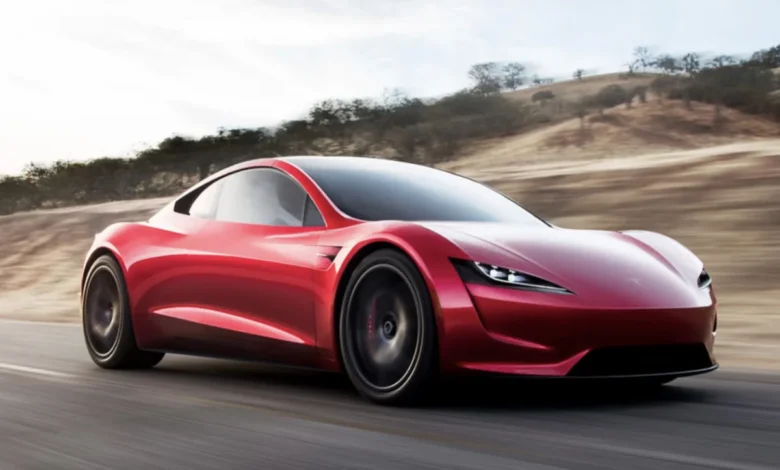
Tesla has officially signaled that the long-awaited second-generation Tesla Roadster is finally nearing its public debut. In a concise yet provocative post shared on X (formerly Twitter) on Saturday afternoon, the electric vehicle manufacturer published a cryptic message reading “Go for launch,” accompanied by an official graphic displaying the date “10.01.” This indicates that Tesla plans to formally unveil the redesigned sports car on October 1.
The announcement has immediately reignited interest across the automotive and technology sectors. Originally unveiled nearly a decade ago, the next-generation Roadster has become one of the most famously delayed products in modern automotive history. The newly teased vehicle is expected to feature a completely overhauled design, distancing itself from the initial 2017 prototype, and is rumored to incorporate radical propulsion technologies inspired by CEO Elon Musk’s aerospace venture, SpaceX.
As the October 1 unveiling approaches, prospective buyers, industry analysts, and enthusiasts are examining what the vehicle represents for Tesla’s technological ambitions, the electric supercar market, and the broader future of high-performance transportation.
Background and Context of the Roadster Development
The journey of the second-generation Tesla Roadster began in November 2017, when Elon Musk shocked the automotive world during the unveiling of the Tesla Semi. Without prior warning, a sleek, red sports car rolled out of the back of a semi-trailer, introducing the world to the new Roadster. At the time, Tesla made staggering performance claims: acceleration from 0 to 60 miles per hour in a blistering 1.9 seconds, a quarter-mile time of 8.8 seconds, a top speed exceeding 250 miles per hour, and an unprecedented 620-mile range powered by a massive 200-kilowatt-hour battery pack.
These performance metrics positioned the vehicle not just as a halo car for Tesla, but as a direct challenge to elite hypercar manufacturers like Bugatti, Koenigsegg, and Ferrari—all while running purely on electricity.
However, bringing such a technically ambitious vehicle to production proved exceptionally difficult. In the years following the 2017 reveal, Tesla repeatedly shifted its product roadmap. High-volume vehicles like the Model Y, the Cybertruck, and the continuous scaling of the global manufacturing footprint took precedence over the low-volume sports car. Consequently, the Roadster’s production timeline slipped year after year, frustrating reservation holders who had put down substantial financial deposits to secure an early build slot.
Chronology of Delays and Public Frustrations
The path from the 2017 prototype to the upcoming October 2026 unveiling has been marked by repeated postponements, shifting engineering priorities, and public impatience.
- November 2017: Tesla formally unveils the second-generation Roadster prototype, promising customer deliveries by 2020. Base models require a $50,000 reservation deposit, while the limited “Founders Series” demands the full $250,000 upfront.
- 2020–2021: As global supply chain disruptions take hold during the COVID-19 pandemic and Tesla prioritizes scaling volume production for the Model 3 and Model Y, the Roadster timeline is pushed back, with Musk citing ongoing engineering refinements.
- 2023–2024: Frustration mounts among early adopters. Musk offers occasional updates on social media, suggesting that engineering work is progressing toward incorporating unprecedented technologies, including an optional "SpaceX package."
- November 2025: Tensions surrounding the prolonged wait spill into public view during a social media dispute between Elon Musk and OpenAI CEO Sam Altman. Altman publicly remarks that waiting 7.5 years after paying a $50,000 reservation fee feels exceptionally long. Musk counters by stating that Altman had previously received a full refund, highlighting the sensitivity surrounding the stalled project.
- Early 2026: Industry reports, notably from outlets like The Information, indicate that Tesla has completely scrapped the original 2017 design in favor of a radical, newly engineered architecture.
- September 12, 2026: Tesla publishes its “Go for launch” teaser on X, setting a definitive unveiling date for October 1, 2026.
The SpaceX Connection and Radical Engineering Features
One of the most distinguishing aspects of the second-generation Roadster is its rumored integration of aerospace technology. From the initial 2017 unveiling, Elon Musk has teased an optional "SpaceX package" for the vehicle, which would allegedly replace the rear seats with cold gas thrusters similar to those used on SpaceX rockets.
The graphic released by Tesla on Saturday strongly hints at these thrusters, reinforcing speculation that the vehicle will leverage aerospace thruster technology to dramatically enhance braking, cornering grip, and acceleration. While automotive safety regulators and conventional engineering standards have raised questions regarding the feasibility and legality of compressed gas thrusters on a street-legal consumer vehicle, Tesla’s engineering team has reportedly explored ways to integrate the technology safely.

Furthermore, reports leading up to the October unveiling suggest that Tesla has completely re-architected the vehicle since its initial showing. The original 2017 prototype served primarily as a design study and engineering exercise; the upcoming production-intent vehicle is expected to incorporate advancements in battery chemistry, high-voltage architecture, aerodynamic efficiency, and structural casting developed during the intervening years of scaling mass-market electric vehicles.
Industry Responses and Consumer Reactions
The sudden announcement of an October 1 unveiling has elicited mixed reactions from the automotive community, ranging from intense excitement to cautious skepticism.
Reservation holders, some of whom have waited nearly a decade, have expressed relief that Tesla is finally providing a concrete milestone. Online forums and enthusiast communities have dissected the teaser graphic pixel by pixel, attempting to glean insights into the final vehicle’s styling, aerodynamics, and dimensions.
Conversely, industry analysts and financial observers remain pragmatic. Following the social media teaser, financial commentators have noted that while an unveiling generates immediate marketing momentum, transforming a design concept into a manufactured, mass-producible vehicle is an entirely different operational challenge. Musk himself has previously acknowledged that even after the formal reveal, the Roadster will likely require another 12 to 18 months of intensive testing, validation, and tooling setup before physical production lines begin rolling out customer vehicles. This places a realistic production window somewhere in late 2027 or early 2028.
Broader Market Impact and Strategic Implications
The impending debut of the new Tesla Roadster carries significant strategic implications for both the company and the broader electric vehicle market.
For Tesla, the Roadster serves primarily as a technological showcase. In an automotive landscape where electric vehicles have transitioned from novelties to mainstream commodities, legacy automakers and new EV startups alike are fiercely competing on range, charging speeds, and pricing. By introducing a halo vehicle that pushes the boundaries of physics and acceleration, Tesla aims to reaffirm its technological leadership and brand prestige.
Moreover, the Roadster demonstrates Tesla’s willingness to leverage synergies across Musk’s corporate portfolio, blending terrestrial automotive engineering with aerospace thruster concepts pioneered by SpaceX. If successful, the vehicle could redefine performance benchmarks for hypercars, proving that electric powertrains can decisively outperform internal combustion engines across every measurable metric.
However, challenges remain. The electric hypercar segment has grown increasingly crowded and competitive over the past decade. Companies such as Rimac with the Nevera, Pininfarina with the Battista, and Lotus with the Evija have established high-performance benchmarks of their own, delivering multi-million-dollar electric hypercars to discerning collectors. Tesla will need to ensure that the production Roadster matches or exceeds its ambitious performance claims to justify the years of delays and maintain its competitive edge.
Outlook Ahead of October 1
As the countdown to October 1 continues, all eyes will be on Tesla headquarters for the official reveal event. While the teaser graphic has successfully galvanized public interest, the ultimate test for the company will lie in its execution: proving that the new Roadster is not merely a radical design concept, but a manufacturable reality ready to redefine the future of high-performance electric mobility.