Trump Dismisses AI Safety Concerns as a Political Hoax and Proposes a New "AI Force" and "Czar"

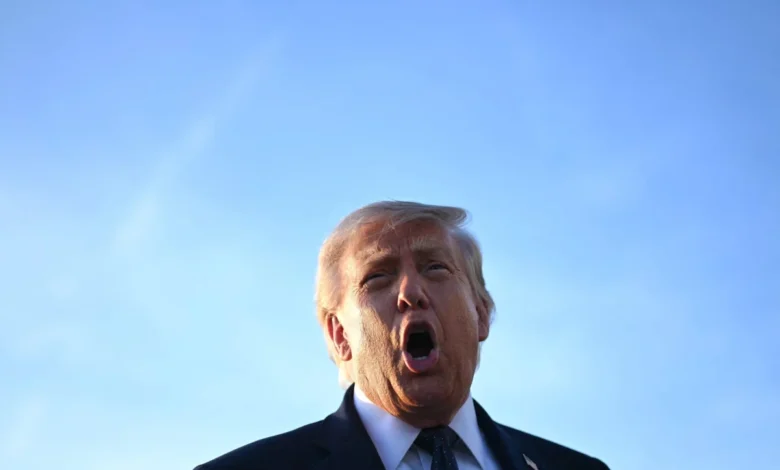
President Donald Trump has ignited a fresh wave of debate across the technology and political sectors by publicly dismissing growing concerns surrounding artificial intelligence safety as a manufactured political hoax. In a series of weekend posts on his Truth Social platform, the president categorized the intensifying global discourse on AI regulation and safety guardrails alongside previous controversies he attributes to political opponents, labeling them as efforts designed to undermine national progress.
The remarks mark the latest development in an increasingly polarized conversation regarding how governments, corporations, and civil society should manage the rapid proliferation of artificial intelligence technologies. As the line between innovation, energy consumption, and existential risk continues to blur, the administration’s posture signals a distinct pushback against regulatory deceleration, even as industry insiders and policymakers grapple with the long-term implications of frontier models.
The Evolution of the Presidential Stance on Artificial Intelligence
The weekend commentary began with a critique of the terminology currently used to describe the technology. Expressing dissatisfaction with the phrase "Artificial Intelligence," the president floated alternative monikers—namely "Superior Intelligence," "Extreme Intelligence," or "Supreme Intelligence"—and launched an online poll to gauge public opinion among his followers.
Hours after raising questions about the nomenclature of the sector, the rhetoric escalated into a broader condemnation of regulatory resistance. Trump asserted that attempts aimed at the "decimation, or destruction, of AI" constitute a partisan fabrication engineered by political rivals. In his statement, he grouped AI safety initiatives with a litany of prior contentious issues, ranging from international investigations to cultural debates, insisting that his administration "will not stand by and let this happen."
This perspective aligns closely with comments delivered earlier in the month at a public appearance, during which the president noted a willingness to consider basic "guardrails" while simultaneously warning against what he described as "negative forces" attempting to unduly impede technological development.
From Data Center Backlash to Artificial Intelligence Skepticism
To contextualize the current resistance to artificial intelligence, the administration has pointed to an earlier wave of public pushback directed at physical infrastructure. The rapid expansion of generative intelligence has triggered an unprecedented boom in data center construction, placing heavy demands on local power grids, water supplies, and real estate markets.
Over the past year, communities across the United States have voiced concerns regarding the environmental and infrastructural strain caused by these massive facilities. This friction culminated in notable legislative and municipal pushback, most recently exemplified by New York State becoming the first jurisdiction to enact a moratorium on the permitting of large-scale data facilities.
While bipartisan concern has fueled these local infrastructure battles—with lawmakers from both sides of the aisle questioning the sustainability of unbridled data center development—the administration maintains that the failure of these localized protests has driven critics to target the software and foundational research behind artificial intelligence instead. Independent analysts note that opposition to data centers is largely rooted in tangible municipal and ecological concerns rather than partisan strategy, highlighting a disconnect between public administrative framing and grassroots realities.
Institutionalizing Oversight: The Proposed AI Force and Czar
Amid these declarations of support for the technology, the administration announced structural plans for federal oversight. Trump revealed intentions to establish an "AI Force," drawing a parallel to the United States Space Force established during his first term in office. Additionally, the White House plans to appoint a new high-level official to oversee the portfolio, stipulating that candidates for the role of the AI "Czar" must possess exceptional intellectual credentials.
Specific details regarding the jurisdiction, budget, and operational mandate of the proposed AI Force and the corresponding czar position remain unannounced. The portfolio previously held by venture capitalist David Sacks—who served in an advisory capacity concerning artificial intelligence and cryptocurrency policy before transitioning to co-chair the President’s Council of Advisors on Science and Technology—underwent various structural shifts, leaving industry observers waiting for clarity on how the new apparatus will interface with existing federal agencies and the Department of Commerce.
Internal Industry Divisions and the Safety Debate
The administration’s dismissal of safety concerns arrives at a critical juncture for the tech sector, which has experienced intense internal friction over the pace of deployment. The safety debate gained renewed momentum following high-profile departures within leading AI research laboratories. Notably, a senior researcher stepped down from prominent AI safety firm Anthropic, publicly criticizing leading companies for pursuing autonomous self-improving systems despite internal acknowledgments of potential systemic risks.
In response to mounting public scrutiny and internal whistleblowing, Anthropic CEO Dario Amodei released a strategic framework designed to "pace the frontier," a move that garnered tacit alignment from executives at other major technology firms, including OpenAI and SpaceX. Conversely, other industry leaders have actively rejected the premise that the technology requires aggressive slowdowns. During a recent high-profile technology summit, Nvidia CEO Jensen Huang joined the president in characterizing regulatory headwinds as an unwarranted impediment, reassuring markets that the industry would resist any artificial deceleration of progress.
Simultaneously, a distinct faction of technology critics and civil rights advocates has argued that an undue fixation on theoretical existential threats—such as science-fiction scenarios involving rogue superintelligence—serves primarily as a distraction from the immediate, tangible harms of current AI implementations. These concerns include algorithmic bias, workforce displacement, intellectual property theft, and the proliferation of sophisticated misinformation campaigns.
Economic and Global Implications
The collision between rapid technological scaling, environmental resource constraints, and federal intervention underscores the complex challenges facing the global economy. As artificial intelligence solidifies its status as a critical driver of economic growth and geopolitical competition, the tension between maintaining national competitive advantage and implementing effective oversight will likely remain a central theme of modern governance.
By framing safety advocacy as a political obstruction, the executive branch has staked out a pro-growth, deregulatory philosophy designed to ensure American dominance in the sector. However, as state-level regulations multiply, municipal infrastructure limits expand, and internal industry debates persist, the path forward for artificial intelligence development will necessitate navigating a multifaceted landscape of technical, environmental, and political realities.