Apple iPhone 18 Pro Launches Alongside Expanded Ecosystem and Intense Flagship Competition

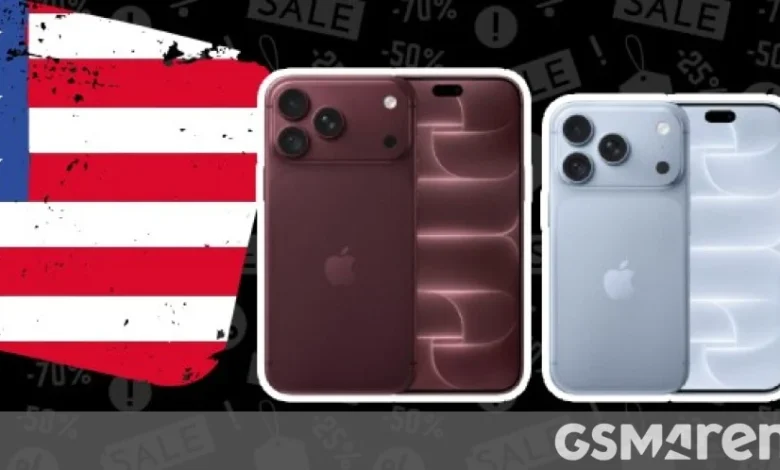
The consumer technology landscape has entered its crucial autumn product cycle, marked by Apple’s official opening of pre-orders for the newly announced iPhone 18 Pro and iPhone 18 Pro Max. This release arrives against a backdrop of adjusted pricing strategies, significant hardware breakthroughs—most notably Apple’s transition to cutting-edge 2nm semiconductor fabrication—and intensifying competition from primary Android manufacturers including Samsung and Google.
As early adopters secure their positions in the queue for the latest Cupertino hardware, the broader mobile market finds itself forced to reevaluate value propositions, performance benchmarks, and form-factor innovations. With Apple simultaneously introducing its debut wide foldable device, updating its smartwatch portfolio, and adjusting price points upward across several legacy categories, the autumn 2026 hardware ecosystem is characterized by heightened stakes for all major industry players.
Chronology of the Autumn 2026 Release Cycle
The rollout of Apple’s latest device generation follows a carefully calibrated timeline designed to maximize market impact while staggering the availability of its more experimental form factors.
Pre-orders for the traditional bar-form flagships, the iPhone 18 Pro and iPhone 18 Pro Max, officially commenced on a Saturday morning, setting off the traditional rush for launch-day delivery slots. Because Apple opted to bypass the vanilla iPhone 18 model until a later date, consumer focus is concentrated entirely on the upper echelon of the smartphone lineup.
The timeline shifts significantly in October, when Apple is scheduled to formally introduce its much-anticipated entry into the foldable market, provisionally termed the iPhone Duo. Pre-orders for this wide foldable device are slated for mid-October, with retail availability commencing one week later. This staggered launch allows Apple to capture initial demand from traditional upgrade cycles before shifting consumer attention toward its pioneering flexible-screen ecosystem.
Concurrently, major United States telecommunications providers—including AT&T, T-Mobile, and Verizon—have unveiled their carrier-subsidized acquisition programs, offering structured trade-in deals and financing incentives to mitigate the financial impact of Apple’s recent retail price adjustments.
Hardware Innovations and Performance Metrics
At the architectural core of the iPhone 18 Pro and Pro Max lies Apple’s proprietary A20 Pro system-on-chip. Manufactured using an industry-pioneering 2nm process node, the A20 Pro represents a massive leap in silicon engineering. Initial Geekbench benchmarking results demonstrate unprecedented single-core and multi-core processing speeds, driven by a peak clock frequency of 4.93GHz. This raw computational power translates to a chip that operates at nearly 5GHz, delivering generational improvements in machine learning execution, computational photography, and thermal efficiency.
Beyond the processor, the camera architecture has received a substantial upgrade. The primary 48-megapixel sensor, built on a large 1/1.28-inch optical format, now incorporates a true variable aperture mechanism spanning f/1.5 to f/4.0. This addition grants mobile photographers greater physical control over depth of field and light gathering capabilities in diverse lighting conditions. Apple has also promised extended battery endurance across the board, with the larger chassis of the iPhone 18 Pro Max yielding particularly notable longevity gains under continuous load.
Pricing Pressures and the Traditional Bar-Form Flagship Landscape
Apple’s hardware rollout is tempered by consumer reaction to its pricing structure. Following recent corporate adjustments that increased the base pricing of the iPhone 16, iPhone 17, and iPhone Air series by $100, the new iPhone 18 Pro models arrive without promotional pre-order incentives or complimentary accessories. This pricing strategy has inadvertently created significant openings for rival original equipment manufacturers to market competing devices as more cost-effective alternatives.
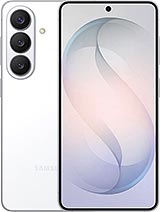
In the 6.3-inch display category, Samsung presents the Galaxy S26 as a direct foil to the standard iPhone Pro. Both devices utilize advanced 120Hz LTPO panels of identical physical dimensions. However, hardware disparities remain pronounced: Samsung equips its smaller flagship with a 10-megapixel 3x telephoto lens and a 12-megapixel ultra-wide camera, which pale on paper compared to Apple’s dual 48-megapixel telephoto (4x zoom) and ultra-wide sensor configuration. Furthermore, Samsung continues to omit native magnetic charging support from its base bar-form models.
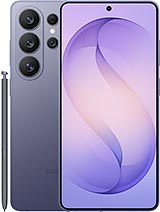
For consumers eyeing larger displays, the 6.9-inch Samsung Galaxy S26 Ultra undercuts the pricing of the iPhone 18 Pro Max—and remarkably, even costs less than the smaller iPhone 18 Pro. The Ultra closes the imaging gap significantly through a comprehensive camera array comprising a 200-megapixel 1/1.3-inch main sensor, a 10-megapixel 3x telephoto module, a dedicated 50-megapixel 5x telephoto lens (111mm equivalent), and a 50-megapixel ultra-wide sensor. Additionally, the S26 Ultra distinguishes itself with productivity utilities such as the integrated S Pen and advanced Privacy Display technology.

Google’s market positioning with the 6.3-inch Pixel 11 Pro and 6.8-inch Pixel 11 Pro XL reflects a different strategic calculus. While Google has largely resolved the thermal and battery efficiency deficits of its previous-generation Tensor G5 chip with the new Tensor G6, raw computational performance still lags behind the benchmarks set by Apple’s A20 Pro and Qualcomm’s Snapdragon 8 Elite Gen 5.
Nevertheless, Google’s hardware package remains competitive through its photographic suite—featuring a 50-megapixel main sensor, a 48-megapixel 5x telephoto lens, and a 48-megapixel ultra-wide camera—alongside the inclusion of proprietary "Pixelsnap" magnetic wireless charging functionality.
The Foldable Frontier: Apple Enters the Market
Perhaps the most profound development in the autumn 2026 hardware cycle is the convergence of traditional flagship pricing with foldable form factors. With high-end bar phones commanding premium prices, consumers increasingly find that devices like the Samsung Galaxy Z Flip8 occupy a similar financial tier to ultra-premium bar phones. The Z Flip8 offers a 6.9-inch foldable inner display paired with a 4.1-inch cover screen, driven by the custom Snapdragon 8 Elite Gen 5 platform, though its camera system is comparatively modest with a 50-megapixel main and 12-megapixel ultra-wide setup.

Apple’s entry into the foldable arena with the iPhone Duo marks a pivotal moment for the Cupertino firm. Choosing to debut with a wide foldable layout rather than a tall, book-style device, Apple faces an entrenched competitor in the Samsung Galaxy Z Fold8. Dimensionally, the Samsung offering retains distinct ergonomic advantages: it measures 9.7mm in thickness and weighs 201g, compared to the iPhone Duo’s 11.3mm thickness and 254g weight.
Software ecosystem maturity is another critical vector of comparison. While Samsung has accumulated years of iterative refinement for One UI on flexible displays, the iPhone Duo represents Apple’s maiden voyage in translating iOS applications fluidly from a cover display to an expansive internal canvas. Apple attempts to offset this transitional friction by incorporating stylus support and an under-display camera—features that Samsung strategically abandoned in previous iterations. In terms of optics, the iPhone Duo features a 48-megapixel main sensor with sensor-shift optical image stabilization (OIS) paired with a 48-megapixel ultra-wide lens, closely matching the 50-megapixel main and 50-megapixel ultra-wide configuration of the Galaxy Z Fold8.
For consumers seeking maximum screen estate in a book-style configuration, the Samsung Galaxy Z Fold8 Ultra presents an imposing alternative. Boasting an 8-inch inner display with a near-1:1 aspect ratio and a 6.5-inch tall-and-skinny cover display, the Ultra undercuts the iPhone Duo significantly in weight (215g versus 254g) and matches the slim profile of traditional bar phones at just 8.9mm thick—merely 0.1mm thicker than the non-foldable iPhone 18 Pro Max. Google’s counterpart, the Pixel 11 Pro Fold, similarly targets the multitasking demographic with an 8-inch inner screen and magnetic wireless charging, though it is similarly constrained by the performance limits of the Tensor G6 processor.

Ecosystem Refreshes: Wearables and Audio
Beyond its smartphone announcements, Apple updated its peripheral ecosystem with targeted enhancements to wearables and audio accessories. The Apple Watch Series 12 introduces upgraded optical and electrical heart rate sensors alongside advanced artificial intelligence audio capabilities. These software-driven features include automated acoustic threat detection for users with hearing impairments, conversational summarization tools, and ambient audio recognition capable of recalling previously heard musical tracks.
For endurance-focused consumers, the Apple Watch Ultra 4 prioritizes longevity. While withholding precise battery capacity metrics, Apple claims the device achieves up to 50 hours of standard operation—an 8-hour improvement over its predecessor—stretching up to 84 hours when utilizing Low Power Mode.
In the audio segment, Apple introduced the AirPods 5. Countering perceptions of corporate premium pricing, the new generation arrives at a lower price point while introducing performance enhancements across active noise cancellation, transparency mode, spatial audio algorithms, and Adaptive EQ. The product is offered in two configurations: a standard variant with USB-C wired charging and a version featuring a wireless-charging-enabled case for a modest price supplement.

Market Implications and Analyst Outlook
The concurrent rollout of the iPhone 18 Pro series, the initiation of Apple’s foldable journey, and aggressive counter-programming from Samsung and Google point toward an intensely competitive fourth quarter. Apple’s pricing adjustments and shift toward 2nm silicon underscore a strategy focused on high margins and performance dominance. However, the maturation of Android foldables and the aggressive pricing of flagship alternatives like the Galaxy S26 series ensure that consumers possess more viable, feature-rich alternatives than in previous cycles. As pre-order metrics finalize and retail availability expands, the true test will lie in whether Apple’s silicon and ecosystem cohesion can successfully outweigh the physical and financial advantages currently held by its primary competitors.
Related posts: