The Hottest Day of the Year Understanding Regional Climate Peaks and the Science of Summer Extremes

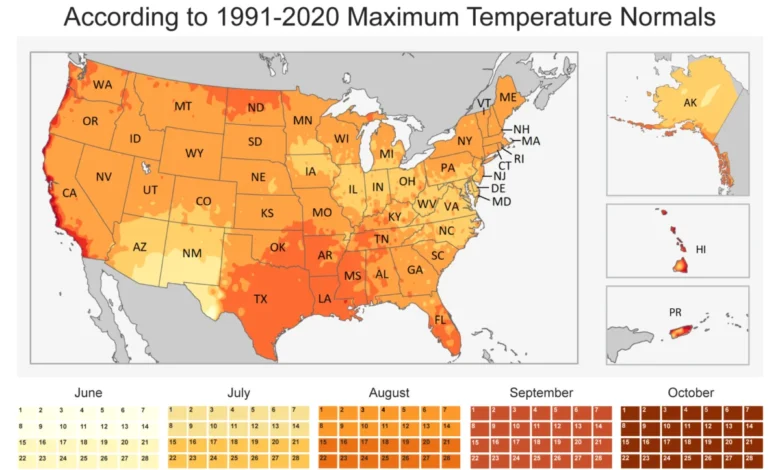
As record-breaking temperatures continue to reshape the global landscape, millions of residents across the United States find themselves grappling with a summer that has already proven to be historically brutal. From the scorching heat domes of the Southwest to the stifling humidity of the Eastern Seaboard, the quest for relief has become a primary concern for citizens and policymakers alike. While the unpredictability of climate change has made weekly forecasting a complex endeavor, a deep dive into three decades of meteorological data provides a clearer picture of when the mercury is most likely to hit its annual peak. By analyzing the National Oceanic and Atmospheric Administration (NOAA) Climate Normals from 1991 to 2020, researchers and organizations like The Old Farmer’s Almanac have identified distinct patterns that dictate the "hottest day" across various American regions.
The timing of the year’s highest temperature is rarely a uniform event. While the summer solstice in late June marks the point of maximum solar radiation in the Northern Hemisphere, the hottest days of the year typically lag behind by several weeks or even months. This phenomenon, known as seasonal lag, is driven by the thermal inertia of the Earth’s surface and atmosphere. Much like a pot of water takes time to boil even after the heat is turned to high, the land and oceans continue to absorb and store heat long after the sun has reached its highest point in the sky. Consequently, for the vast majority of the United States, the peak of summer heat arrives in July and August, though geographical nuances create significant outliers.
The Geography of Heat: Regional Variations in Peak Temperatures
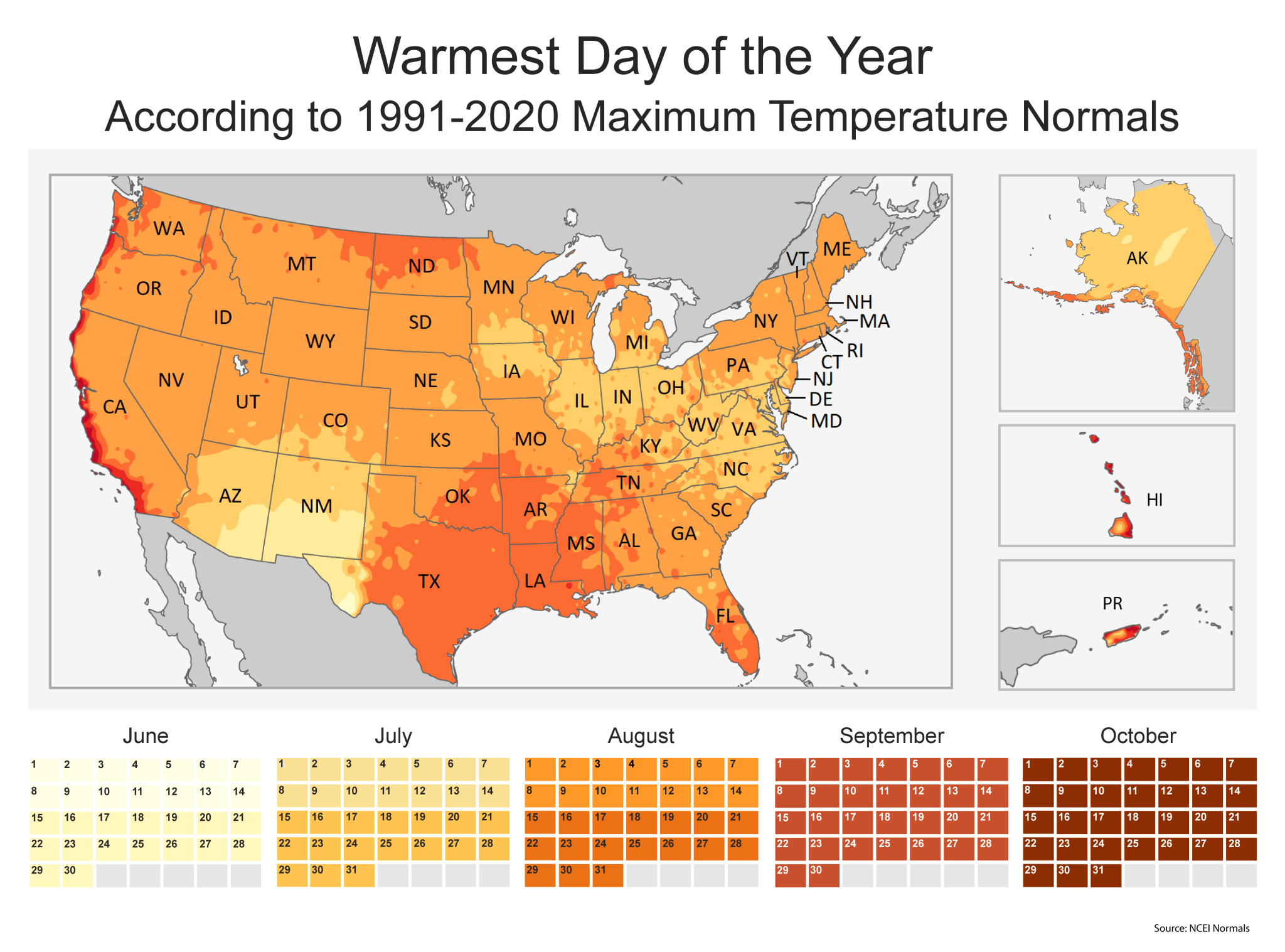
According to the NOAA data, the United States can be divided into several "heat zones" based on when they typically experience their annual maximum temperature. For a significant portion of the country—stretching from the Rocky Mountains through the Midwest and into the Northeast—mid-to-late July is the standard window for peak swelter. In these regions, the combination of long daylight hours and the gradual warming of the soil leads to a crescendo of heat that often coincides with the "dog days" of summer.
However, the Southern United States presents a different timeline. States such as Texas, Louisiana, Mississippi, Arkansas, and Oklahoma often see their hottest temperatures pushed into August. This delay is frequently influenced by the movement of moisture from the Gulf of Mexico and the stabilizing of high-pressure systems over the southern plains. In these areas, the heat is not merely a matter of temperature but of "apparent temperature," where high humidity prevents the human body from cooling itself through evaporation, leading to dangerous heat index values that often peak just as students are preparing to return to school.
The Western United States and the Pacific Coast offer perhaps the most striking departure from the national norm. In coastal California, Oregon, and Washington, as well as parts of southern Alaska, the hottest days of the year may not arrive until September or even October. This is largely due to the "marine layer" effect and the thermal inertia of the Pacific Ocean. During June and July, cool ocean air often rushes inland to replace rising warm air, creating the famous "June Gloom" fog that keeps coastal temperatures moderate. As the ocean waters reach their maximum warmth in late summer and early autumn, and as offshore wind patterns like the Santa Anas begin to develop, coastal residents often experience their most intense heatwaves just as the rest of the country is transitioning into fall.
The Role of Climate Change and the Shifting Baseline
While historical data provides a roadmap, the acceleration of climate change is increasingly acting as a "wildcard" that disrupts traditional patterns. Meteorologists note that while the 30-year averages (1991–2020) are the current gold standard for defining "normal" weather, the last decade has seen a disproportionate number of record-breaking events that fall outside these norms. The year 2023 was officially declared the hottest year on record globally, and 2024 has continued this trend with unprecedented "heat domes"—massive ridges of high pressure that trap heat over a region for extended periods.
The implications of these shifting baselines are profound. Climate scientists point out that "extreme" heat is becoming more frequent, more intense, and longer-lasting. This has led to the emergence of "global boiling," a term coined by United Nations Secretary-General António Guterres to describe the new, more volatile era of the climate crisis. In this context, the "hottest day of the year" is no longer just a meteorological curiosity; it is a critical data point for public health, energy management, and agricultural stability.
Infrastructure and Public Health Challenges
The concentration of heat in specific months places an immense strain on national infrastructure, particularly the power grid. In states like Texas, which operates on its own independent grid (ERCOT), the peak heat of August represents a period of high risk. As millions of air conditioning units run simultaneously to combat 100-plus degree temperatures, the demand for electricity can push the grid to its breaking point. This has prompted increased investment in renewable energy sources, such as solar power, which ironically performs best during the very hours when the grid is most stressed.
From a public health perspective, the "hottest day" represents a peak in heat-related illnesses and fatalities. The Centers for Disease Control and Prevention (CDC) has noted that heat is now the leading cause of weather-related death in the United States, surpassing hurricanes and tornadoes. Urban environments are particularly vulnerable due to the "Urban Heat Island" effect, where concrete, asphalt, and lack of vegetation cause cities to retain heat much longer than surrounding rural areas. This means that for city dwellers, the hottest day of the year often brings "tropical nights," where temperatures do not drop enough for the human body to recover from the day’s heat.
Meteorological Mechanisms: Why the Timing Varies
To understand why the hottest day varies so much by location, one must look at the specific meteorological mechanisms at play. In the Southwest, the arrival of the North American Monsoon can actually provide a slight cooling effect in late July and August due to increased cloud cover and precipitation, meaning their hottest days often occur in June or early July before the rains arrive.
In contrast, the "Bermuda High"—a large subtropical semi-permanent center of high pressure—plays a major role in the timing of heat for the East Coast. When this system pumps warm, humid air from the Atlantic and the Gulf of Mexico northward, it creates the sustained heatwaves typical of late July. In Hawaii and Puerto Rico, the moderating influence of trade winds and the surrounding ocean means that their peak temperatures are tied almost entirely to sea-surface temperatures, which do not reach their maximum until the very end of the summer season.
Analysis of Implications for the Future
As we look toward the middle of the 21st century, the definition of the "hottest day" is likely to undergo further transformation. Data suggests that we are seeing a "seasonal creep," where the window for extreme heat is expanding. Springs are becoming warmer earlier, and summer heat is lingering longer into the autumn months. For agriculture, this means a shift in growing seasons and increased water stress for crops. For the average citizen, it means an increased reliance on cooling technology and a necessary shift in lifestyle to avoid the most dangerous hours of the day.
The consensus among climatologists is that while historical data from the last 30 years is an essential tool for preparation, it must be used in conjunction with forward-looking climate models. The "hottest day" of the future may regularly exceed the records set in the 1991–2020 period. Preparation, therefore, becomes a matter of resilience—upgrading building codes to improve insulation, expanding urban tree canopies to provide natural cooling, and developing more robust early-warning systems for vulnerable populations.
Conclusion: Staying Resilient in a Warming World
The 30 years of NOAA data provide more than just a calendar of when to expect the highest temperatures; they offer a reminder of the complex relationship between our planet’s geography and its atmosphere. Whether the peak arrives in a July thunderstorm in New York or a September offshore breeze in San Francisco, the "hottest day" is a recurring milestone of the American experience.
As we navigate this and future summers, the advice from meteorologists and health officials remains consistent: stay informed, stay hydrated, and recognize that the historical "peak" is a benchmark, not a limit. With the climate continuing to evolve, the data of the past serves as a foundation upon which we must build a more adaptable and heat-resilient future. The "sweltering conditions" mentioned by The Old Farmer’s Almanac are no longer just a seasonal inconvenience; they are a call to action for a society learning to live on a rapidly warming planet.