Samsung Galaxy Watch 9 Confirmed to Feature Qualcomm Snapdragon Wear Elite Chipset, Marking Major Strategic Shift

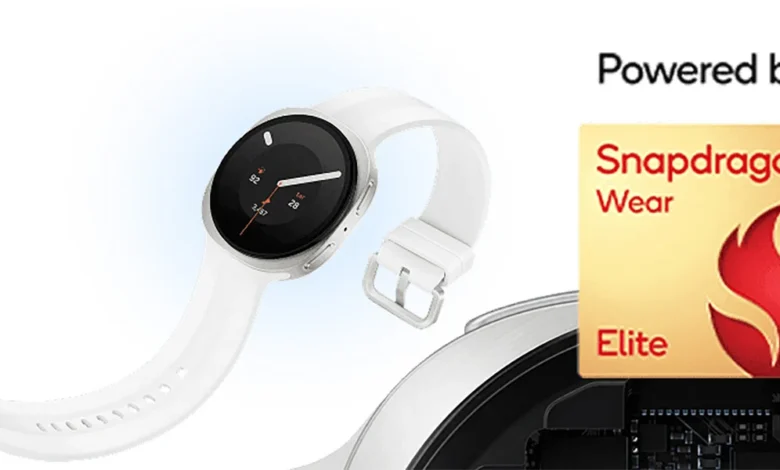
Samsung’s highly anticipated Galaxy Watch 9 series is officially set to transition to Qualcomm’s advanced Snapdragon Wear Elite chipset, a significant departure from its long-standing reliance on proprietary Exynos processors. This strategic pivot, confirmed by recently surfaced images and reputable industry leaks, signals a new era for Samsung’s wearable technology, promising enhanced performance, superior power efficiency, and robust AI capabilities for its upcoming smartwatches. The move is poised to reshape the competitive landscape of the Android smartwatch market and re-establish Qualcomm as a dominant force in wearable silicon.
The confirmation emerged from a batch of images shared by renowned leaker Evan Blass via his "Leakmail" newsletter, explicitly displaying the branding "Powered by Snapdragon Wear Elite" on promotional material for the standard Galaxy Watch 9, differentiating it from the expected Ultra 2 variant. This leak substantiates earlier industry whispers and Qualcomm’s own subtle hints about a major OEM adoption following the Snapdragon Wear Elite’s announcement earlier this year. The 3nm fabrication process of the new chipset is a cornerstone of its appeal, promising substantial improvements over previous generations and a distinct advantage in the increasingly competitive wearables sector.
A Decisive Break from Exynos Tradition
![Galaxy Watch 9 is ‘Powered by Snapdragon Wear Elite,’ leaked images confirm [Gallery]](https://i0.wp.com/9to5google.com/wp-content/uploads/sites/4/2026/07/galaxy-watch-9-snapdragon-2.jpg?resize=1200%2C628&quality=82&strip=all&ssl=1)
For years, Samsung’s Galaxy Watch series has been synonymous with its in-house Exynos chipsets. This vertical integration strategy allowed Samsung to maintain tight control over hardware and software optimization, mirroring Apple’s successful approach with its S-series chips in the Apple Watch. However, the performance and power efficiency of Exynos wearable chips have often been a subject of debate among enthusiasts and reviewers, particularly when compared to Apple’s custom silicon. While Exynos chips held their own during periods when Qualcomm’s wearable offerings were perceived as "underwhelming"—a sentiment echoed by industry observers for several years—the recent advancements by Qualcomm appear to have tipped the scales.
The decision to adopt a third-party chipset for a flagship product line like the Galaxy Watch is not taken lightly by a company with Samsung’s manufacturing prowess and commitment to its own silicon. It suggests a strategic re-evaluation, prioritizing raw performance and cutting-edge technology from an external supplier to ensure its smartwatches remain competitive and innovative. This is particularly crucial as the smartwatch market matures and consumer expectations for battery life, speed, and advanced features grow.
The Powerhouse Behind the Change: Snapdragon Wear Elite
Qualcomm officially unveiled the Snapdragon Wear Elite chipset earlier in 2026, positioning it as a revolutionary leap for wearable technology. Built on a cutting-edge 3nm process node, the chip boasts significant improvements across key metrics. The smaller manufacturing process allows for a denser packing of transistors, leading to inherently faster clock speeds and greater power efficiency. This directly translates into a more responsive user experience, quicker app loading times, and, crucially, extended battery life—a perennial challenge for smartwatches.
![Galaxy Watch 9 is ‘Powered by Snapdragon Wear Elite,’ leaked images confirm [Gallery]](https://9to5google.com/wp-content/uploads/sites/4/2026/07/galaxy-watch-9-snapdragon-2.jpg?quality=82&strip=all&w=1200)
Beyond raw computational power, the Snapdragon Wear Elite is specifically engineered with robust AI capabilities. It integrates a dedicated neural processing unit (NPU) designed to handle on-device AI tasks with unparalleled efficiency. This opens up a plethora of possibilities for the Galaxy Watch 9, including more sophisticated health and fitness tracking (e.g., advanced sleep analysis, real-time activity recognition, improved heart rate variability monitoring), more natural voice interactions with digital assistants, and personalized recommendations based on user behavior and biometric data. The ability to perform complex AI computations locally, rather than relying solely on cloud processing, also enhances data privacy and reduces latency.
Chronology of a Strategic Shift
The journey towards this significant change can be traced back several years, reflecting the evolving dynamics of the wearable chip market:
- Mid-2010s: Qualcomm largely dominates the Android wearable chip market with its Snapdragon Wear series, but successive generations like the Wear 2100 and 3100 are criticized for incremental upgrades and lagging behind smartphone chip advancements.
- Late 2010s – Early 2020s: Samsung doubles down on its Exynos W-series chips for Galaxy Watches, which, despite some performance concerns, often offered a more integrated experience with Samsung’s ecosystem and better power management than contemporary Snapdragon Wear chips. During this period, Qualcomm’s offerings are frequently described as "underwhelming," giving Samsung’s Exynos an unexpected competitive edge.
- 2021: Google partners with Samsung to co-develop Wear OS 3, integrating it with Samsung’s One UI Watch. This period also sees Google beginning to develop its own Tensor chips for Pixel phones and later, the Pixel Watch, signaling a push for custom silicon within the Android ecosystem.
- Early 2026: Qualcomm officially announces the Snapdragon Wear Elite, highlighting its 3nm architecture, significant performance gains, and advanced AI capabilities. During the announcement, Qualcomm subtly teases that a major original equipment manufacturer (OEM) would be adopting the new chip, fueling speculation that Samsung might be the partner.
- July 2026: Reputable leaks, notably from Evan Blass, explicitly confirm that the Samsung Galaxy Watch 9 will be powered by the Snapdragon Wear Elite, providing photographic evidence. This leak surfaces just a week before Samsung’s anticipated Unpacked event, where the Galaxy Watch 9 and new foldable phones are expected to be officially unveiled.
Implications for Performance, Features, and User Experience
![Galaxy Watch 9 is ‘Powered by Snapdragon Wear Elite,’ leaked images confirm [Gallery]](https://9to5google.com/wp-content/uploads/sites/4/2026/07/galaxy-watch-9-snapdragon-1.png)
The switch to Snapdragon Wear Elite is expected to bring a host of tangible benefits to the Galaxy Watch 9:
- Unprecedented Speed and Fluidity: The 3nm process and enhanced architecture will ensure a remarkably smooth and responsive user interface, minimizing lag and speeding up app interactions. This will be particularly noticeable when navigating complex menus, running multiple apps simultaneously, or using demanding features like GPS tracking.
- Extended Battery Life: Power efficiency is paramount for wearables. The Snapdragon Wear Elite’s optimized design, combined with the 3nm node, is projected to deliver significantly longer battery life, addressing a common pain point for smartwatch users. This could mean multi-day usage even with always-on display and frequent activity tracking.
- Advanced AI-Powered Health and Fitness: The dedicated NPU will unlock next-generation health monitoring. Expect more precise and insightful data from sensors, potentially leading to earlier detection of health anomalies, personalized workout recommendations that adapt in real-time, and more accurate stress level assessments. On-device AI could also enable sophisticated gesture controls or contextual understanding of user activities.
- Enhanced Connectivity: The new chip will likely support the latest wireless standards, offering more stable Bluetooth connections, faster Wi-Fi, and potentially improved cellular modem performance for LTE variants, leading to a more reliable standalone smartwatch experience.
- Future-Proofing: With AI capabilities at its core, the Galaxy Watch 9 will be well-positioned to leverage future software innovations and AI models, ensuring its relevance and functionality for years to come.
Broader Industry Impact and Competitive Landscape
Samsung’s adoption of the Snapdragon Wear Elite is not merely a product-level decision; it carries significant weight for the entire Android smartwatch ecosystem and the broader competitive landscape.
- Strengthening Wear OS: As the dominant player in the Android smartwatch market, Samsung’s endorsement of a powerful Qualcomm chip will undoubtedly elevate the entire Wear OS platform. It could set a new performance benchmark that other Android smartwatch manufacturers will aspire to meet, potentially driving wider adoption of Qualcomm’s latest silicon and fostering a more vibrant and competitive ecosystem. This move could also encourage developers to create more graphically intensive or AI-driven applications for Wear OS, confident in the underlying hardware’s capabilities.
- Qualcomm’s Resurgence: For Qualcomm, securing Samsung as a flagship customer for its new wearable chip represents a major victory. After years of facing criticism for stagnant performance in its wearable line, the Snapdragon Wear Elite marks a decisive comeback. This partnership solidifies Qualcomm’s position as a leading provider of high-performance silicon for a variety of connected devices, extending beyond its traditional smartphone dominance.
- Competitive Dynamics with Apple: Apple’s proprietary S-series chips have long been a significant differentiator for the Apple Watch, offering unparalleled performance and tight integration with watchOS. By adopting the Snapdragon Wear Elite, Samsung is making a strong statement that it is closing the performance gap, directly challenging Apple’s supremacy in the premium smartwatch segment. The focus on 3nm architecture and AI capabilities puts the Galaxy Watch 9 in a much stronger position to compete head-to-head with the latest Apple Watch models.
- Implications for Google and Pixel Watch: Google’s Pixel Watch, powered by its own Tensor chip, currently occupies a unique position within the Wear OS ecosystem. Samsung’s move with Qualcomm could put pressure on Google to accelerate its own wearable chip development or consider future collaborations to maintain a competitive edge, especially in terms of raw processing power and efficiency.
Samsung’s Strategic Reassessment and Future Outlook
![Galaxy Watch 9 is ‘Powered by Snapdragon Wear Elite,’ leaked images confirm [Gallery]](https://i0.wp.com/9to5google.com/wp-content/uploads/sites/4/2026/07/galaxy-watch-9-leakmail-1.png?ssl=1)
This decision by Samsung sparks broader questions about its long-term silicon strategy. While Samsung has historically championed its Exynos chips across various product categories, including smartphones and tablets, there have been instances where it has opted for Qualcomm or other third-party solutions. The move in the wearables segment could signal a more pragmatic approach where Samsung is willing to leverage the best available technology, regardless of its origin, to ensure product competitiveness. This could potentially free up Samsung’s internal R&D resources to focus on other strategic areas or more specialized Exynos variants where it holds a distinct advantage.
The shift also highlights the immense cost and complexity involved in developing cutting-edge processors, especially at advanced nodes like 3nm. Partnering with Qualcomm for a component where it leads may offer Samsung benefits in terms of development cost, time-to-market, and access to a mature and optimized platform.
As the launch of the Galaxy Watch 9 approaches next week, alongside Samsung’s new foldables, the anticipation is palpable. The transition to the Snapdragon Wear Elite is arguably one of the most significant hardware changes in the Galaxy Watch series’ history. It’s a bold move that not only promises a superior user experience for consumers but also reshapes the competitive dynamics of the smartwatch market, signaling a renewed focus on performance and innovation in the wearable space. What Samsung ultimately achieves with this newfound horsepower will be a critical focal point for industry observers and consumers alike.