New Gemini setting lets you keep chat history, but turn off AI training [U]


The Mechanics of the New Privacy Framework
For years, the standard approach among major technology firms regarding AI interaction has been a binary choice: either a user maintains their conversation history, which often implies consent for that data to be used in model training, or they disable history entirely, sacrificing the convenience of reference and continuity.
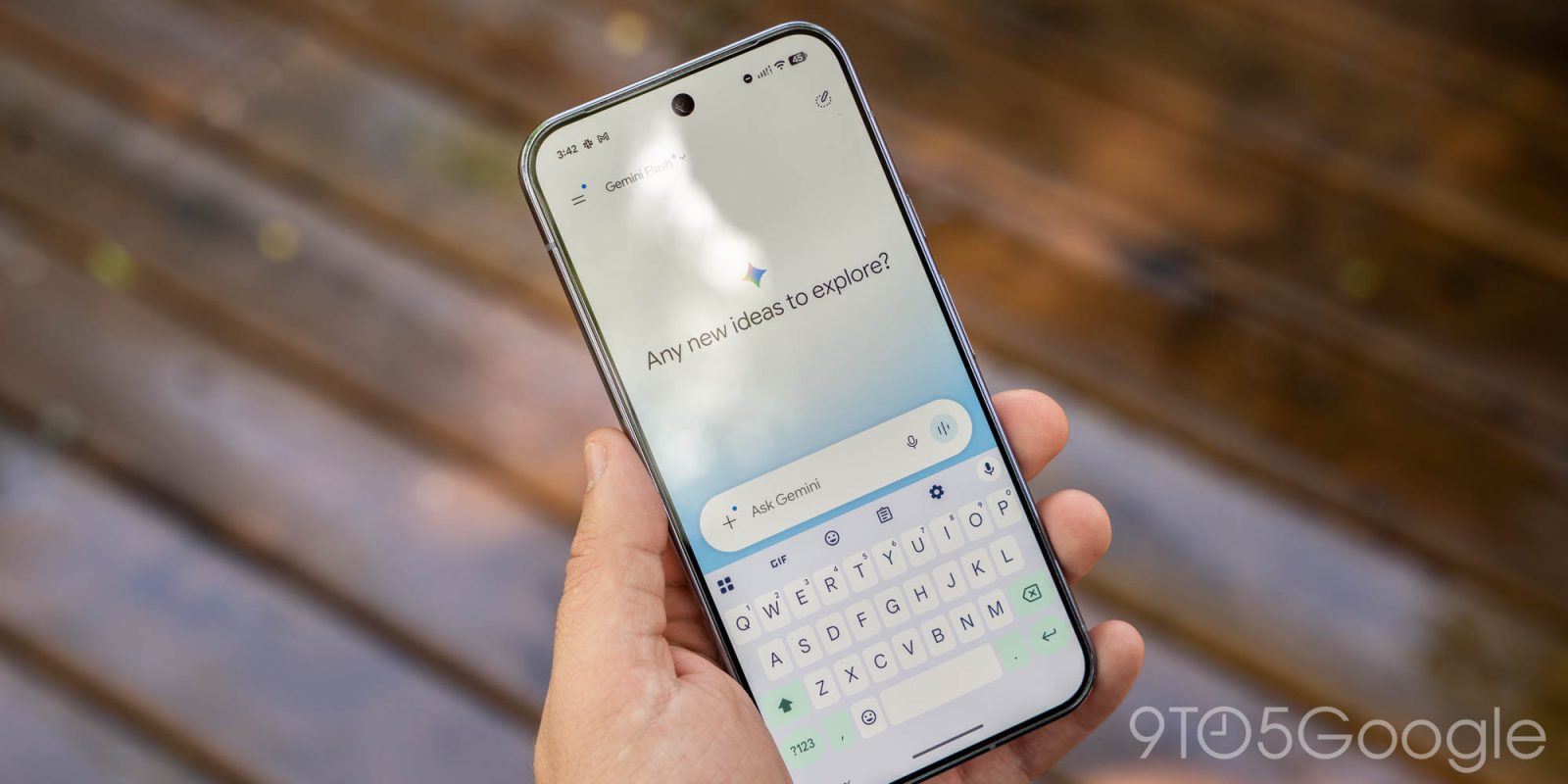
Google’s latest update, now widely available across the Gemini web interface and mobile application, dissolves this ultimatum. Users navigating to their activity dashboard—found at myactivity.google.com/product/gemini—will now see a bifurcated control system. Under the new configuration, the "Gemini History" setting acts as a master toggle for data retention, while a separate section labeled "Help train generative AI models" allows users to specifically opt-out of data processing for model refinement.
Within this training menu, users can toggle "Chat content including text & attachments" independently. It is important to note that this is enabled by default, meaning users who wish to prevent their interactions from contributing to Google’s internal research and development must proactively navigate to these settings. A distinct exception remains for "Audio and Gemini Live videos & screenshares," which continues to operate as an opt-in-only preference, reflecting the heightened sensitivity regarding multimedia and biometric data.
Chronology of the Gemini Privacy Evolution
The path to this granular control has been marked by a series of incremental updates and mounting public pressure regarding AI transparency.
- Initial Launch Phase: When Google first introduced Gemini (formerly Bard), the "Keep Activity" setting served as the singular mechanism for both history and training. Users were warned that turning off history would prevent Google from using their data to improve its models, but it also effectively erased the utility of a persistent chat log.
- The November 16, 2026 Announcement: Google officially signaled its intention to separate these functions. The company began notifying users via email that the monolithic "Keep Activity" setting was being phased out in favor of the dual-setting approach.
- The November 24, 2026 Rollout: The feature reached broad availability across desktop and mobile platforms. The introduction of the settings gear icon on gemini.google.com provided a direct gateway to the activity control page, simplifying the user experience for those concerned about data sovereignty.
Contextualizing Data Retention Policies
To understand why this change is significant, one must examine Google’s existing data retention hierarchy. Prior to this update, if a user opted to keep their activity, their data was subject to various retention windows. Even when history was "off," Google maintained a transient buffer: chat context was stored for approximately 24 hours to ensure the model could function within a conversational session, and data was held for up to 72 hours for security, safety, and abuse-prevention purposes—a process often involving human review.
By separating the training component from the retention component, Google is essentially creating a "read-only" history mode. Users can now maintain their chat archives for their own reference without those archives becoming part of the massive datasets used to train future iterations of the Gemini model. This addresses a common critique from privacy advocates who argue that users should not have to sacrifice access to their own past work to protect their data from being ingested by AI training pipelines.
Implications for AI Training and Data Ethics
The broader implications of this move are significant for the field of generative AI. Large language models require vast quantities of human-generated text to improve reasoning, nuance, and factual accuracy. By allowing users to opt out of the training pool, Google is acknowledging the growing tension between the need for high-quality training data and the ethical necessity of user consent.

Industry analysts suggest that this shift could signal a maturation in the AI sector. As users become more sophisticated regarding how their data is handled, companies that offer transparent, granular controls are likely to build higher levels of trust. This is particularly relevant in corporate and enterprise environments, where companies are often hesitant to allow employees to use generative AI tools if there is a risk that proprietary data could be incorporated into a public-facing model.
Furthermore, this update aligns with evolving regulatory frameworks in jurisdictions like the European Union, where the General Data Protection Regulation (GDPR) emphasizes the principle of "data minimization" and explicit consent. By offering users a clear choice to "keep history" without "contributing to training," Google is providing a compliance-friendly interface that aligns with global expectations for digital privacy.
User Guidance and Best Practices
For those looking to optimize their privacy settings following this update, the process is straightforward but requires a proactive visit to the settings menu.
- Access the Dashboard: Log into your Google account and navigate to the Gemini app settings.
- Locate Gemini History: Click the gear icon and select "Gemini History." This redirects you to the Google My Activity portal.
- Configure Retention: Choose your preferred timeframe for how long your chat logs are saved. Even if you turn off the "History" setting, Google notes that future chats will still be retained for a short window (approximately 2 months) to facilitate the response loop and ensure safety standards.
- Manage Training: Locate the "Help train generative AI models" section. You can toggle off the "Chat content including text & attachments" option if you prefer that your interactions not be used to refine Google’s neural networks.
It is worth noting the language used in the confirmation prompts: "Your future chats won’t be used to train generative AI models, unless you provide feedback." This highlights a nuance in the system—if a user explicitly provides feedback on a response (e.g., a thumbs-up or thumbs-down reaction), that specific interaction may still be used to improve the system, as the user is effectively participating in the training process by providing a data label.

The Road Ahead for Google’s Privacy Standards
As Google continues to integrate Gemini more deeply into its ecosystem—from Gmail and Docs to Android and Chrome—the importance of these privacy controls will only grow. The ability to decouple history from training is a necessary step in the scalability of AI products. If users felt that using the assistant meant an automatic loss of data privacy, adoption rates could stagnate.
The company’s decision to communicate this via direct email notifications suggests a desire to avoid the perception of "shadow training," where user data is utilized without clear, affirmative consent. Moving forward, observers will be watching to see if Google extends these controls to other aspects of its AI ecosystem, such as multimedia generation or predictive suggestions in its workspace suite.
While this update provides significant control, it also places the responsibility on the user to understand and navigate the settings. The default status remains "on" for training, which ensures that Google’s models continue to receive the data necessary for development, but the barrier to opting out has been significantly lowered. This balance—between the aggressive pursuit of model improvement and the requirement for user autonomy—will likely remain the defining challenge for Google and its competitors throughout the remainder of the decade.
In conclusion, the separation of chat history from model training is a pragmatic, user-centric improvement that bridges the gap between AI utility and data privacy. It empowers individuals to retain the benefits of a personal assistant—such as the ability to look back at previous brainstorming sessions or drafted content—without being forced to contribute their personal interactions to the development of the next generation of generative AI.