Memory price skyrockets as demand for AI data centers drives 369% year-over-year surge

The Mechanics of a Supercycle
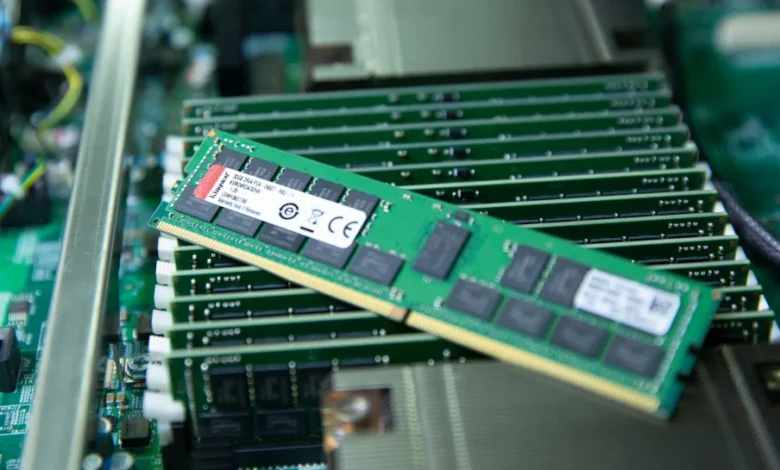
To understand the current state of the memory market, one must look at the divergence between volume and value. Bit shipments—the standard metric for the total amount of memory capacity moving through the supply chain—increased by a modest 4% during the third quarter. This indicates that the revenue explosion is almost entirely driven by record-high average selling prices (ASPs). For decades, DRAM was considered a cyclical commodity, prone to periods of oversupply and price crashes. However, the emergence of generative AI and large-scale agentic workloads has effectively de-commoditized the product.
In the first quarter of 2026, global DRAM revenue was estimated at $97 billion, a 260% year-over-year increase at the time. The fact that the industry managed to effectively double that revenue figure in just six months underscores the intensity of the current "supercycle." Prices that previously fluctuated between 20 and 30 cents per gigabit have escalated to approximately $2 per gigabit. High Bandwidth Memory (HBM4), which is critical for the latest generation of AI accelerators, is witnessing even more extreme valuation, with prices trending toward $4 per gigabit.
A Timeline of Escalation
The current shortage is the culmination of a multi-year squeeze that began showing its most acute symptoms in late 2025.
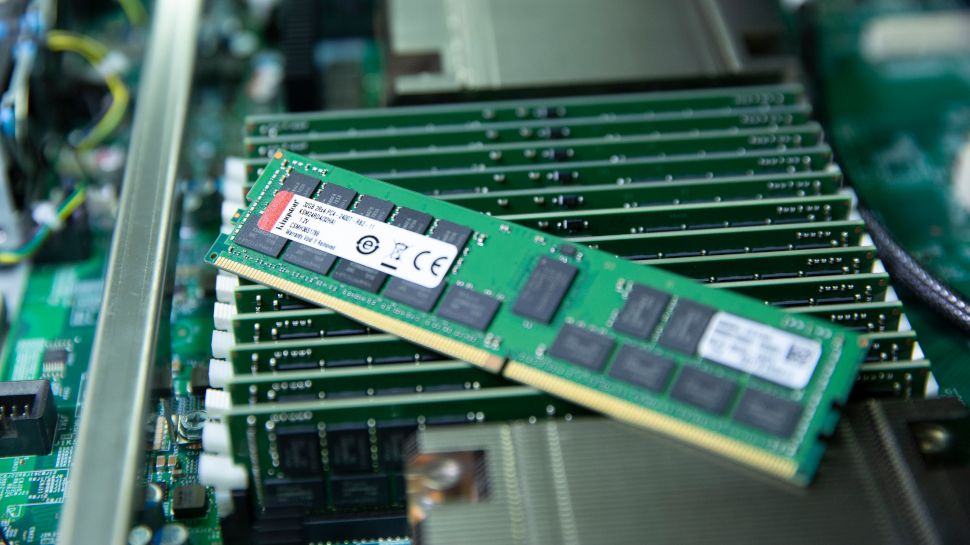
- October 2025: Contract prices for a standard 16Gb DDR5 chip hovered around $8.70.
- January 2026: Analysts noted that the previous 2018 peak of $1 per gigabit for server modules was being eclipsed, signaling the start of a new, more aggressive market phase.
- Q1 2026: Industry revenue hit the $97 billion milestone, confirming that the AI boom was creating a sustained supply-demand imbalance.
- September 2026: The price of a 16Gb DDR5 chip reached $48, a 450% increase from the previous year’s October baseline.
- October 2026: Benchmark DDR4 8Gb chips hit a record high of $27.50.
- November 2026: Major suppliers and industry observers began projecting that the supply crunch would persist well into 2027 and potentially 2030, marking the longest period of price volatility in modern memory history.
The Shift Toward Consumer-Grade Competition
A significant and often overlooked aspect of the current crisis is the encroachment of AI demand into the consumer electronics sector. Historically, specialized high-end memory like HBM was the primary focus of the AI boom. However, as "agentic" AI applications—software capable of performing complex, multi-step tasks autonomously—become more prevalent, there is a surge in demand for general-purpose servers that utilize standard DDR5 and LPDDR memory.
This shift has created a direct conflict between the needs of hyperscalers (such as Microsoft, Google, and Amazon) and the requirements of PC and smartphone manufacturers. Because these companies are often vying for the same fab capacity, consumer electronics have become collateral damage in the race for AI dominance. The economic impact is clearly visible in the bill of materials for modern hardware; industry estimates suggest that CPUs, RAM, and SSDs now account for approximately 68% of the manufacturing cost of a typical $900 laptop.
Corporate Responses and Financial Divergence
The financial results of the major memory manufacturers reflect this volatility. Samsung, which retains the largest market share at 38%, reported a record third-quarter operating profit of approximately $80 billion. Yet, the internal dynamics of these firms are complex; Samsung’s own mobile and network division reported a 600-billion-won operating loss, largely attributed to the very memory costs that are fueling the company’s semiconductor division’s success.
SK Hynix has seen an even more dramatic shift, with quarterly revenue exceeding 100 trillion won for the first time in its history—a 632% year-over-year increase in operating profit. Micron, following a similar trajectory, reported a 379% revenue increase to $54.23 billion. Despite these record-breaking earnings, there is little optimism regarding a near-term price correction. SK Hynix has publicly stated that supply shortages could persist through 2030, while Micron has warned that 2027 and 2028 will likely be tighter than the current year, noting that their new production facilities in Idaho will not reach significant output until mid-2027.
Implications for the Future
The long-term implications of this market structure are significant. The memory industry is transitioning toward a model of long-term, fixed-price contracts. Micron, for example, has secured $32 billion in customer commitments through multi-year "take-or-pay" agreements that cover over 35% of its projected revenue through 2030. This change in contracting structure is designed to provide the capital stability necessary to fund the massive, multi-billion-dollar investments required to build new fabrication plants.
However, this structural change also serves to insulate memory manufacturers from traditional market corrections. In previous cycles, a decline in demand would typically lead to a rapid drop in prices as manufacturers offloaded inventory. In the current environment, even if AI demand were to cool, a significant portion of future supply is already contractually obligated to specific buyers, which may keep prices artificially elevated for a prolonged period.
Economists and analysts remain divided on the duration of this trend. While industry leaders warn of a multi-year crisis, some academic observers, such as Professor Willy Shih of Harvard Business School, suggest that the memory market remains fundamentally cyclical. The eventual completion of multiple new, high-capacity fabrication plants globally is expected to restore equilibrium by late 2027 or 2028.
Until that time, the consumer electronics market is likely to remain in a state of flux. With smartphone shipments already at their lowest levels since 2012 and PC manufacturers facing mounting pressure from rising component costs, the immediate future for technology retail is one of sustained premium pricing. For the average consumer and the broader tech industry, the "memory crisis" is not merely a temporary supply chain bottleneck, but a fundamental realignment of how computing power is valued and distributed in an AI-first world. The era of cheap, abundant DRAM appears to be over, replaced by a new reality where memory is the most sought-after, and most expensive, resource in the digital economy.