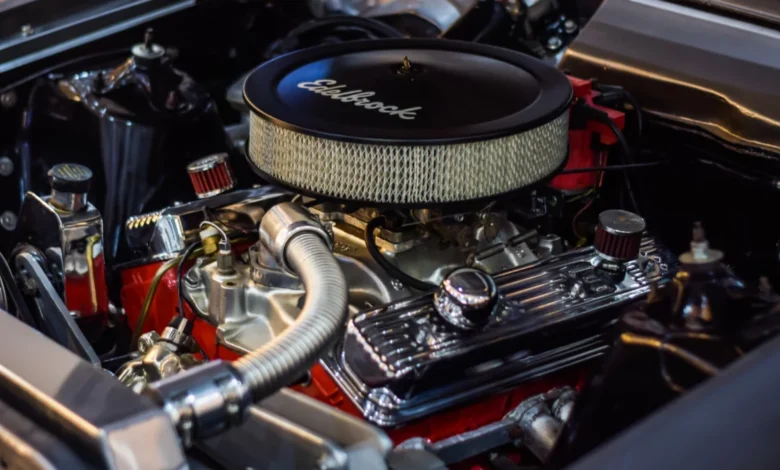
In an era increasingly dominated by smaller displacement engines augmented by sophisticated turbocharger technology, the venerable pushrod engine continues to defy expectations, delivering colossal power and torque figures that often leave its more modern, forced-induction counterparts in its wake. For well over a century, the pushrod design, characterized by its camshaft residing within the engine block and operating valves via lifters, pushrods, and rocker arms, has been a cornerstone of automotive engineering. This architectural simplicity translates into inherent advantages: a more compact engine footprint, reduced weight, fewer moving parts, and consequently, enhanced reliability and ease of maintenance. These attributes explain why manufacturers like Chevrolet steadfastly incorporate pushrod V8s into iconic vehicles such as the Corvette, Camaro, and their full-size truck lines.
However, the global automotive landscape has undergone a significant transformation. Driven by stringent emissions regulations and a concerted industry push towards engine downsizing, engineers have increasingly embraced forced induction, particularly turbocharging. Small, highly efficient turbocharged units have largely supplanted naturally aspirated pushrod configurations, promising a compelling blend of increased power output from reduced size, improved thermal efficiency, and superior fuel economy. Turbochargers achieve this by compressing more air into the engine’s cylinders, allowing a smaller engine to generate power typically associated with larger, naturally aspirated units. Despite this pervasive trend and the aggressive marketing of turbocharged downsizing, a select group of pushrod engines continues to produce performance metrics that not only compete with but often demonstrably exceed the output of many advanced turbocharged powerplants, challenging the narrative that older technology is inherently inferior. This article delves into five such pushrod marvels that stand as testaments to enduring engineering prowess.
The Enduring Legacy of the Pushrod: A Historical Perspective
The pushrod engine, or overhead valve (OHV) engine, traces its origins back to the very dawn of internal combustion. Its design was a revolutionary step from earlier flathead engines, allowing for better airflow and higher compression ratios. For decades, it was the dominant engine architecture, particularly in American vehicles. Its robust nature and relatively simple construction made it ideal for mass production and allowed for significant displacement, a hallmark of American performance.
In contrast, the overhead camshaft (OHC) design, with its camshafts positioned in the cylinder head, offered potential benefits in terms of higher RPM capabilities, more precise valve timing, and improved volumetric efficiency. As automotive engineering advanced, OHC engines became more prevalent, especially in European and Asian markets, often associated with higher-revving, smaller-displacement engines. However, the pushrod design, particularly the V8 configuration, maintained its stronghold in American muscle cars and trucks due to its excellent low-end torque characteristics, compact dimensions for its displacement, and a deep-seated legacy of performance.
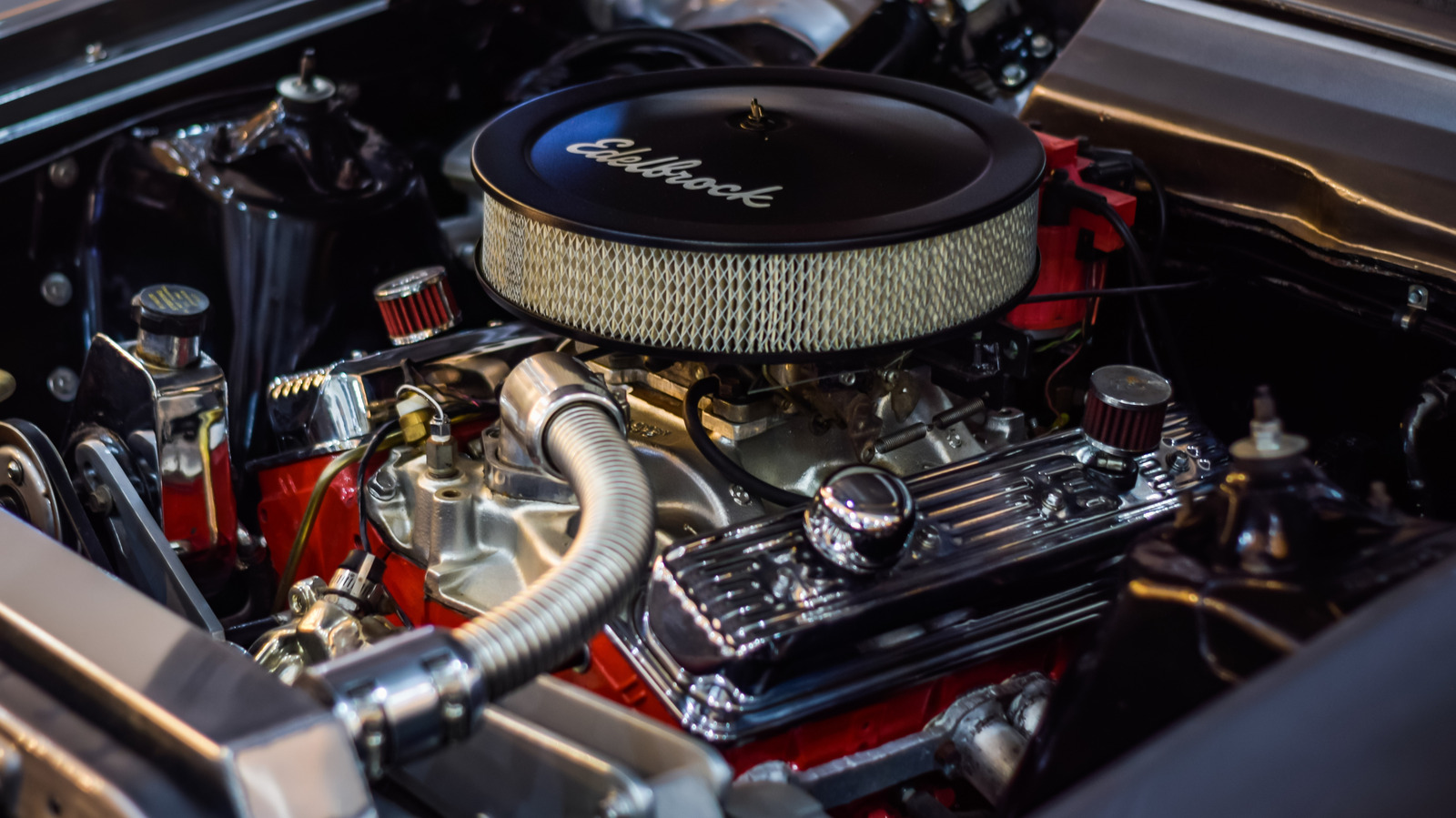
The shift towards modern turbocharged engines gained significant momentum in the late 20th and early 21st centuries. Environmental concerns led to stricter emissions standards, prompting manufacturers to seek ways to extract more power from smaller, more fuel-efficient engines. Turbochargers, which harness exhaust gases to spin a turbine that compresses intake air, became the go-to solution. They allowed for "right-sizing" – achieving the power of a larger engine with the fuel economy and emissions of a smaller one. Yet, as the following examples demonstrate, the fundamental advantages and raw power potential of the pushrod architecture, particularly when combined with its own forms of forced induction like supercharging, remain formidable.
Defying the Trend: Five Pushrod Powerhouses
The following five engines represent the pinnacle of pushrod engineering in contemporary production, each demonstrating extraordinary capabilities that rival, and often surpass, the performance of many advanced turbocharged engines in their respective categories.
1. The Dodge Challenger SRT Demon 170’s Supercharged 6.2L HEMI
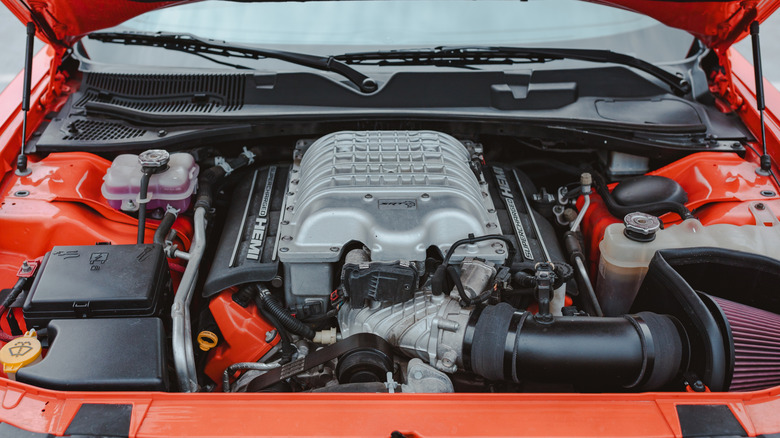
When it comes to the ultimate expression of modern American muscle, few vehicles command as much respect as the Dodge Challenger SRT Demon 170. This vehicle, part of Dodge’s "Last Call" series marking the end of the current Challenger and Charger generations, epitomizes raw, unadulterated power. At its heart lies a supercharged 6.2-liter HEMI pushrod V8, an evolution of the legendary Hellcat engine. When fueled with E85 ethanol, the Demon 170 unleashes an astonishing 1,025 horsepower and 945 lb-ft of torque. Even on standard E10 pump gas, its output remains formidable at 900 hp and 810 lb-ft.
Dodge engineered the Demon 170 specifically for drag strip dominance. The brand boasts a launch force exceeding 2 Gs, a figure unmatched by any other production car. This immense power translates to a blistering 1.66-second sprint to 60 mph. On a prepared drag strip, the Demon 170 has achieved an NHRA-verified quarter-mile time of 8.91 seconds at 151.17 mph, making it the first factory-produced muscle car to break into the eight-second bracket. For context, this time is nearly a full second faster than the claimed 9.78 seconds for Yangwang’s 3,000-horsepower electric U9 Xtreme hypercar, highlighting the pushrod’s enduring capability against even futuristic powertrains.
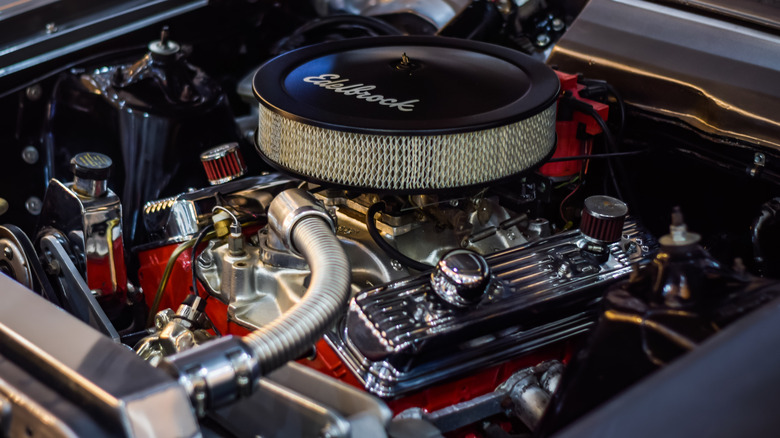
The Demon 170’s top speed is electronically limited to 149 mph, a necessary measure to protect its specialized drag radial tires. This limitation underscores its design philosophy: absolute acceleration off the line, rather than sustained high-speed runs. The sheer force and speed achieved by this pushrod V8 dramatically overshadow the 550 hp and 531 lb-ft offered by Dodge’s own turbocharged 3.0-liter twin-turbo Hurricane inline-six, marketed as SIXPACK, which is slated to replace the HEMI in some future applications. The Demon 170 stands as a defiant final chapter for the HEMI, a testament to what traditional V8 architecture, when pushed to its limits, can still accomplish.
2. Chevrolet Performance ZZ632/1000 Crate Engine: Unadulterated Displacement
While some engines achieve their power through intricate engineering and high-revving designs, others rely on the brute force of sheer displacement. The Chevrolet Performance ZZ632/1000 crate engine falls firmly into the latter category. Displacing a colossal 632 cubic inches (10.4 liters), this naturally aspirated big-block pushrod V8 is a monument to raw power. It generates an astounding 1,004 horsepower at 6,600 rpm and 876 lb-ft of torque at 5,600 rpm, all without the aid of forced induction, running on readily available 93-octane premium pump gas.
The engineering behind the ZZ632, despite its apparent simplicity, is meticulous. Chevrolet’s spec sheet emphasizes precision, with every intake and exhaust port on its CNC-machined aluminum heads cut to identical size and shape – a significant departure from the typical port-to-port variations found in many big-block Chevys. This design, dubbed RS-X Symmetrical Port, is credited to Ron Sperry, a veteran of over five decades in GM powertrain development. Chevrolet rigorously validated the engine, subjecting a single example to the equivalent of more than 200 dyno-simulated drag-strip runs before it entered production, ensuring its durability and consistent performance.
As a crate engine, the ZZ632 does not come installed in a factory vehicle, thus lacking official quarter-mile or 0-60 mph figures. However, performance analysis platforms like OnAllCylinders have modeled its potential in drag-strip simulation software. Plugging the engine into a theoretical 1966 Chevelle, their quickest projected combination – a 3,425-pound build equipped with 13-inch slicks – yielded an estimated 8.98 seconds at 151.3 mph in the quarter-mile. This simulated performance places it squarely in the territory of some of the fastest production cars ever made, underscoring the incredible potential of a well-engineered, high-displacement naturally aspirated pushrod V8.
3. The Corvette ZR1’s Supercharged LT5: A Swan Song for Front-Engined Pushrod Performance
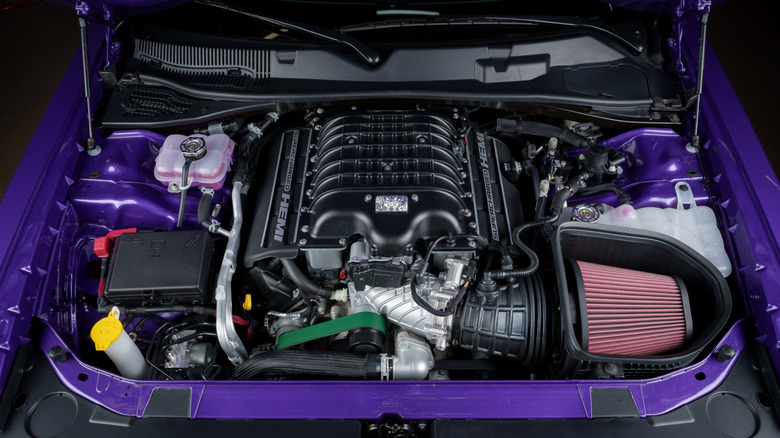
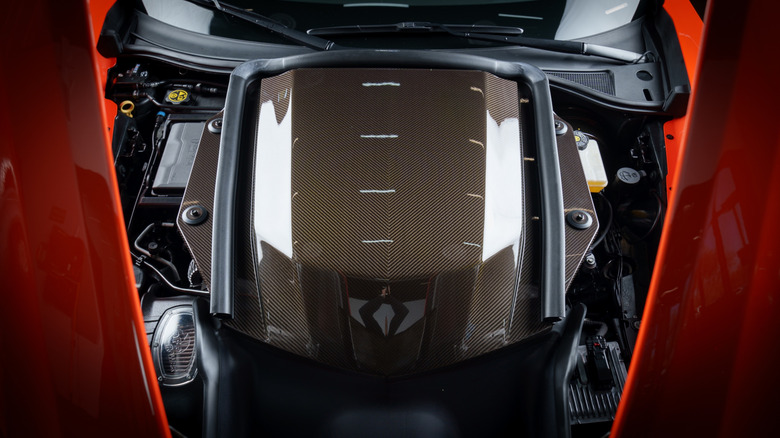
Although General Motors has ceased production of the C7-generation Corvette ZR1, its supercharged LT5 pushrod V8 remains an iconic powerplant, recognized as one of the most potent engines ever installed in a Chevrolet Corvette. This 6.2-liter LT5 boasts an SAE certification of 755 horsepower and 715 lb-ft of torque, figures GM proudly published, underscoring the engine’s verifiable output.
The heart of the LT5’s prodigious power lies in its massive 2.6-liter Eaton supercharger, a significant upgrade from the 1.7-liter unit found in the Z06’s LT4 engine, representing a 52 percent increase in displacement. While spinning its rotors to nearly 15,900 rpm to generate 13.96 psi of boost, the supercharger itself consumes up to 110 horsepower. However, at a steady 80 mph cruise, its power draw is minimal, barely impacting efficiency. The engine is also fed by a sophisticated combined direct- and port-injection fuel system, optimizing fuel delivery across various operating conditions.
Chevrolet’s factory performance figures for the ZR1 were impressive: a 2.9-second 0-60 mph sprint and a 10.6-second quarter-mile at 134 mph. Independent testing by publications like MotorTrend recorded slightly different numbers – 3.0 seconds to 60 mph and a 10.8-second quarter-mile at 133.1 mph. This slight discrepancy was attributed to the use of 91-octane fuel during testing, rather than the 93-octane recommended by Chevrolet. With a top speed of 212 mph, the ZR1’s advanced aerodynamic package provided 950 pounds of downforce, a 60% improvement over the Z06/Z07. Notably, with the subsequent LT6 and LT7 engines adopting a flat-plane crank V8 design, the LT5 Z06 holds the distinction of being the most powerful pushrod V8 ever featured in a front-engined Corvette, cementing its place in performance history.
4. The Supercharged Hellcat HEMI V8 Family: Versatility in Extreme Power
The supercharged 6.2-liter Hellcat HEMI V8 serves as the foundational block for several of Stellantis’s most powerful vehicles, including the aforementioned Demon 170 and the Ram 1500 TRX. While the Demon 170’s engine represents an extreme evolution, heavily modified with bespoke superchargers and reinforced internals (with Motor1 noting that "the camshaft is the only significant engine part that carries over from earlier versions"), the core Hellcat architecture demonstrates remarkable versatility across different platforms.
In the Ram 1500 TRX Final Edition, the standard-tune Hellcat engine delivers 702 horsepower and 650 lb-ft of torque. Despite its substantial weight and off-road-oriented tires, the TRX manages a 0-60 mph dash in approximately four seconds and completes the quarter-mile in 12.9 seconds at a trap speed of 108 mph. Its top speed is electronically capped at 118 mph due to tire limitations.
When this same Hellcat architecture is housed within a lighter, rear-wheel-drive coupe, its performance figures escalate dramatically. The Dodge Hellcat Redeye, for instance, produces 797 horsepower, enabling a factory-claimed 0-60 mph time of 3.6 seconds. The ultimate street-legal iteration, the Super Stock trim, pushes this further, with Dodge claiming a 3.25-second 0-60 mph time. On the drag strip, the widebody Redeye achieves a claimed quarter-mile time of 10.8 seconds, while the standard car runs 11.1 seconds, both boasting an impressive top speed of 203 mph. The Hellcat family illustrates how a robust pushrod design can be adapted and tuned to deliver varying levels of extreme performance across diverse vehicle types, consistently outperforming many contemporary turbocharged rivals.
5. The Cadillac Escalade-V’s Supercharged LT4: Luxury SUV with Supercar Heart
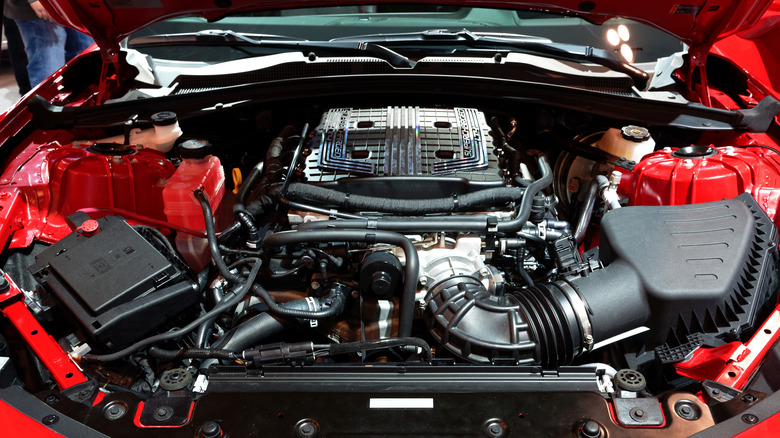
The LT4 engine, a close relative of the LT5 found in the Corvette ZR1 (the LT5 essentially being an LT4 with a significantly larger supercharger), is a formidable pushrod V8 in its own right. While the LT5 pushed output to 755 hp, the LT4, without that specific upgrade, still delivers immense power, even in unexpected applications. One such example is the Cadillac Escalade-V, marking Cadillac’s return to a supercharged V8 after the CTS-V.
Under the hood of this three-row luxury SUV, the supercharged 6.2-liter LT4 generates 682 horsepower at 6,000 rpm and 653 lb-ft of torque at 4,400 rpm. This cam-in-block pushrod architecture is the same that powered the CTS-V and the previous-generation Corvette Z06. Cadillac’s factory figures for the Escalade-V are impressive for a vehicle of its size: 4.4 seconds to 60 mph and a 12.74-second quarter-mile. Independent testing by Car and Driver corroborated these figures, achieving 4.3 seconds to 60 mph and a 12.7-second quarter-mile pass at 111 mph.
These numbers are particularly noteworthy considering the Escalade-V’s substantial curb weight, exceeding 6,200 pounds when fully loaded. The vehicle’s top speed is electronically limited to 125 mph. To put its performance into context, a direct rival in the full-size performance-SUV segment, the BMW X5 M Competition, utilizes a twin-turbo 4.4-liter V8, which produces 617 horsepower and 553 lb-ft of torque – falling short of the supercharged Cadillac by 65 horsepower and 100 lb-ft of torque. The Escalade-V stands as a powerful demonstration that the pushrod V8, even in a heavy luxury application, can deliver performance that surpasses its sophisticated turbocharged competitors.
Beyond the Numbers: The Intangibles of Pushrod Power
While raw horsepower and acceleration figures are compelling, the appeal of these pushrod engines extends beyond mere statistics. Enthusiasts often cite the distinctive, visceral sound of a large-displacement V8, a deep, resonant rumble that is difficult for smaller, turbocharged engines to replicate. The immediate, linear torque delivery characteristic of naturally aspirated or supercharged large V8s also offers a driving experience that many prefer over the slight lag sometimes associated with turbochargers, even modern twin-turbo setups.
Furthermore, the inherent robustness and relative simplicity of the pushrod design contribute to its legendary durability and immense potential for aftermarket modification. Tuners frequently push these Hellcat and LT4/LT5 blocks well past four-figure horsepower figures, often with the addition of larger superchargers, nitrous, or even custom turbocharging systems. The ZZ632 crate engine, too, can be built to exceed its rated output with further enhancements. This ease of modification and resilience makes them highly desirable for performance enthusiasts seeking to extract maximum power.
Analysis and Implications: A Niche, But Potent, Future
The continued dominance of these select pushrod engines in specific performance metrics underscores a critical point: while the automotive industry is undeniably shifting towards electrification and smaller, turbocharged internal combustion engines for mainstream efficiency, there remains a powerful niche for raw, uncompromised power delivery. These engines serve as halo products, showcasing the engineering capabilities of their manufacturers and appealing to a dedicated segment of enthusiasts who prioritize ultimate performance and a traditional driving experience.
As emissions regulations tighten further and the transition to electric vehicles accelerates, the future of such large-displacement, high-output internal combustion engines, particularly pushrod designs, will likely become even more specialized. They may evolve into highly exclusive, low-volume offerings, or perhaps be relegated to specialized track-only vehicles or crate engine applications. However, their persistence, as evidenced by the ongoing development and impressive output of engines like GM’s latest V8s and Stellantis’s HEMI family, suggests that the pushrod engine is not yet ready to fade entirely into history. It will likely continue to thrive in segments where sheer power, sound, and a connection to automotive heritage are paramount, reminding us that sometimes, the oldest designs can still deliver the most astonishing performance.
Methodology and Verification
The data presented in this analysis is rigorously sourced to ensure accuracy and journalistic integrity. Horsepower and torque ratings are directly pulled from official manufacturer newsrooms, press materials, and product pages provided by Chevrolet, Dodge, Cadillac, and BMW, as well as Stellantis Media for specific details on the Demon 170’s launch specifications. Acceleration and quarter-mile times prioritize independent, instrumented testing from reputable automotive publications such as MotorTrend, Car and Driver, and Motor Authority, wherever such real-world tests are available. This approach avoids simply accepting manufacturer claims at face value, providing a more objective assessment of vehicle performance. Technical and engineering details are derived from specialized trade outlets including Motor1, AutoEvolution, Forbes, GM Authority, CAR Magazine, and OnAllCylinders. In instances where no real-world test data exists for a specific engine, such as the Chevrolet Performance ZZ632, this information gap is explicitly stated rather than presented as definitive fact. This transparent methodology aims to provide readers with a comprehensive and verifiable account of these extraordinary pushrod engines.