Astronomy Picture of the Day: The Kaleidoscope of the Lunar Surface Through Earth’s Atmosphere

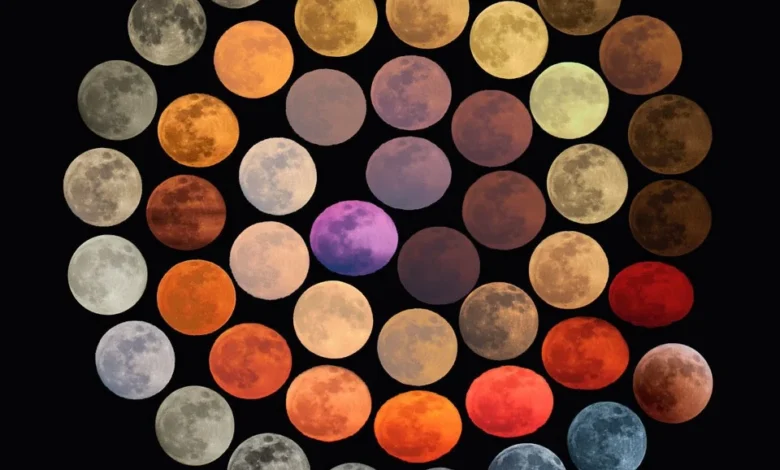
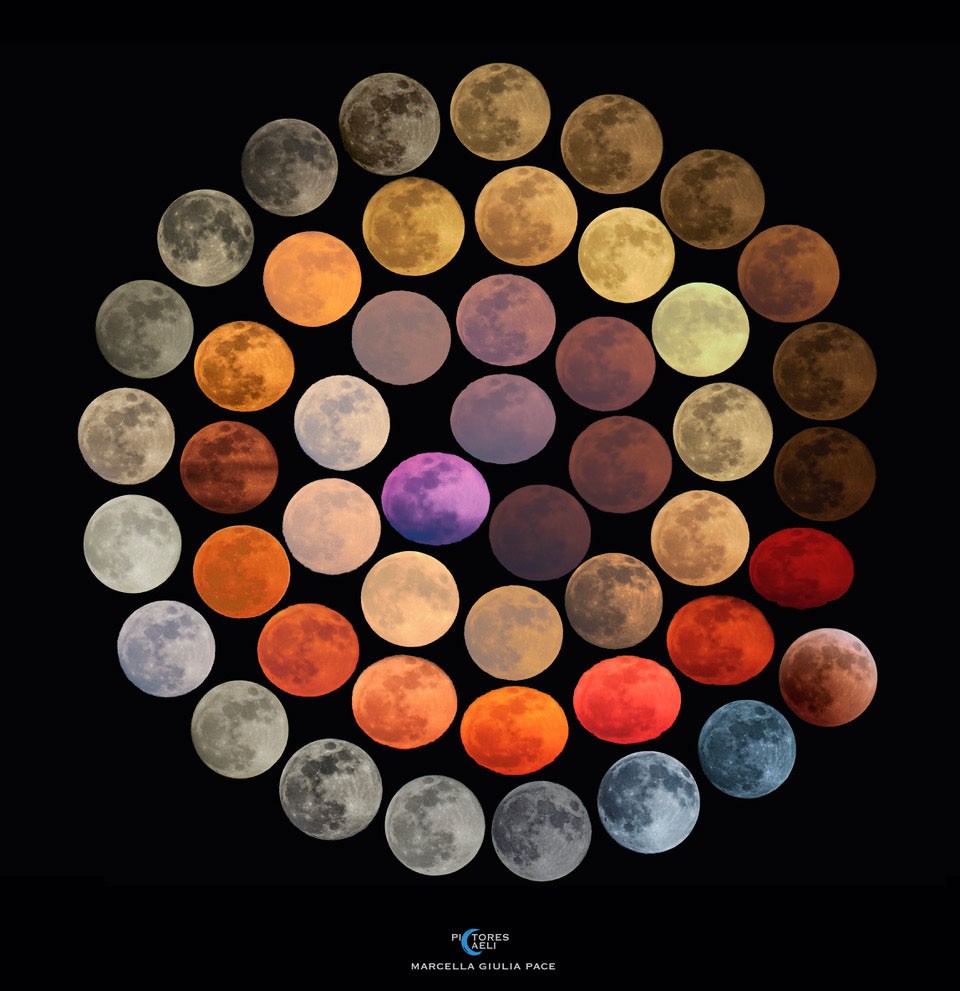
The Moon, while often perceived as a constant, monochromatic beacon in the night sky, exhibits a surprising spectrum of color when observed through the complex filter of Earth’s atmosphere. A decade-long photographic study conducted by astrophotographer Marcella Giulia Pace, featured as the NASA Astronomy Picture of the Day for November 1, 2026, illustrates this phenomenon in a compelling spiral compilation. By documenting the full moon from various locations across Italy over ten years, Pace has captured the interplay between lunar light and the terrestrial environment, revealing that the "color" of the Moon is less a property of the satellite itself and more a testament to the composition and density of the air through which its light travels.
The Science of Lunar Chromatics
In the vacuum of space, the Moon is a grey, basaltic landscape with a low albedo, reflecting only a small fraction of the sunlight that hits its surface. When viewed from the lunar surface, the Moon appears as a muted, brownish-grey sphere. However, as that reflected light reaches Earth, it must penetrate the multi-layered gaseous envelope of our planet. The atmosphere acts as a refractive prism and a filter, scattering specific wavelengths of light based on the presence of particulates, gas molecules, and the angle of observation.
The most frequent color shifts occur when the Moon is observed near the horizon. As the light travels a longer path through the atmosphere, shorter, blue wavelengths are scattered away by Rayleigh scattering—the same physical process responsible for the blue appearance of the daytime sky. Consequently, the remaining light, enriched in longer, warmer wavelengths, causes the Moon to appear yellow, orange, or red. When the atmosphere contains higher concentrations of dust, smoke, or volcanic ash, this scattering effect is intensified, leading to deeper, more vivid shifts in color.
A Chronology of Observations
Marcella Giulia Pace’s decade-long project serves as a longitudinal study of these atmospheric effects. Her methodology involved capturing the full moon at various altitudes, from the dense, particulate-heavy air near sea level to the clearer conditions found at higher elevations.
The collection includes:
- 2016–2018: Initial phase of documentation focusing on seasonal color variations and the impact of local air quality in various Italian provinces.
- July 2018: A landmark capture of the total lunar eclipse. During this event, the Moon appeared a faint, haunting red—a phenomenon caused by "Rayleigh scattering" of sunlight through the Earth’s atmosphere, which projects a reddish hue into the planet’s shadow, casting it onto the obscured lunar surface.
- 2019–2026: Continued monitoring that incorporated advancements in digital imaging, allowing for the precise calibration of color data to ensure the observed hues were accurately represented as seen by the human eye rather than being artifacts of camera sensors.
Understanding the Blue and Purple Anomalies
While red and yellow moons are relatively common and easily explained by atmospheric path length and dust scattering, other colors, such as blue or purple, remain subjects of scientific curiosity. A "blue moon"—not to be confused with the calendar definition—is an exceptionally rare event. It occurs when the atmosphere is saturated with larger dust particles, typically measuring about one micron in diameter. These particles are specifically sized to scatter red light while allowing blue light to pass through more readily. Such conditions are often linked to massive forest fires or volcanic eruptions that inject large quantities of particulate matter into the stratosphere.
The appearance of a purple moon, while rare and often difficult to categorize, is hypothesized by atmospheric scientists to be a combination of several optical effects. It likely results from the interplay of standard atmospheric scattering combined with specific types of aerosols that selectively filter light. Because these events are transient and localized, they remain a subject of active research within the atmospheric science community.
Supporting Data: Atmospheric Interaction
The Earth’s atmosphere is a "multi-layered cake" of gases and suspended particles. According to data from the NASA Science Activation programs, the interaction between light and these layers is governed by the optical depth of the atmosphere.
| Condition | Atmospheric Factor | Typical Lunar Color |
|---|---|---|
| High Altitude | Low particulate density | Silver/White |
| Horizon View | Long atmospheric path | Yellow/Orange |
| High Dust/Smoke | Fine particulate scattering | Deep Red |
| Large Particles (>1µm) | Selective blue transmission | Blue |
| Complex Refraction | Combined aerosols/moisture | Purple/Violet |
These variations demonstrate that the Moon acts as a celestial gauge for the health and composition of our own atmosphere. When the Moon appears discolored, it is often a direct reflection of the chemical or particulate load present in the local or regional air column.
Professional Perspectives and Implications
The work of astrophotographers like Pace provides more than aesthetic value; it offers a public-facing dataset that bridges the gap between amateur astronomy and atmospheric physics. Professional astronomers, including those at NASA’s Goddard Space Flight Center, note that such long-term studies are essential for raising public awareness regarding atmospheric phenomena.
"The Moon is a constant in our night sky, but it is also a mirror of our planet’s environment," says an editorial note from the Astronomy Picture of the Day team. By viewing the Moon through the lens of atmospheric science, observers are encouraged to look beyond the object itself and consider the medium through which they are seeing it. This perspective is vital in an era where climate change and urban pollution are increasingly altering the composition of the atmosphere, potentially leading to more frequent, or more extreme, optical anomalies in the night sky.
Broader Impact: Public Engagement with Science
The popularity of the Astronomy Picture of the Day (APOD) initiative, managed by NASA and Michigan Technological University, underscores a global interest in the intersection of art and science. By providing clear, expert-vetted explanations for common celestial occurrences, these projects demystify the natural world.
The implication of this research extends to the field of optics and light pollution studies. As urban areas grow, the "artificial skyglow" combined with increased aerosol concentrations significantly impacts how we perceive celestial bodies. The "spiral" of the Moon’s colors is a reminder that our view of the universe is inherently filtered.
Conclusion
The decade of observations provided by Marcella Giulia Pace offers a comprehensive visual history of the Moon’s changing face. From the deep reds of a lunar eclipse to the rare, mysterious purples of a dust-laden sky, the colors of the Moon are a dynamic, ever-changing portrait of Earth’s atmosphere. As we continue to monitor the night sky, such visual records serve as both a reminder of the beauty of the cosmos and the delicate, complex nature of the planet we call home. The next time the Moon rises, observers are encouraged to look for these subtle shifts in hue, as they provide a direct, visual connection to the physical processes occurring in the air above us.
Related posts: