Salesforce pivots to an agentic future as Dreamforce 2026 takes center stage in San Francisco

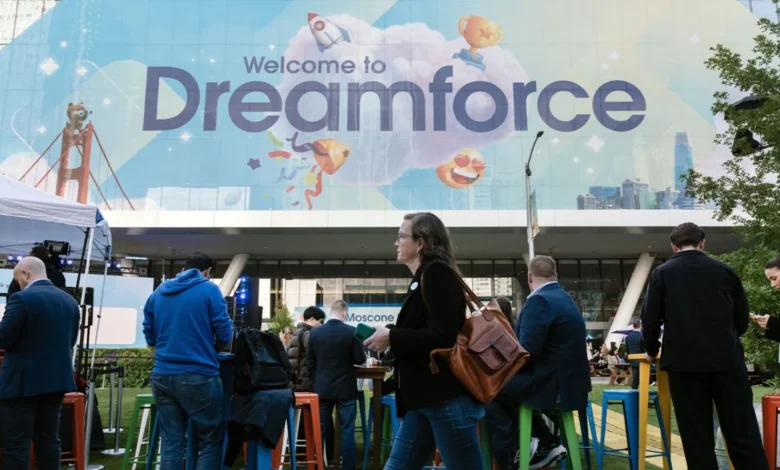
As the technology industry converges on San Francisco for Dreamforce 2026, Salesforce faces a pivotal moment in its three-decade history. The CRM giant is navigating a shifting landscape where the traditional Software-as-a-Service (SaaS) model—the very category Salesforce pioneered—is being challenged by the rapid rise of agentic artificial intelligence. With the event set to kick off next week, all eyes are on how CEO Marc Benioff plans to reconcile the company’s legacy architecture with an era where autonomous agents are increasingly capable of performing complex, multi-step business tasks without human intervention.
The industry has been defined throughout 2026 by a volatile "war of words" regarding the sustainability of SaaS. This narrative gained significant momentum early in the year, following the release of Anthropic’s Claude Cowork, a suite of agents capable of executing workflows across legal, sales, and data analytics sectors. The launch triggered a broad sell-off in software stocks, as investors reacted to the prospect that AI agents might bypass traditional enterprise interfaces, effectively rendering some SaaS platforms redundant. Salesforce, despite its massive market share, was not immune to this market sentiment, forcing the company to shift its strategic messaging from defensive posturing to proactive integration.
A Chronology of the Agentic Shift
The tension between legacy SaaS providers and the new guard of agentic AI began to crystallize in early 2026. The introduction of Claude Cowork served as a catalyst for a market correction, with analysts questioning whether the "SaaSpocalypse"—a term popularized by industry commentators—was an inevitability.
Throughout the spring, Salesforce responded by accelerating its "open ecosystem" strategy. In April 2026, the company introduced "Headless 360," a foundational shift in its architecture designed to decouple CRM business logic from the traditional browser-based UI. This move was a direct acknowledgment that the future of enterprise software lies in API-first accessibility, allowing AI models to interact with Salesforce data directly through Model Context Protocol (MCP) tools and command-line interfaces.
By mid-2026, the partnership with Anthropic reached a new milestone with the announcement of "Claudeforce." This collaboration, which integrates Claude’s reasoning engines directly into the Salesforce infrastructure, signaled that the company had chosen to embrace the "if you can’t beat them, join them" philosophy. Rather than viewing agentic AI as an existential threat, Salesforce has opted to position itself as the primary data and workflow provider for these intelligent entities.
Claudeforce and the Symbiosis of AI and CRM
The integration of Claudeforce represents more than a simple plug-in arrangement; it is a bidirectional data flow. Customers can now deploy Claude-powered agents that operate within the Salesforce ecosystem, but critically, they can also utilize Salesforce-specific plugins within Claude’s environment. This symbiotic relationship is designed to provide agents with the "context" they require to perform accurate, secure, and compliant tasks—a major pain point for enterprises wary of AI hallucination.
Dario Amodei, CEO of Anthropic, is expected to join Marc Benioff on the keynote stage at Dreamforce 2026. This appearance will likely focus on the practical application of the partnership. While Salesforce has already rolled out beta versions of Claudeforce to a select group of enterprise clients, the event will serve as the platform for the first broad-scale unveiling of real-world use cases. Industry observers anticipate demonstrations showing how agents can autonomously manage lead qualification, automate contract negotiations, and synthesize complex datasets from Salesforce records, all while maintaining the stringent security protocols required by Fortune 500 companies.
Slack as the Agentic Operating System
A central pillar of Salesforce’s strategy is the elevation of Slack from a communication tool to an "agentic operating system." Since its acquisition in 2021, Slack has been re-engineered to serve as the intelligent backbone for the company’s AI initiatives. At Dreamforce 2026, the company is expected to demonstrate how Slack functions as the control plane for these autonomous agents.
In this architecture, human users interact with agents within Slack channels, providing a centralized audit trail for every action taken by an AI. This "human-in-the-loop" model addresses a major regulatory concern for enterprises: transparency. By using Slack as the interface for Claudeforce, Salesforce aims to ensure that AI-driven tasks—such as updating a customer record or drafting an invoice—remain visible, controllable, and accountable to the organization. This framing is crucial for Salesforce, as it repositions the platform not just as a repository for data, but as the essential orchestration layer for the future of work.
Market Implications and Future Outlook
The broader implications of this transition are significant. If Salesforce successfully executes this shift, it will redefine the value proposition of CRM software. Instead of selling seats based on user activity, the company may move toward a model where value is derived from the number of successful autonomous agent interactions supported by its infrastructure.
Supporting data from industry analysts suggests that enterprise investment in agentic workflows is expected to grow by over 40% year-over-year through 2027. However, the success of this transition depends on adoption. Salesforce must demonstrate that its platform is not only compatible with Anthropic’s models but also sufficiently flexible to integrate with other LLMs, such as those from OpenAI or Google, to avoid vendor lock-in.
The "Headless 360" initiative will be a key performance indicator during the event. While Claudeforce will dominate the headlines, the underlying architecture that allows businesses to interact with Salesforce data via headless APIs will ultimately determine the company’s long-term relevance. If developers can build custom AI agents that interact with Salesforce’s "intelligent backbone" without relying on the legacy UI, Salesforce will have successfully transitioned from a SaaS company to an AI-infrastructure provider.
The Road Ahead at Dreamforce
As the event commences, the atmosphere will be one of cautious optimism. Salesforce has managed to weather the initial market volatility of 2026 by showing a willingness to iterate rapidly. However, the company faces a skeptical audience of developers and IT decision-makers who are still weighing the risks of agentic AI against the promised productivity gains.
The upcoming sessions at Dreamforce are expected to address three primary concerns: data privacy in an agent-led environment, the reliability of autonomous decision-making, and the total cost of ownership for AI-heavy workflows. If Salesforce can provide clear, verifiable answers to these questions—supported by concrete case studies from the Claudeforce beta program—it will likely solidify its position as a dominant force in the AI era.
Ultimately, Dreamforce 2026 is about survival through adaptation. The transition from a traditional SaaS provider to a leader in agentic AI is not merely a branding exercise; it is an architectural overhaul that requires Salesforce to prove that its data, its security models, and its core platform are the necessary foundation for the next generation of enterprise automation. Whether the company can effectively silence the critics of the "SaaSpocalypse" narrative will depend on the strength of its partnerships and the utility of the agents it brings to market. Following the event, the industry will have a clearer roadmap of whether Salesforce has successfully reinvented itself or if the "death of SaaS" was a harbinger of more fundamental changes in the technology landscape.