Perseverance Rover Uncovers Complex Aqueous History Within Mars Jezero Crater Margin Unit

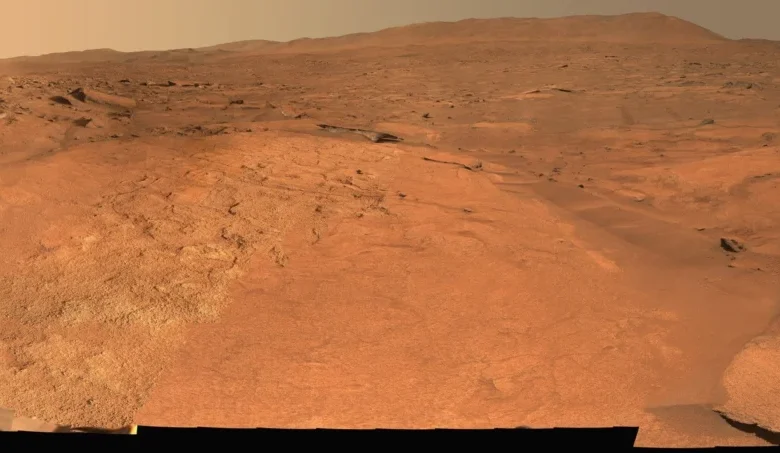
The search for ancient life on Mars has reached a pivotal juncture as NASA’s Perseverance rover provides new evidence that the planet’s geological history is far more dynamic than previously modeled. Tasked with exploring the Jezero Crater—a site long hypothesized to be the floor of an ancient lake—the rover’s recent investigation of the "Margin Unit" has challenged foundational assumptions about the Martian surface. While orbital data originally suggested that the area would be composed of sedimentary deposits ideal for fossil preservation, the rover instead encountered a complex landscape of olivine-rich igneous rock, revealing a sequence of water-rock interactions that occurred in three distinct phases billions of years ago.
A Departure from Orbital Expectations
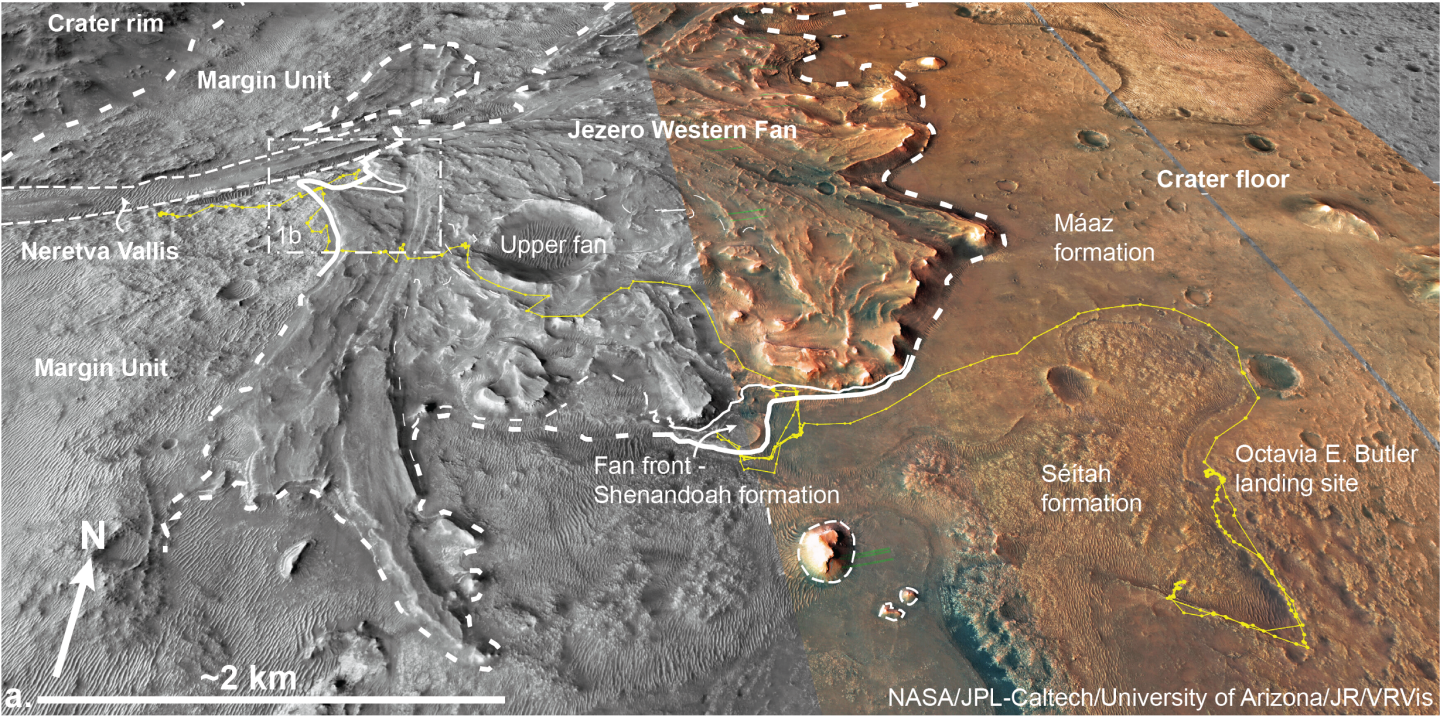
For years, the scientific community relied on high-resolution orbital imagery to plan the Perseverance mission. The Margin Unit, a distinct geological band lining the ancient shoreline of Jezero Crater, was categorized primarily as a sedimentary feature. The working hypothesis suggested that as the ancient lake receded, it would have left behind layers of silt and mud—the types of soft, porous rocks that are globally recognized as the best candidates for trapping and preserving microbial biosignatures.
However, upon reaching the Margin Unit in September 2023, the reality on the ground proved far more intricate. Instead of sand-based sediments, the rover’s SuperCam instrument—which utilizes laser-induced breakdown spectroscopy to analyze mineral composition—identified widespread deposits of igneous rock rich in olivine. On Earth, olivine is a mineral associated with cooling magma or volcanic activity. The presence of this rock type implies that the geological history of the crater is rooted in volcanic processes, which subsequently interacted with water in ways that have profoundly altered the crater’s mineralogy.
Geological Chronology of the Margin Unit
The findings, recently published in the journal Communications Earth & Environment, highlight a sophisticated timeline of water-driven geological change. By analyzing over 185 bedrock targets across the unit, the research team identified a gradient of alteration that correlates with elevation.
At higher altitudes—approximately 2,350 meters above the reference datum—the rocks retain a relatively pristine, slow-cooled igneous texture. These rocks show minimal evidence of interaction with water, serving as a baseline for the region’s original volcanic composition. Conversely, as the rover descended approximately 265 meters toward the elevation of the ancient lakebed, the mineralogical profile shifted dramatically.
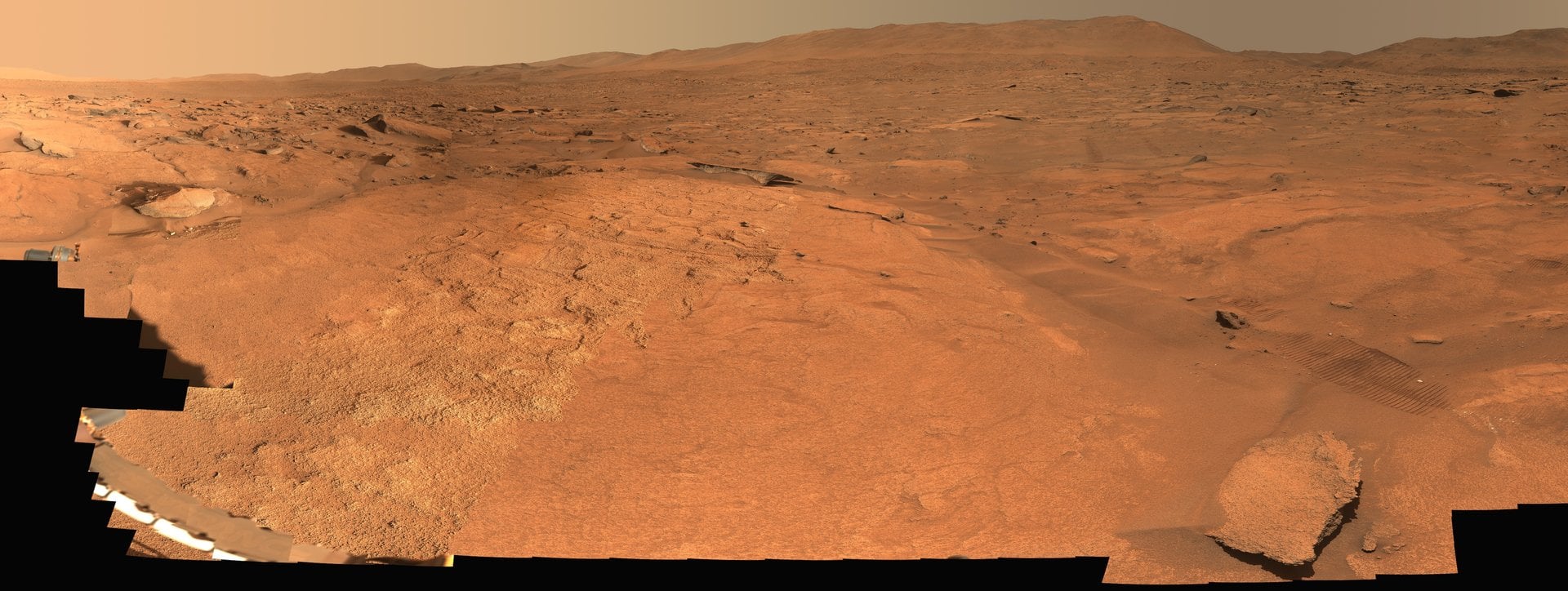
The team has delineated three primary stages of chemical alteration:
- Groundwater Circulation: In the initial phase, neutral to CO2-rich groundwater permeated the bedrock. This fluid reacted with the olivine, triggering a chemical transformation that produced carbonate ridges within existing fractures. As the surrounding, less-resilient volcanic rock eroded over the eons, these harder carbonate structures were left standing, creating the unique topography now observed by the rover.
- Lacustrine Exposure: The second phase involved direct interaction with the paleolake itself or significant shifts in the regional water table. This period resulted in the physical reworking of the rock, fracturing olivine grains and depositing silica in the interstitial spaces. This is particularly evident near the Western fan and the Neretva Vallis, a dried-up river channel that once served as a major artery for water flowing into the crater.
- Hydrothermal Activity: The final stage represents a departure from surface-level water interaction. The rover detected fluorite-bearing, calcium-sulfate veins measuring roughly 25 centimeters in thickness. Fluorite is a signature mineral that typically forms when hot, hydrothermal fluids circulate through volcanic substrates. This discovery suggests that the region was not merely a passive lakebed but a thermally active environment, potentially powered by internal volcanic heat.
The Significance of Mineral Preservation
The discovery of carbonate and silica is of paramount importance to astrobiology. When olivine reacts with water, the process is known to release hydrogen—a key chemical energy source that, on Earth, supports microbial communities in extreme environments. Simultaneously, the byproduct of these reactions, specifically silica and carbonate, acts as a geological "vault."
These minerals are exceptional at entombing organic molecules and biological signatures. By documenting the exact sequences of these mineral formations, researchers are effectively mapping the "habitability timeline" of Jezero Crater. The presence of silica, in particular, is highly correlated with the depth of the water line, suggesting that the most favorable conditions for potential microbial life may have been concentrated in the lower-lying areas of the crater.
Expert Perspectives and Scientific Implications
Candice Bedford, a research scientist at Purdue University and the lead author of the study, noted the irony of the mission’s findings. "Before we arrived at the Margin Unit, the main hypothesis was that the carbonate seen from orbit formed from interaction with the lake that existed in Jezero Crater," Bedford stated in a NASA press release. "But now we know that this location became a sort of crossroads for aqueous systems."
This "crossroads" model changes how planetary scientists view Mars. Jezero Crater is located within one of the largest continuous exposures of carbonate on the Martian surface. Consequently, the mechanisms discovered here are likely representative of a much broader geographical area. The findings suggest that early Mars was not simply a planet with a static lake, but a world with complex, multi-stage water systems that included groundwater, surface water, and hydrothermal activity.
Eleni Ravanis, a planetary scientist at the University of Hawaii at Manoa and co-author of the study, emphasized the specific chemical markers that led to these conclusions. "Turning olivine into carbonate can leave silica behind, and we see more of that silica in rocks that sat below the water line," she explained. This confirmation of silica-rich deposits provides a concrete target for future sample return missions, as these areas are now confirmed to have undergone the exact chemical processes necessary to preserve traces of ancient life.
Broader Impact on Martian Exploration
The discrepancy between orbital remote sensing and in situ rover exploration serves as a reminder of the inherent limitations of planetary science conducted from space. While orbiters provide the necessary scale to identify regions of interest, they often lack the resolution to distinguish between sedimentary deposits and chemically altered igneous bedrock.
The implications for the Mars Sample Return mission are significant. With the Margin Unit now confirmed as a site of complex, multi-stage aqueous activity, the rocks collected by the Perseverance rover become exponentially more valuable. They represent a record of a dynamic, potentially life-supporting environment that persisted through at least three distinct geological epochs.
As the mission progresses, the team plans to use the data from the Margin Unit to recalibrate their search parameters. The goal is no longer just to find a "lake," but to identify specific "hydrothermal crossroads" where the chemical conditions were optimal for life.
"If there is one thing I have learned after 10 years working with Mars rovers, it is that Mars constantly throws surprises at you," Bedford remarked. "It is very rare that things are as we expect them to be from orbital data. I hope this work helps reshape how scientists view the history of water in Jezero Crater and across Mars."
By reconstructing the climate and habitability of early Mars through the lens of these mineral records, the scientific community is moving closer to answering the fundamental question of whether the Red Planet ever hosted life. The Margin Unit stands as a testament to the planet’s hidden complexity, proving that beneath the arid, dusty surface of Mars lies a deep, multifaceted history waiting to be decoded. Through the methodical analysis of minerals, light, and geography, the Perseverance mission continues to turn the pages of a geological chronicle that is billions of years in the making.
Related posts: