Microsoft Named a Leader in the 2026 Gartner Magic Quadrant for Container Management

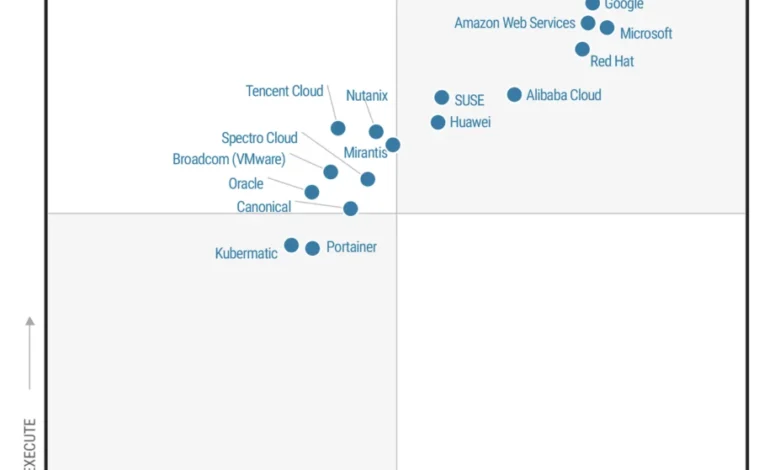
Microsoft has officially been designated a Leader in the 2026 Gartner Magic Quadrant for Container Management, securing a position furthest to the right on the "Completeness of Vision" axis. This recognition highlights the company’s strategic shift toward integrating artificial intelligence (AI) workloads into cloud-native environments without compromising operational stability. As containerization evolves from a niche development tool to the backbone of modern enterprise infrastructure, Microsoft’s portfolio—anchored by Azure Kubernetes Service (AKS), Azure Container Apps, and Azure Arc—has become a focal point for organizations navigating the complexities of hybrid and multi-cloud architectures.
The Evolution of Container Orchestration
The trajectory of container management has shifted dramatically over the past decade. When Kubernetes first emerged from internal Google projects and entered the public domain, the primary objective was the democratization of distributed systems. The goal was to simplify the deployment of reliable services by abstracting the physical hardware from the workload. This design philosophy proved prescient; by decoupling applications from the underlying infrastructure, developers gained the flexibility to run services anywhere.
However, the integration of AI has fundamentally altered these requirements. Modern container platforms are no longer merely orchestration engines; they are now expected to support diverse operating models, sovereign data requirements, and edge computing scenarios. Organizations today require a consistent operating model that can span across public clouds, on-premises data centers, and edge devices without necessitating the costly re-engineering of existing applications. Microsoft’s current strategy is built upon the premise that the platform must provide a unified control plane, regardless of where the data resides or what regulatory environment governs the workload.
Chronology of Azure’s Cloud-Native Growth
Microsoft’s climb to this leadership position is the result of a multi-year investment in open-source and proprietary cloud-native technologies.
- 2014–2016: The early adoption phase saw Microsoft pivot from a Windows-centric server strategy to embracing Linux and open-source standards. The launch of Azure Container Service (ACS) marked the company’s initial entry into the space.
- 2017–2019: With the introduction of Azure Kubernetes Service (AKS), Microsoft standardized its offering, prioritizing compatibility with the Cloud Native Computing Foundation (CNCF) ecosystem.
- 2020–2022: The launch of Azure Arc signaled a major expansion, allowing customers to manage Kubernetes clusters outside of the Azure ecosystem, effectively addressing the "multi-cloud" reality of enterprise IT.
- 2023–2025: The integration of AI-specific tooling, such as GPU scheduling and specialized AI toolchain operators, became the priority. This period saw the launch of Azure Kubernetes Fleet Manager to handle the logistical challenges of managing large-scale, multi-cluster deployments.
- 2026: Recognition in the Gartner Magic Quadrant marks a maturation point, where Microsoft’s platform-as-a-service (PaaS) capabilities are now fully optimized for both traditional microservices and high-compute AI inference.
Supporting Data and Strategic Pillars
The technical infrastructure supporting Microsoft’s position relies on three distinct pillars: consistency, elasticity, and automation.
Data from the CNCF indicates that Microsoft has consistently maintained its status as the second-largest contributor to CNCF projects globally, and the leading cloud provider in terms of open-source contributions over the last three years. This commitment to "upstream" Kubernetes is not merely a philanthropic effort; it is a strategic necessity that prevents proprietary lock-in. By ensuring that APIs remain standard, Microsoft allows developers to migrate workloads between Azure and other environments with minimal friction.
Furthermore, the operational data from current Azure deployments suggests two primary architectural patterns:
- Persistent Serving Layers: Targeted at high-volume, predictable AI workloads where platform teams manage GPU allocation and compliance boundaries.
- Serverless Inference: Utilizing Azure Container Apps to manage sporadic, event-driven AI tasks, which prioritize rapid elasticity and hardware-isolated sandboxes.
Analysis of Operational Implications
As organizations scale their AI initiatives, the number of clusters often grows faster than the human resources available to manage them. This "cluster sprawl" is a critical bottleneck. Industry analysts note that traditional manual operations are insufficient for modern requirements; consequently, the industry is trending toward "agentic operations."

Microsoft is responding to this with the Azure SRE Agent and the AKS MCP (Model Context Protocol) Server. These tools represent a shift toward AI-assisted troubleshooting, where systems perform automated diagnosis and propose remediations based on existing permissions. For an enterprise, this transition is essential: if the goal is to lower the total cost of ownership (TCO) while increasing deployment velocity, the platform must handle the "heavy lifting" of day-to-day maintenance.
The implication for the market is clear: the winners in the container management space will be those who can reduce the cognitive load on platform engineers. By abstracting the complexity of Kubernetes, Microsoft aims to enable application teams to deploy AI models without requiring deep expertise in cluster configuration or infrastructure management.
Official Responses and Customer Perspectives
The recognition by Gartner serves as a validation of Microsoft’s focus on bridging the gap between high-performance computing and developer accessibility. Industry experts have observed that the primary challenge for enterprises is no longer just "getting containers running," but rather managing the lifecycle of these containers across a heterogeneous estate.
Brian Sutliffe, Vice President of Engineering at CallRevu, noted that the platform’s ability to manage GPU resources dynamically has been a key differentiator for their business. "Azure Kubernetes Service gives us the control and cost efficiency we need. We can scale GPU resources based on call volume and test new models without touching production," Sutliffe stated. Such testimonials emphasize the practical utility of the platform in real-world, revenue-generating scenarios.
Future Outlook and Strategic Challenges
While Microsoft currently holds a leadership position, the landscape remains highly competitive. Other cloud providers and independent software vendors are similarly investing in AI-native orchestration. The challenge for Microsoft in the coming years will be to maintain this balance between providing high-level abstractions—like AKS Automatic—and preserving the deep, granular control that power users expect from the Kubernetes API.
The "surface area" of container management continues to expand. With the rise of sovereign clouds and strict data residency requirements, the platform’s role is to provide a consistent policy engine. If an organization must adhere to different regulatory frameworks in Europe, Asia, and North America, the container platform must be able to enforce these policies automatically across all regions.
Ultimately, Microsoft’s recognition in the 2026 Gartner Magic Quadrant for Container Management underscores a broader market trend: the transition from "container management" to "platform engineering." The focus has moved away from the container itself and toward the entire lifecycle of the application—from development and testing to production deployment and AI-driven monitoring. As long as Microsoft continues to anchor its strategy in open-source stability while aggressively automating operational tasks, it is well-positioned to remain a primary facilitator of the global AI transition for enterprise organizations.
The full report, including the detailed analysis of the container management market, is currently available via Gartner for organizations seeking to evaluate their infrastructure strategy for the remainder of the decade.