Lenovo Legion Tab Gen 5 Review: A Nostalgic Concept Hindered by Modern Market Realities

The mobile gaming landscape has shifted dramatically over the last decade, transitioning from simple touch-based interfaces to sophisticated emulation environments that blur the line between tablets and handheld consoles. Lenovo’s latest entry into this niche, the Legion Tab Gen 5, attempts to recapture the spirit of iconic hardware like the Nvidia Shield Tablet while integrating cutting-edge mobile processing power. However, as the device hits the market with an aggressive $900 price point, it faces significant scrutiny regarding its value proposition, software stability, and hardware refinements.

The Evolution of the Small-Form-Factor Gaming Tablet
The history of the "mini" gaming tablet is brief but impactful. In the mid-2010s, the Nvidia Shield Tablet established a template for what an Android-powered portable gaming device should be: a 7-to-8-inch display, front-firing speakers, and a focus on controller-based gameplay. When Nvidia exited the hardware space to pivot toward cloud computing and enterprise AI infrastructure, a vacuum was left in the market.
For years, consumers seeking a compact, high-performance Android device were forced to choose between underpowered budget tablets or oversized flagship models that lacked the ergonomic portability required for handheld gaming. Lenovo’s recent efforts, beginning with the Gen 3 model and culminating in the current Gen 5, represent a targeted attempt to serve this underserved demographic. The Legion Tab Gen 5 features an 8.8-inch, 16:10 aspect ratio display—a form factor that many enthusiasts argue is the "Goldilocks zone" for portable gaming, balancing screen real estate with handheld comfort.

Technical Specifications and Hardware Analysis
At its core, the Legion Tab Gen 5 is powered by the Snapdragon 8 Elite Gen 5 chipset, a processor capable of handling demanding mobile titles and, more importantly, experimental emulation software. Despite the raw power of the silicon, the physical hardware presents a mixed bag of design choices.
The device features an LCD panel with a peak brightness of 600 nits (reaching 800 nits in high-brightness mode). While the display is fast, the absence of an OLED panel—particularly at the $900 price point—has become a significant point of contention for potential buyers. In an era where even mid-range smartphones and handheld consoles, such as the OLED-equipped Steam Deck, utilize superior display technology, the Legion Tab’s reliance on traditional LCD technology results in contrast levels that fail to meet the expectations of premium-tier hardware.

Furthermore, the physical construction includes a pronounced camera bump. While seemingly a minor aesthetic choice, it prevents the tablet from lying flat on surfaces, an inconvenience for users who utilize the tablet with external controllers or stands. The device weighs 360 grams, which, while manageable, contributes to a top-heavy sensation in portrait orientation. Biometric security is limited solely to camera-based face recognition; the lack of a physical fingerprint scanner is a notable omission for a device positioned as a high-end personal gaming machine.
Software Challenges and Optimization Concerns
The most significant barrier to the Legion Tab Gen 5’s success is its software experience. The device operates on a version of Android that appears to suffer from optimization inconsistencies. Users have reported intermittent issues with refresh rate locking, where the display becomes stuck at 60Hz despite user settings intended for higher rates. Additionally, system-level functions such as auto-rotate and wake-on-pickup have exhibited sluggish or erratic behavior.

Beyond performance bugs, the device comes pre-loaded with a suite of third-party applications, including various casual games and productivity tools. For a consumer investing nearly $1,000 into a device, this "bloatware" detracts from the premium experience expected at this price bracket. Furthermore, the update policy for the Gen 5 remains ambiguous, with industry analysts projecting approximately two OS upgrades and four years of security support—a timeframe that trails behind the standards set by competitors like Samsung or Google.
The Emulation Frontier: DroidDeck and Beyond
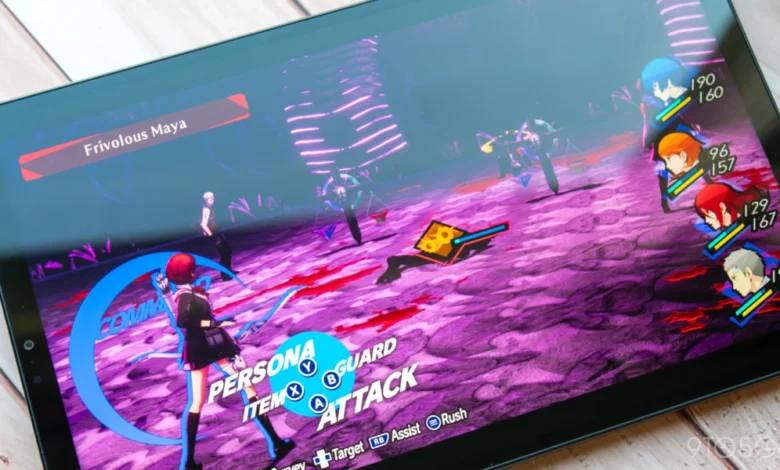
The primary differentiator for the Legion Tab Gen 5 is its potential as an emulation powerhouse. The rise of software suites like DroidDeck has enabled users to run Steam-like interfaces on Android, effectively turning the tablet into a versatile handheld. During testing, the device successfully managed modern titles such as Persona 3 Reload. While the game required low-graphical settings to maintain playability, the fact that a mobile tablet can bridge this performance gap highlights the device’s technical potential.

However, this experience is currently in its infancy. As an emulation device, the Legion Tab Gen 5 is more of an experimental platform than a polished consumer product. Users should expect varying levels of compatibility and performance depending on the specific titles and software environment. While the potential for a "Valve-esque" portable experience is present, it is not yet a turnkey solution for the average gamer.
Market Positioning and Economic Context
When comparing the Legion Tab Gen 5 to its competition, the value proposition weakens. The Apple iPad Mini, while also subject to criticism regarding its pricing and feature set, is significantly cheaper. Even the base-model OLED Steam Deck, which provides a dedicated gaming ecosystem with physical controls and a more robust software library, remains more affordable than the Legion Tab.

Lenovo has attempted to mitigate this by offering periodic discounts, occasionally bringing the price down to $700. Even at this reduced rate, the cost remains $150 higher than the launch price of the previous generation, without offering a transformative leap in hardware capabilities.
Broader Implications for the Tablet Market
The Legion Tab Gen 5 serves as a microcosm of the current state of Android tablets: hardware capable of impressive feats, hindered by inconsistent software and a disconnect between price and consumer value. As manufacturers continue to explore the niche of "gaming tablets," they face the challenge of balancing high-end components with the software polish that consumers demand.

The industry expectation is that the next iteration of the Legion Tab will address the current shortcomings by incorporating an OLED display and more refined software integration. For now, the Gen 5 remains a device primarily for early adopters and enthusiasts who prioritize the specific 8.8-inch form factor over the broader ecosystem benefits of more established competitors.
Conclusion and Future Outlook
The Lenovo Legion Tab Gen 5 is a testament to the potential of portable gaming on Android, but it is currently a product defined by its limitations. While the inclusion of the Snapdragon 8 Elite and the successful execution of high-end emulation projects are commendable, these high points are eclipsed by the high asking price, the absence of an OLED panel, and the unpolished state of the software.

Prospective buyers are advised to exercise caution. While the tablet offers a glimpse into the future of handheld gaming, the current implementation is arguably unfinished. As the software ecosystem for Android-based gaming continues to mature and future hardware cycles introduce more competitive display technology, the market may eventually provide a more compelling, cost-effective alternative. Until then, the Legion Tab Gen 5 serves as a reminder that even with powerful specifications, success in the consumer market requires a cohesive balance of hardware design, software reliability, and aggressive, sensible pricing. The tablet market remains a difficult terrain, and for the Legion Tab to truly stand out, it must offer more than just nostalgia and raw performance.
Related posts: