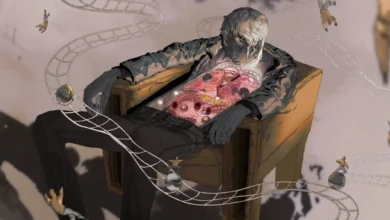
Jagex and Games by Malcs officially announce Melvor Idle 2 as a licensed RuneScape adventure


The landscape of idle gaming is set to undergo a significant shift as Jagex, the developer and publisher behind the long-running MMORPG RuneScape, has formally announced a deepened partnership with independent developer Games by Malcs. This collaboration marks the official transition of the popular spin-off series into a fully branded "RuneScape Adventure" with the upcoming launch of Melvor Idle 2. While the sequel will not take place within the established geography of Gielinor, the game is designed to capture the core mechanical essence of the RuneScape experience—specifically the progression-heavy, numbers-driven loop that has captivated players for over two decades.
A Chronology of the Partnership
The relationship between Jagex and Games by Malcs is not a recent development, but rather the result of a multi-year maturation process. The origins of this synergy can be traced back to 2019, when Melvor Idle first debuted as an independent passion project. Its core premise—distilling the skill-leveling and resource-gathering loops of RuneScape into an idle format—quickly garnered a dedicated following.
In 2021, Jagex recognized the potential of the project and assumed the role of publisher, providing the developer with the infrastructure and reach of a major studio. This move was met with initial scrutiny from parts of the player base, who feared that the influence of a large corporation might introduce aggressive monetization schemes or alter the game’s core identity. However, the subsequent years proved that the partnership allowed for growth and polish without compromising the game’s "pure" idle mechanics.
Following the successful release of the first Melvor Idle and its subsequent expansions, the announcement of a sequel signals a more permanent integration. By officially branding the upcoming title as a "RuneScape Adventure," Jagex is positioning the franchise as a cornerstone of its broader IP portfolio, aiming to capture both legacy RuneScape players and those interested in the burgeoning idle genre.
Core Mechanics and Gameplay Evolution
At its heart, Melvor Idle 2 is built upon the foundational systems that defined its predecessor: combat, resource gathering, and skill progression. Players engage with a system of menus and timers that track the accumulation of experience points across various disciplines—such as Woodcutting, Mining, and Smithing—mirrored after the iconic skill tree of the original RuneScape.
The sequel promises a significant overhaul in both presentation and technical scope. Among the most notable updates is a raised level cap of 120, a significant increase from the standard 99-level ceiling often seen in classic RPGs. This change is intended to provide a deeper "end-game" experience, catering to players who prioritize long-term progression. Furthermore, the game will feature entirely reworked visual assets, moving away from the more rudimentary aesthetic of the original to a more refined, modern interface that retains the nostalgic charm of the series.
Despite these changes, the development team has emphasized that the core "RuneScape feel" remains intact. The game avoids the "active" requirements of a traditional MMO, instead focusing on the satisfaction of optimization. By removing the need for manual interaction, the game highlights the mathematical progression of the genre, allowing players to manage multiple skills simultaneously while managing their character’s equipment and inventory efficiency.

Official Stance on Monetization and Integrity
One of the primary concerns surrounding the announcement of any legacy IP expansion is the potential for intrusive microtransactions. In the modern gaming industry, idle titles are frequently criticized for relying on "pay-to-win" mechanics, where players can purchase speed-ups or currency to bypass the core gameplay loops.
Jagex and Games by Malcs have explicitly addressed these concerns in their official communications. The announcement confirms that Melvor Idle 2 will feature no microtransactions. This is a strategic decision intended to maintain the integrity of the game’s design, ensuring that progression is earned through time and strategy rather than financial expenditure. By committing to this model, the developers aim to preserve the community trust that was built during the life cycle of the first game, where the absence of predatory monetization was a key selling point.
Industry Context and Strategic Implications
The decision to elevate Melvor Idle to a branded "RuneScape Adventure" serves as a case study in how established MMO developers can diversify their offerings. Jagex, having spent years refining the RuneScape brand, is leveraging its intellectual property to enter the idle genre—a segment of the gaming market that is increasingly popular due to its compatibility with mobile devices and the "low-stress" nature of the gameplay.
From an analytical perspective, this partnership offers several strategic advantages for both parties:
- IP Longevity: By creating spin-offs that require less time commitment than the original 20-year-old MMO, Jagex ensures that the RuneScape brand remains relevant to modern audiences who may not have the capacity for high-engagement MMORPG sessions.
- Resource Efficiency: Games by Malcs benefits from Jagex’s publishing expertise, quality assurance resources, and global distribution channels, allowing the independent developer to focus on design while Jagex handles the logistics of a wider launch.
- Genre Expansion: The idle genre is often overlooked by major studios. By bringing a "prestige" name like RuneScape to the genre, Jagex is essentially legitimizing the category and potentially drawing in a demographic of players who prioritize strategic planning over real-time reflexes.
The Challenge of Identity
A curious aspect of this release is the choice to set the game outside of Gielinor, the primary setting of the RuneScape universe. While the game carries the franchise name, it operates as a distinct experience. This creates a unique challenge for the developers: balancing the expectations of players who associate "RuneScape" with specific lore, geography, and characters against the need for a fresh start in a new digital ecosystem.
However, historical data on the first Melvor Idle suggests that players are less concerned with narrative world-building and more concerned with the mechanics of skill progression. The "RuneScape" label acts as a stamp of quality regarding the math and balance of the game, rather than a requirement for a cohesive narrative journey. As long as the feedback loops—the "dopamine hits" of leveling up—remain authentic to the experience players expect, the setting is likely to be secondary to the game’s mechanical efficacy.
Conclusion and Future Outlook
The transition of the Melvor Idle franchise into an officially recognized RuneScape adventure represents a significant milestone for both Jagex and the independent developer, Games by Malcs. By focusing on a "pure" gameplay experience without the interference of modern monetization trends, the studio is betting on the enduring appeal of the RuneScape progression loop.
As the development cycle for Melvor Idle 2 continues, the industry will be watching to see if this model of "independent development supported by major publisher IP" can provide a sustainable blueprint for other studios. For the players, the return to a world of familiar skills, high-level caps, and steady, incremental progress offers a nostalgic yet modernized way to engage with one of the most storied brands in PC gaming history. Whether it succeeds in bringing new fans to the franchise or serves primarily as a comfort for the existing player base, the project remains a notable example of how a decades-old game can successfully adapt to contemporary gaming habits.