Irrigating the Future with Electrolytes: How a Developer Built the Department of Agriculture from Idiocracy Using Sanity and AI Agents

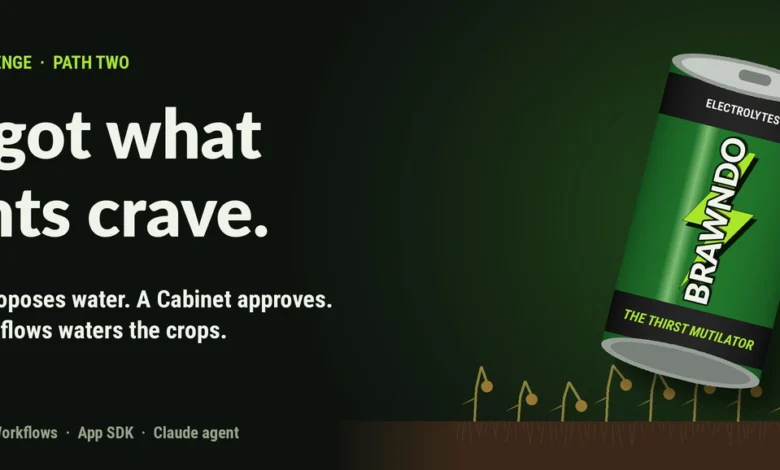
In an inventive demonstration of modern content architecture and automation, a software developer has successfully recreated the satirical Department of Agriculture from the 2006 cult film Idiocracy using the Sanity CMS platform. Submitted as part of the Sanity Challenge under the "Vibe-Code Something Strange" category, the project blends automated AI agent workflows, a human-in-the-loop cabinet approval process, and a deliberately simplified graphical interface to explore how non-technical users interact with complex data stores.
The project highlights the technical capabilities of Sanity Studio 6, Next.js 16 live content integration, and early-access Sanity Workflows. By staging a satirical crisis where crops are exclusively watered with an energy drink called Brawndo ("it’s got electrolytes"), the build investigates how modern content lakes can manage structured logic, multi-user permissions, and automated runtime triggers.
The Architectural Blueprint: One Schema, Two Studios
At the core of the implementation is a single, unified schema deployed across two distinct Sanity Studio workspaces: the "Stock" workspace and the "Kiosk" workspace. Utilizing programmatic schema generation—specifically buildSchema( kiosk: true )—the developer dynamically swaps out standard text and enumerated inputs for oversized picture-buttons. This design directly mirrors the automated hospital kiosks depicted in Idiocracy, tailored for users who struggle with traditional data management interfaces.
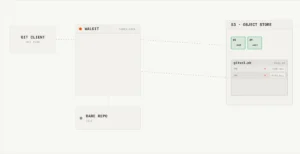
Despite the visual differences, both workspaces share a single underlying dataset (ukyhb6bu, hosted on Sanity’s Growth trial tier). This architecture ensures that all operational changes remain synchronized while offering radically different user experiences. Behind the scenes, content lifecycle management is driven by @sanity/workflow-* (version 0.33.0), which manages state transitions for agricultural proposals without relying on traditional, easily breakable status fields. Instead, the workflow instance itself exists as a distinct Sanity document, maintaining a singular source of truth for every crop cycle.
Chronology of a Crop Cycle: From Petition to Harvest
The system operates through a strictly governed pipeline that dictates the fate of virtual crops. The chronology of a standard run proceeds as follows:
- Petition Submission: An autonomous AI agent—utilizing Claude (claude-opus-5) paired with the
@sanity/workflow-mcptool—acts as the Secretary of the Interior. It drafts and submits a formal proposal to transition field irrigation from Brawndo to water. - Advisory Review: The proposal enters a review queue. A human operator acting as the "Cabinet" accesses the Kiosk interface.
- Approval Execution: Upon clicking the oversized "Approve (water)" picture-button, the workflow advances to the watering stage. Security tests built into the definition prevent the agent from self-approving its own proposals, demonstrating the enforcement of separation of duties.
- Runtime Execution and Growth: A background runtime watcher (
runtime:watch) continuously polls queued effects. Once the approval timestamp is validated, the system triggers the irrigation sequence, transitioning the field status to "growing" and calculating a precise harvest countdown (harvestAt). - Harvest or Dust Bowl: If approved and properly watered, the fields sprout and reach harvest within minutes. Conversely, rejections or failed watering sequences result in a simulated "dust bowl" state.
Comparative Usability Study: AI Agents Versus Traditional Interfaces
To evaluate the practical effectiveness of these interface variations, the developer implemented a rigorous benchmarking protocol. Operating under three distinct conditions—the picture-button Kiosk, the standard stock Sanity Studio, and raw Markdown files managed via GitHub’s web repository—a standardized suite of administrative tasks was timed across multiple iterations.
The evaluation measured performance across three key actions: watering a field, adding a citizen record, and amending an existing proposal. Analysis of the raw telemetry data, processed via Python scripts, revealed clear operational insights regarding interface efficiency.
For the AI agent participant (Claude operating through a browser extension), the stock Sanity Studio proved to be the fastest interface across all evaluated metrics. For instance, executing routine amendments averaged 37.6 seconds in the stock Studio, compared to 41.4 seconds in the Kiosk and 46.2 seconds within GitHub’s Markdown file structure. The discrepancy stemmed from how the automated agent parsed the accessibility tree; giant graphical buttons and subtle radio controls often carried identical textual labels, introducing minor navigational friction in the satirical Kiosk.
However, the contrast between structured content repositories and file-based version control was stark. Traditional Git workflows consistently lagged behind database-driven CMS solutions. Adding a citizen profile via GitHub required manual file creation, precise naming conventions, and hand-coding YAML frontmatter, whereas database-backed environments handled record generation natively.
Technical Implications and Content Lake Mechanics
Beyond its satirical framing, the project offers valuable technical takeaways regarding GROQ query optimization and decentralized state management. Public-facing metrics—such as citizen voting tallies on the companion web application brawndo.gov—are calculated entirely within the Content Lake using native GROQ aggregate functions:
count(*[_type == "vote" && field._ref == ^._id && choice == "water"])This approach offloads arithmetic from the frontend presentation layer (Next.js 16), ensuring that client applications remain lightweight. Furthermore, data integrity is maintained at the database level by constructing deterministic document IDs from combined identifiers, preventing duplicate voting by anonymous participants while preserving privacy.
The implementation also underscores the nuances of Sanity’s security model. While workflow definitions can specify role-based checks (such as requiring a "cabinet" or "secretary" role), Sanity’s content lake ultimately enforces permissions at the dataset access level. Because automated API tokens cannot hold administrative privileges reserved for human users, the architecture successfully enforces a strict sociotechnical boundary: the agent proposes, but only a human user with the appropriate credentials can formally authorize the transition.
Broader Industry Implications
While conceived as a humorous entry for a developer challenge, the "Brawndo Agriculture" project touches on serious themes in modern enterprise software development: the integration of generative AI agents into human approval workflows, the design of zero-training administrative interfaces for non-technical stakeholders, and the performance trade-offs of headless content architecture versus traditional document repositories.
As organizations increasingly adopt AI-driven automation for routine administrative tasks, frameworks that cleanly delineate agentic capabilities from human governance—while maintaining transparent audit trails—will become essential. By demonstrating that complex state machines and multi-workspace schemas can be spun up rapidly within a single development session, the project illustrates the flexibility and extensibility of modern composable content platforms.