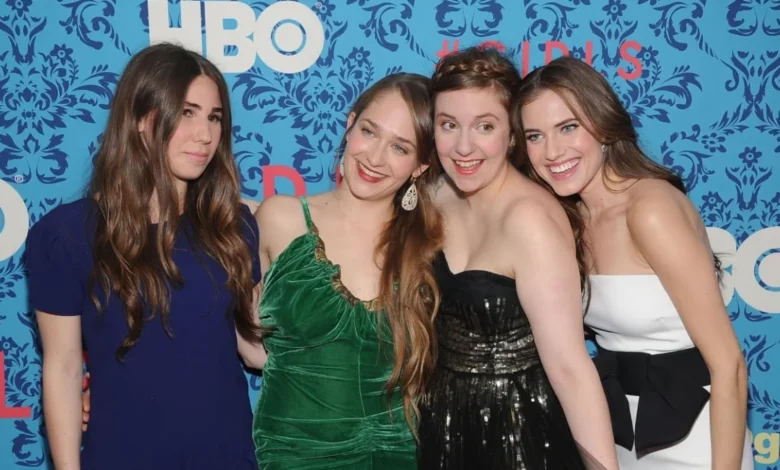
The announcement that HBO will revive the critically acclaimed, generation-defining series Girls for a limited five-episode run has ignited significant discourse regarding the evolution of its central characters. Since the series finale aired in 2017, the cultural landscape of New York City and the broader millennial experience have undergone profound shifts, moving from the pre-social-media-dominance era to a hyper-connected, algorithm-driven reality. As creator Lena Dunham prepares to return to the world of Hannah Horvath, Marnie Michaels, Jessa Johansson, and Shoshanna Shapiro, the production faces the task of reconciling the show’s legacy with the current sociopolitical and economic climate of 2026.
A Legacy of Cultural Turbulence
When Girls premiered in 2012, it served as a polarizing yet essential mirror for a specific subset of the millennial population. It was lauded for its unflinching, often uncomfortable exploration of entitlement, ambition, and the messy transition into adulthood. Over its six-season run, the series documented the professional and personal failures of four women living in Brooklyn, often prioritizing authentic—if flawed—character development over traditional narrative arcs.
Data from the original run indicated that the show consistently drew a niche but highly engaged demographic. According to Nielsen ratings from that period, Girls maintained a steady viewership among adults aged 18-34, a group that was navigating the same economic instability and post-recession anxieties depicted on screen. By the time the final episode, "Goodbye Tour," aired in April 2017, the show had firmly established itself as a cornerstone of the prestige television era, even as it faced ongoing criticism regarding its lack of diversity and its characters’ perceived insularity.
The Chronology of a Revival
The path to the 2026 revival has been characterized by years of speculation. Following the 2017 conclusion, the primary cast members—Lena Dunham, Allison Williams, Jemima Kirke, and Zosia Mamet—pursued diverse individual projects. During the nine-year interim, discussions regarding a potential reunion were frequently stifled by the cast’s evolving career paths.
However, in October 2026, official channels confirmed that HBO had secured the talent for a five-episode limited series. The production timeline, according to industry reports, aims to begin principal photography in early 2027, with a premiere date anticipated for late 2027 or early 2028. This limited scope suggests a narrative focused on a specific "where are they now" snapshot, allowing the writers to explore the characters’ lives in the post-pandemic, AI-integrated world.

Anticipated Narrative Trajectories
The primary challenge for the creative team lies in updating these characters for a 2026 audience. The following narrative touchpoints have been identified as essential for maintaining the show’s hallmark sense of chaotic realism:
The Professional Evolution of the Cast
Shoshanna Shapiro, once the most anxious and impressionable of the quartet, is widely expected to be presented as a fully realized, perhaps hyper-efficient, corporate entity. Her trajectory in the final season hinted at a move into the high-pressure world of marketing and PR, and in the current climate, this would likely translate into the role of a startup founder navigating the complexities of venture capital and the "girlboss" trope.
Conversely, the professional lives of Hannah and Marnie must reflect the precarious nature of the modern creative economy. Hannah’s evolution as a writer in the age of generative AI and short-form video content provides a fertile ground for conflict. Industry analysts note that the shift toward Substack and algorithmic content creation has fundamentally altered the path of the personal essayist, a career path that was central to Hannah’s early narrative.
The Integration of Modern Social Stigma
A recurring theme in the revival discussions is how the characters would interact with contemporary internet subcultures. The potential for Jessa to lean into the "wellness grifter" archetype—a common phenomenon in the post-2020 influencer economy—is high. The proliferation of unregulated wellness retreats and the intersection of alternative medicine with social media marketing provide a logical, if cynical, progression for her character.
Similarly, the inclusion of characters like Patrick Wilson’s "hot doctor," Joshua, serves as a narrative anchor to the show’s early, more grounded roots. His potential reappearance would serve as a barometer for how much—or how little—the women have matured in their approach to romantic attachments.
Economic and Social Implications
The revival of a series that was so tethered to a specific moment in time—the early 2010s Brooklyn aesthetic—requires a nuanced handling of gentrification and cost-of-living crises. The "Girls" of 2012 existed in a version of New York that has since been transformed by record-high rents and the homogenization of retail spaces. A truthful portrayal of their lives in 2026 must acknowledge that the "starving artist" lifestyle is becoming increasingly untenable in the five boroughs.

Official Stance and Production Context
While HBO has remained tight-lipped regarding specific plot details, executives have signaled that the revival will maintain the show’s commitment to "unflinching honesty." Lena Dunham, serving as both showrunner and primary writer, has indicated in previous interviews that she views the characters as a lifelong project. The involvement of the original creative team suggests a desire to maintain continuity, ensuring that the voice of the show remains consistent even as the world around it has radically shifted.
The Role of Supporting Characters
The inclusion of secondary characters is essential to the show’s world-building. Figures like Elijah (Andrew Rannells) provide the necessary levity and social commentary on the changing dynamics of the queer community, while the potential return of characters like Caroline (Gaby Hoffmann) or Laird (Jon Glaser) would offer a look at how the "alternative" lifestyle of the past decade has integrated with modern domesticity.
Analyzing the "Cringe" Factor
A significant hurdle for the revival is the "cringe" factor—a term that has become synonymous with the show’s reception. By 2026 standards, the behavior of the characters is often viewed as peak millennial absurdity. The revival’s success will likely depend on its willingness to lean into this. Rather than attempting to "fix" the characters or make them more likable, the production should explore how the passage of time has made them self-aware, yet ultimately unchanged in their core insecurities.
Impact on Streaming Dynamics
For HBO, the revival serves a dual purpose: it leverages the existing nostalgia for the 2010s to drive engagement among original viewers, and it provides an opportunity to introduce the franchise to a Gen Z audience that may have discovered the series through social media discourse. Data shows that legacy series revivals often provide a significant boost to a platform’s library, as viewers re-watch the original seasons to prepare for the new installments.
As production approaches, the public’s expectations remain high. The core audience is no longer looking for a relatable story about young adulthood; they are looking for a mature, perhaps even cynical, examination of what happens when the "voice of a generation" realizes that their generation has moved on, leaving them to navigate the complexities of middle age in an increasingly fractured society. The five-episode limit provides a tight, controlled environment for this exploration, potentially allowing for a more focused and impactful conclusion than the original series provided.