AI Visionaries at Dreamforce 2026: Nvidia and Anthropic CEOs Debate the Future of Global Technology Infrastructure

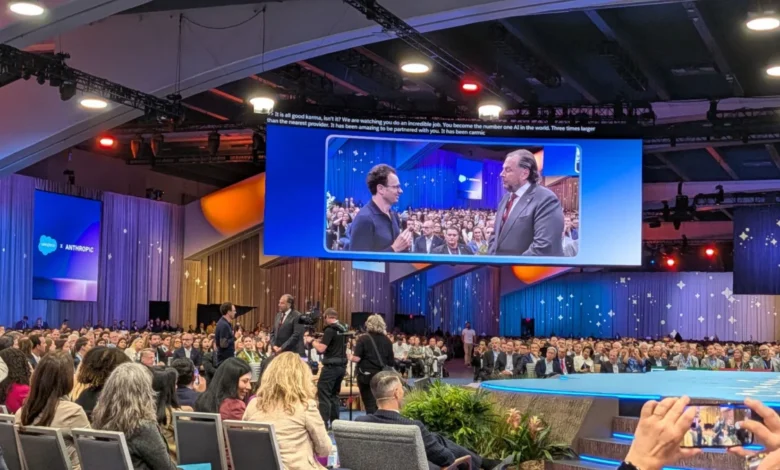
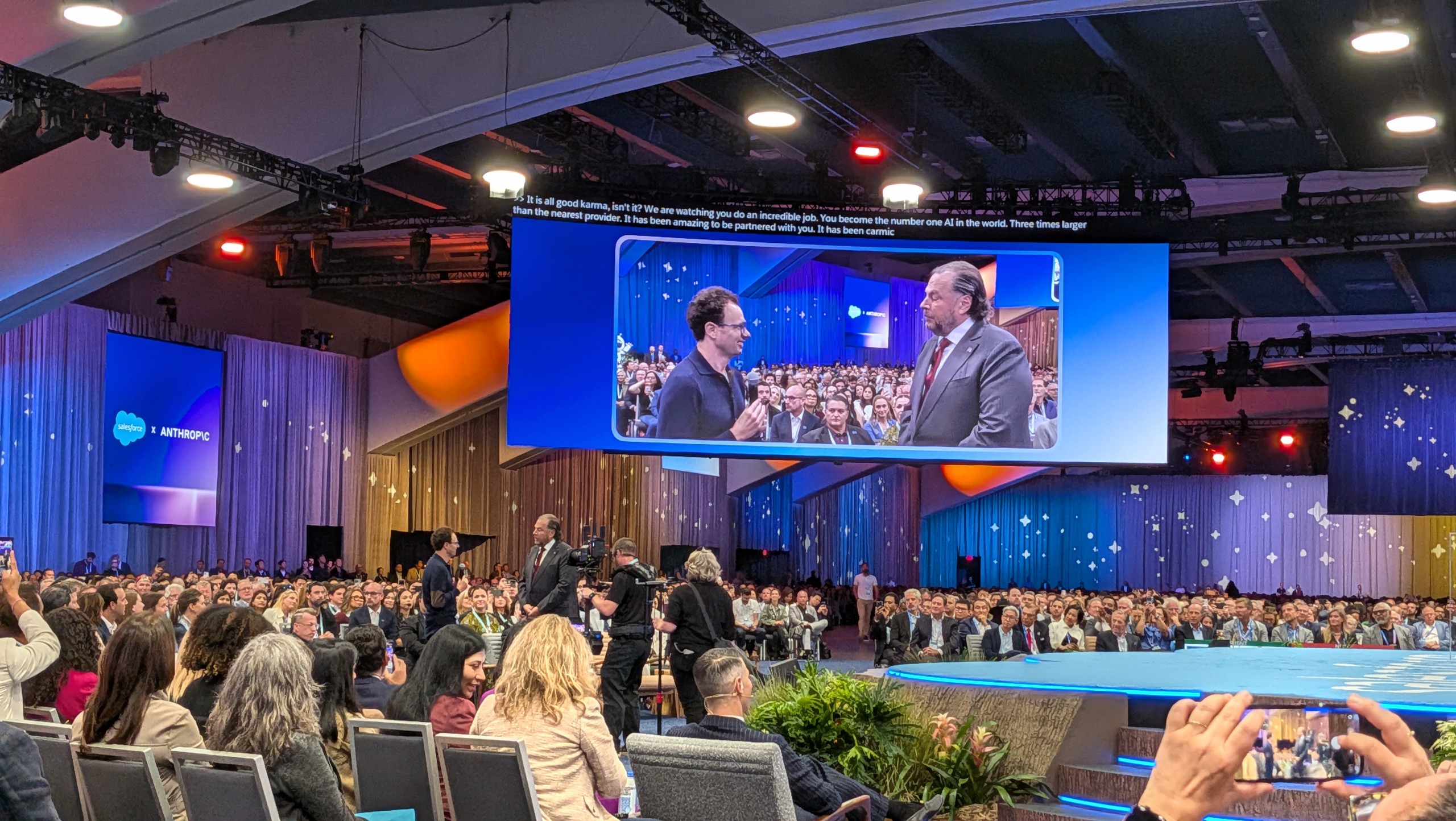
The opening keynote of Dreamforce 2026 in San Francisco served as a critical platform for the industry’s most influential architects to articulate their visions for the next decade of artificial intelligence. Salesforce CEO Marc Benioff moderated a high-stakes discussion featuring Nvidia CEO Jensen Huang and Anthropic CEO Dario Amodei, two figures whose organizations currently define the hardware and software parameters of the AI boom. As the global economy grapples with the transition from experimental AI to ubiquitous enterprise utility, the divergent perspectives offered by Huang and Amodei highlight a growing tension between rapid, aggressive deployment and the necessity of controlled, safety-conscious innovation.
A Convergence of Power: The Dreamforce Context
Dreamforce 2026 has emerged as a landmark event in the technology calendar, marking a period where AI is no longer a peripheral software feature but the core operational layer of the global enterprise. With the recent integration of Anthropic’s Claude models into the Salesforce ecosystem—specifically through the newly launched "Claudeforce" initiative—the stakes for these leaders have never been higher.
The event took place against a backdrop of increasing scrutiny from international regulators. Governments in the European Union, the United States, and Asia are currently drafting comprehensive frameworks to manage AI-driven labor market disruption and data privacy risks. The dialogue between Huang and Amodei offered a glimpse into how the primary suppliers of this technology are attempting to navigate these regulatory winds while maintaining the competitive velocity required by shareholders.
Chronology of the AI Surge: From Research to Revolution
The development of modern generative AI has moved at an unprecedented pace, shifting from academic research to foundational commercial infrastructure in less than a decade. The timeline of this transformation is marked by several key inflection points:
- 2020–2022: The emergence of Large Language Models (LLMs) demonstrated the potential for human-like reasoning and creative generation.
- 2023: The "Year of Adoption," where enterprises began to test AI for internal productivity, customer service, and software coding.
- 2024–2025: The shift toward agentic AI, where systems move beyond passive content generation to active task execution and decision-making.
- 2026: The current era, characterized by the "Industrialization of Intelligence," where AI is integrated into the structural fabric of supply chains, financial markets, and healthcare systems.
During the keynote, Dario Amodei reflected on the early years of Anthropic, noting that even the developers themselves underestimated the speed at which their models would penetrate daily business operations. The rapid scaling of these technologies has outpaced initial economic models, creating a situation where companies are forced to adapt to "AI-first" workflows in real-time.
Divergent Philosophies: Safety as a Constraint or a Process
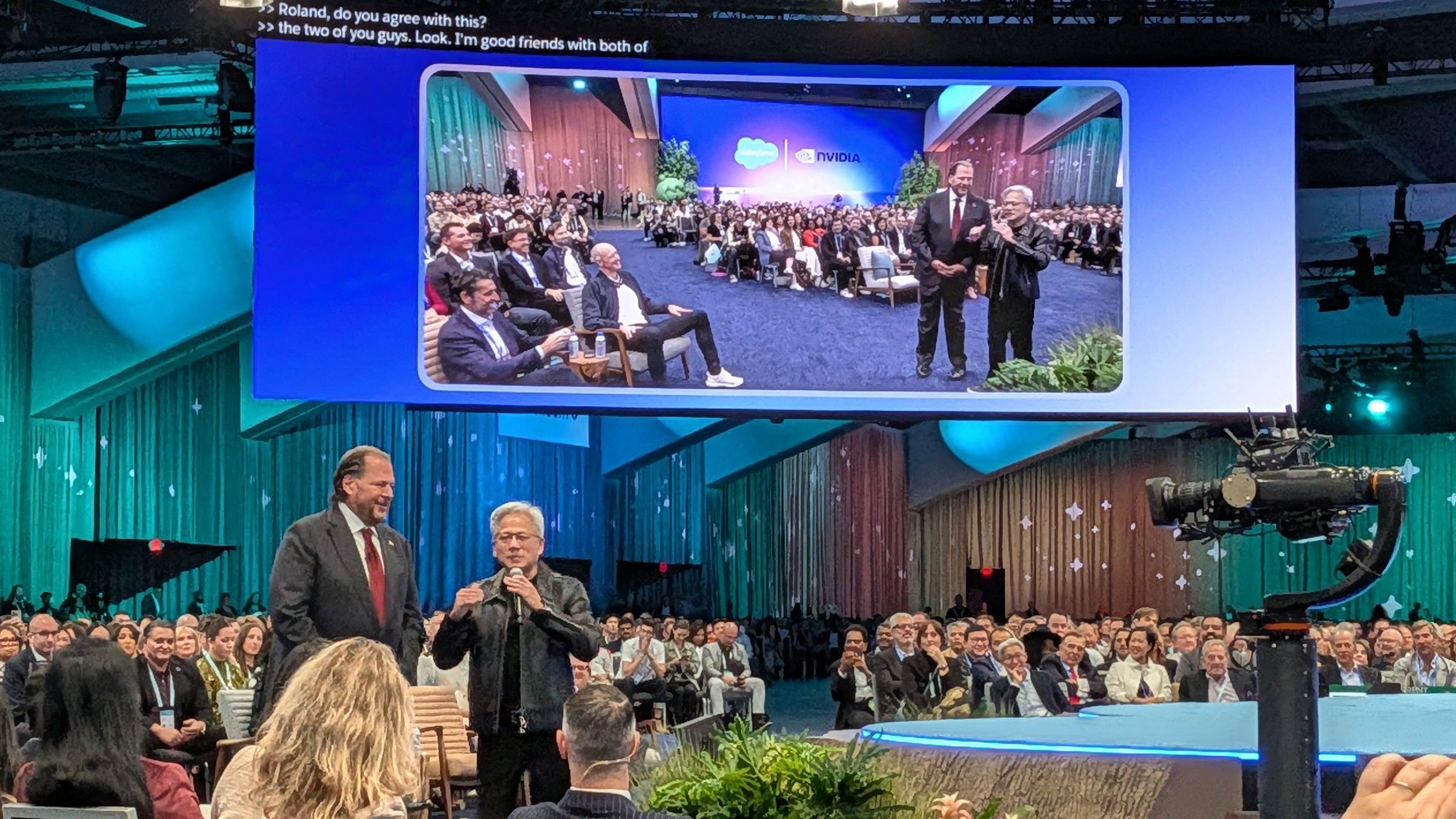
One of the most compelling aspects of the discussion was the philosophical split between Amodei and Huang regarding safety and speed.
Amodei, drawing parallels to the automotive industry, advocated for a standardized, global approach to safety. He argued that just as the motor industry benefited from shared safety standards and regulatory oversight, the AI sector requires a framework that allows companies to learn from collective failures. Amodei’s perspective is rooted in the belief that "everyone can always be better," suggesting that global standards are not merely a compliance burden but a foundational requirement for industry maturity.
Conversely, Jensen Huang, the primary supplier of the high-performance computing hardware fueling these models, framed safety as an engineering challenge rather than a restrictive barrier. Huang’s position is that "speed and safety are not mutually exclusive." He urged practitioners to maintain a "run as fast as you can" mentality, punctuated by strategic pauses only when a specific product or process shows signs of instability. For Huang, the risk of "being left behind" in the current technological revolution carries a greater cost to businesses than the risks associated with rapid iteration.
Data-Driven Realities: The Untapped Potential of Enterprise AI
Both leaders addressed the current state of market penetration. Amodei noted that even if the development of AI were to be frozen at today’s capabilities, the global market is currently utilizing less than 10% of the potential value inherent in existing models. This assessment points to a significant "diffusion gap," where businesses possess the tools to transform their operations but have yet to reconfigure their internal workflows to leverage them effectively.
Supporting data from recent industry reports suggests that while AI adoption rates are high, depth of integration remains shallow. Many companies still treat AI as a "bolt-on" feature for chatbots rather than a fundamental engine for autonomous agents. Huang’s push to "Agentforce every company" is a direct response to this limitation. His vision is for AI to function as an autonomous workforce capable of executing complex multi-step processes, thereby moving the needle from simple data retrieval to active business management.
The Economic Implications of the New Industrial Revolution
The rhetoric used by both CEOs underscores the gravity of the current moment. Huang explicitly described the current period as a "new industrial revolution," a term that is increasingly finding consensus among economists and policymakers. Unlike previous industrial shifts, which focused on physical automation, this revolution is defined by the automation of cognitive labor.
The implications for the workforce are profound. As businesses transition to agentic AI, the demand for traditional clerical and analytical roles is likely to be supplanted by a need for "AI orchestration" skills. Companies that fail to pivot to this new reality risk obsolescence, a point Huang emphasized repeatedly during his walkabout of the keynote stage. He cautioned that if an AI solution does not yield immediate results, the correct response is not to abandon the technology, but to iterate and refine until the implementation matches the organizational requirement.
Regulatory and Ethical Challenges
The tension between Huang’s drive for speed and Amodei’s focus on safety reflects the broader dilemma facing regulators. If governments impose overly stringent restrictions, they risk stifling innovation and ceding technological leadership to jurisdictions with fewer ethical guardrails. However, an unfettered race to deployment creates risks regarding algorithmic bias, hallucinations in critical decision-making, and systemic security vulnerabilities.
The call for "international standards" by Amodei suggests that the industry is aware of the regulatory cliff ahead. By advocating for a collaborative approach to safety, leaders in the space are likely attempting to preempt restrictive national legislation with a form of self-regulation that provides both security and operational flexibility.
Conclusion: The Path Forward
The Dreamforce 2026 keynote underscored a critical reality: the leaders of the AI era are no longer simply selling products; they are shaping the fundamental operating system of the modern economy. While Amodei and Huang differ on the nuances of speed and standard-setting, they are united in the belief that the "sky’s the limit" for AI integration.
For the business community, the message is clear: the transition to an AI-native infrastructure is not a temporary trend but a permanent shift in the global economic paradigm. Whether through the lens of safety-first standardization or rapid, engineering-led iteration, the objective remains the same—to unlock the vast, untapped value of artificial intelligence. As firms continue to integrate platforms like Claudeforce and Agentforce, the focus will likely shift from the raw power of the models to the efficiency and reliability of the agents they power, marking the next phase of this ongoing industrial revolution.