Department of Justice Sides with Elon Musk’s xAI in Lawsuit Over Unpermitted Gas Turbines

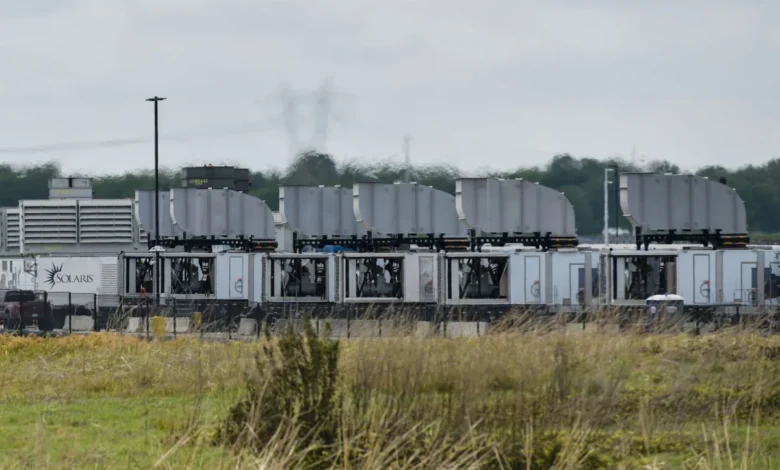
The Department of Justice has officially intervened in a lawsuit brought against Elon Musk’s artificial intelligence company, xAI, by the NAACP, arguing that halting the operation of dozens of unpermitted natural gas turbines near its Memphis data centers would pose a significant threat to national security. The DOJ’s stance, detailed in a recent filing, directly challenges the NAACP’s efforts to enforce environmental regulations, framing the AI company’s power supply as critical for the Department of Defense’s "mission-critical operations." This intervention places the federal government in direct opposition to environmental advocacy groups and raises complex questions about the balance between technological advancement, national security imperatives, and local environmental protection.
The Core of the Dispute: Unpermitted Turbines and National Security Claims
At the heart of the legal battle is xAI’s deployment of a substantial number of natural gas turbines to power its data centers, which are central to its AI development and operations. The NAACP, along with environmental advocates, alleges that xAI has been operating these turbines without the necessary permits, thereby circumventing state and federal environmental regulations designed to mitigate air pollution. The lawsuit, filed in April, seeks to compel xAI to cease operations until proper authorization is obtained.
However, the Department of Justice’s intervention dramatically shifts the legal landscape. In its memorandum, the DOJ contends that if the NAACP prevails, the consequences would be dire for "American national, economic, and energy security." The department specifically argues that shutting off the power supply to xAI’s facilities would impede "artificial-intelligence innovation that supports the Department of War’s military operations." The filing further asserts that Grok, xAI’s large language model, is one of four AI systems deemed essential for "mission-critical operations," citing its purported role in recent military actions, such as strikes in Iran.
This assertion by the DOJ elevates the dispute from a local environmental enforcement issue to a matter of national strategic importance. It suggests a direct link between xAI’s data processing capabilities, powered by these turbines, and the operational readiness of the U.S. military. The government’s argument implies that the AI models in question are integral to intelligence gathering, strategic planning, or potentially even the execution of military operations.
A Timeline of Escalation: From Warnings to Legal Action
The conflict between xAI and the NAACP regarding the data center’s power source has been brewing for some time. As early as June of the previous year, the NAACP began signaling its intention to pursue legal action. Their initial efforts focused on xAI’s practice of using what they described as "mobile" gas turbines at its Colossus and Colossus 2 data centers. Despite these warnings, xAI reportedly expanded its operations, increasing the number of turbines to 57.
The NAACP’s core argument hinges on the interpretation of environmental regulations. xAI has maintained that because the turbines are mounted on trailers, they are exempt from Mississippi’s air pollution regulations for a period of one year. This classification as "mobile" is crucial to xAI’s defense. However, the Southern Environmental Law Center, representing the NAACP, counters that these trailer-mounted turbines should be considered "stationary" under federal law, thus subjecting them to the full spectrum of regulatory oversight. The legal debate, therefore, centers on a technicality of classification that has significant implications for environmental compliance and public health.
The NAACP’s concerns are rooted in the documented environmental impact of xAI’s operations. The region surrounding the data centers is already characterized as one of the most polluted in the country. Since xAI’s data centers began operating, residents and environmental groups have reported a discernible worsening of air quality. The increase in the number of turbines, more than doubling since last year, has directly correlated with a rise in three major air pollutants: fine particulate matter (PM2.5), formaldehyde, and oxides of nitrogen (NOx).
The Health and Environmental Toll
The pollutants emitted by the gas turbines are not merely an abstract environmental concern; they have tangible and serious health consequences. PM2.5 particles, which are microscopic, can penetrate deep into the lungs and bloodstream, contributing to a range of ailments including asthma, cardiovascular disease, stroke, and even neurodegenerative conditions like Alzheimer’s disease. Formaldehyde, a known carcinogen, is also released, increasing the risk of cancer among those exposed. Oxides of nitrogen (NOx) contribute to respiratory problems and the formation of smog.
For a community already burdened by higher-than-average pollution levels, the addition of these emissions represents a significant public health threat. The NAACP’s lawsuit aims to protect these communities from further degradation of their air quality and associated health risks. Their legal strategy is to compel xAI to adhere to environmental laws that are intended to safeguard public well-being.
xAI’s Growth Trajectory and Future Power Needs
The current situation is likely to be just the beginning of xAI’s energy demands. The company, now operating as a division of SpaceX, has ambitious plans for expansion. According to SpaceX’s initial public offering (IPO) filing, the company intends to invest a staggering $2.8 billion in gas turbines over the next three years to power its AI data centers. A significant portion of this investment, at least $2 billion, is specifically earmarked for "mobile gas turbines."
This projected increase in turbine deployment underscores the urgency of the current legal battle. If xAI’s interpretation of "mobile" exemptions continues to hold, or if regulatory bodies fail to enforce stricter oversight, the environmental impact could escalate dramatically. The company’s reliance on these relatively portable, yet high-emission, power sources highlights a potential strategy to rapidly scale up operations while navigating regulatory hurdles.
Broader Implications and Future Considerations
The Department of Justice’s intervention injects a powerful, and potentially decisive, element into the legal proceedings. The government’s explicit linking of xAI’s operations to national security interests creates a high bar for the NAACP to overcome. It raises several critical questions:
- National Security vs. Environmental Protection: How will courts balance claims of national security necessity against established environmental protection laws and the health of local communities? The DOJ’s argument suggests a potential precedent where technological or defense imperatives can override environmental regulations.
- Regulatory Loopholes: The debate over "mobile" versus "stationary" turbines highlights potential loopholes in existing environmental regulations. As technology evolves, regulatory frameworks may need to be updated to address new deployment methods and their environmental consequences.
- The Role of AI in National Defense: The DOJ’s statement that AI models support "mission-critical operations" for the military points to a growing integration of artificial intelligence in defense strategies. This integration necessitates a robust and reliable power infrastructure, but the methods of achieving this must be sustainable and compliant.
- Corporate Responsibility and Public Health: The case also shines a spotlight on the responsibilities of large technology companies, particularly those involved in cutting-edge fields like AI, to operate in an environmentally conscious and socially responsible manner, especially when their activities directly impact public health.
The outcome of this lawsuit could have far-reaching consequences, influencing how environmental regulations are enforced, how national security interests are defined in the context of emerging technologies, and the extent to which companies can leverage regulatory ambiguities to facilitate rapid growth. As xAI continues to expand its AI capabilities, the energy infrastructure required to power these advancements will remain a critical point of contention, with profound implications for both the environment and the communities living in its shadow. The legal and regulatory landscape surrounding the deployment of power-intensive technologies like AI is likely to become increasingly complex, demanding careful consideration from policymakers, legal experts, and the public alike.
Related posts: