AWS Weekly Roundup: Generative AI, Continuum Vulnerability Security, and ECS Gateway Innovations

Amazon Web Services (AWS) has unveiled a sweeping series of product upgrades, enterprise architecture solutions, and security innovations designed to redefine how modern organizations manage code vulnerabilities, container networking, and generative artificial intelligence (AI) deployments. The announcements, rolling out across global data centers and developer environments, arrive amid a rapidly shifting threat landscape where the traditional gap between vulnerability disclosure and malicious exploitation has effectively evaporated.
From cutting-edge advancements in text-to-speech technology tailored for agriculture and remote industries to zero-downtime database and cache migrations for major financial institutions, AWS continues to push the boundaries of cloud computing efficiency. This comprehensive report breaks down the primary product launches, security advisories, machine learning updates, and enterprise migrations shaping the cloud ecosystem this week.
Revolutionizing Vulnerability Management: AWS Continuum and Zero-Day Realities
In the realm of enterprise cybersecurity, the most consequential announcement of the week is the general availability of AWS Continuum, a next-generation security service that fundamentally reframes vulnerability management from a passive reporting mechanism into an active, end-to-end remediation framework.
Traditional vulnerability management typically relies on automated scanners that generate exhaustive lists of CVEs (Common Vulnerabilities and Exposures), leaving security and engineering teams overwhelmed by severity labels and false positives. AWS Continuum takes a radically different approach. By constructing an intricate context graph that maps out code repositories and live AWS environments, the service correlates static code analysis with actual runtime architecture.
When a vulnerability is identified, Continuum assigns a verified evidence level and goes a step further: it reproduces exploitable findings within an isolated sandbox environment using proof-of-concept code. This allows security engineers to observe the tangible risk rather than staring abstractly at a severity score. Furthermore, the service intelligently ranks vulnerabilities based on how closely an active attack path runs to business-critical systems. Once prioritized, Continuum drafts the fix directly as a pull request.
To maintain organizational safety and rigorous compliance standards, AWS has embedded strict control boundaries into the service. Every remediation currently requires explicit human approval; developers must review and merge the pull request. However, AWS has indicated that future iterations will introduce autonomous classes of fixes gated behind configurable confidence thresholds. AWS Continuum is currently available in the US East (N. Virginia) and US West (Oregon) commercial regions.
The Closing Window of Exploitation: MadPot Telemetry and PHP2Shell
The timing of AWS Continuum’s release underscores a chilling new reality in cybersecurity: the traditional patch window measured in days or weeks no longer exists. This shift was starkly illustrated by Amazon Threat Intelligence findings published simultaneously with the Continuum rollout.
Telemetry data captured by AWS MadPot honeypots revealed a PHP2Shell exploitation attempt on October 17. Crucially, this attack occurred four days prior to the public disclosure of CVE-2026-109618 and CVE-2026-109619, which took place on October 21. Even more alarmingly, on the official disclosure day, verified proof-of-concept exploits were actively circulating across hacker forums at approximately 02:00 UTC—roughly twelve hours before the official embargo was lifted at 14:00 UTC.
Security analysts note that these findings carry immediate implications for enterprise incident response and security posture. Organizations can no longer safely time their investigations or patch schedules from the official vulnerability disclosure date. Instead, forensic investigations and defensive patching must be initiated based on the earliest known exploitation telemetry. To assist customers in mitigating these specific threats, AWS simultaneously published comprehensive AWS WAF (Web Application Firewall) mitigations to block incoming PHP2Shell remote code execution (RCE) attempts.

Simplifying Container Architecture with Amazon ECS Gateway
Addressing persistent architectural friction between network administrators and application developers, AWS has officially introduced Amazon ECS Gateway. The service is engineered to split the complex work of exposing containerized microservices across organizational boundaries without sacrificing security or operational velocity.
Historically, exposing container services required close coordination between infrastructure teams managing load balancers, TLS certificates, and security groups, and software teams building the applications. Amazon ECS Gateway decouples these responsibilities cleanly:
- Platform Teams: Define a centralized gateway incorporating the organization’s standardized subnets, security groups, TLS certificates, listener settings, and AWS WAF web ACLs.
- Application Teams: Opt into the gateway effortlessly by appending a simple gateway connector directly to their service definition.
Upon connection, Amazon ECS automatically provisions an ACM (AWS Certificate Manager) certificate, a unique DNS hostname, listener rules, a target group, and a tightly scoped security group that admits incoming traffic exclusively from the Application Load Balancer (ALB).
The economic and operational efficiencies of ECS Gateway are substantial. Up to 25 individual services can seamlessly share a single ALB. Furthermore, ECS handles lifecycle management automatically—provisioning the first ALB upon initial connection and deprecating or removing ALBs when they are no longer utilized. Scalability is built into the core framework: a single gateway can associate with up to 10,000 distinct clusters, with a maximum limit of five gateways per cluster.
Enterprises can adopt the feature incrementally using standard UpdateService commands while legacy load balancers remain fully operational in place. Amazon ECS Gateway is available at no additional charge in all commercial regions where Amazon ECS is supported.
Advancing Generative AI and Machine Learning Infrastructure
Artificial intelligence and machine learning pipelines received significant updates this week, touching hardware acceleration, audio synthesis, model customization, and structured JSON generation.
Amazon Polly Generative Engine Upgrade
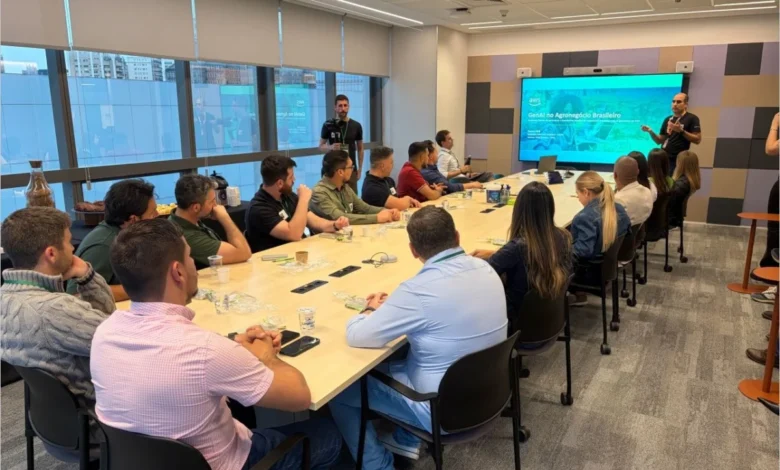
Highlighting the pervasive integration of AI across traditional industries—such as a recent AWS presentation on agribusiness solutions in São Paulo, where drivers and field operators interact primarily through voice interfaces—Amazon Polly has announced a major upgrade to its Generative voice engine. The catalog now encompasses 57 expressive generative voices spanning 11 languages and 25 locales.
The update introduces 14 new voices across 9 locales, marking the general availability of Hindi and Finnish generative voices for the first time. Notably, the expansion includes two native Brazilian Portuguese voices: Leo and Carolina. Designed as a seamless, drop-in upgrade, existing applications retain their current voice names, pricing models, and API endpoints via the standard SynthesizeSpeech call while immediately delivering vastly more natural, human-like inflection and cadence.
TorchNeuron: Native PyTorch Support for AWS Trainium
To combat hardware lock-in and expand machine learning training options, AWS announced the public beta of TorchNeuron. This open-source PyTorch backend enables developers to execute complex neural network models directly on AWS Trainium hardware through a simple configuration modification—changing device placement to .to('neuron')—rather than forcing a complete code rewrite.
Eager execution and torch.compile remain fully intact, and the backend integrates smoothly with the Neuron Kernel Interface for custom operators across Trainium2 and Trainium3 instances. This release aligns with AWS’s broader philosophy that hardware choices should never restrict software innovation, dropping alongside the release of AWS Neuron 2.33.

Customizing Models on Amazon SageMaker AI Without Managing GPUs
Machine learning engineers can now leverage generally available training session APIs on Amazon SageMaker AI. This feature grants granular control over the post-training loop—including custom loss functions and specialized reward signals—while offloading the heavy operational burden of GPU allocation, distributed cluster execution, automatic fault recovery, and checkpoint storage to AWS.
Billing is calculated strictly on the volume of tokens processed, pausing the meter entirely while custom reward functions score a batch. This release also introduces native support for cutting-edge foundational models, including Muse Glimmer, Qwen 3.8, and Ministral 3.
Structured Outputs for Claude on Amazon Bedrock
Enterprise workflow automation received a major boost with the introduction of native structured outputs for all Anthropic Claude models on Amazon Bedrock. Accessible across both bedrock-runtime and bedrock-mantle endpoints, developers can now enforce schema-compliant JSON responses directly from the model without cumbersome custom parsing logic, retry scripts, or complex post-processing layers. This dramatically increases reliability for automated tasks such as extracting line items from complex financial reports, parsing unstructured clinical medical notes, or routing enterprise support tickets by intent.
Enterprise Migration and Cloud Optimization
In addition to security and AI announcements, AWS rolled out significant database migration tools and cost-management analytics.
Zero-Downtime Migration to Amazon ElastiCache Serverless for Valkey
Organizations running self-managed Valkey or Redis OSS deployments on Amazon EC2 can now migrate seamlessly into Amazon ElastiCache Serverless with zero downtime and zero errors returned to clients during the transition. Managed entirely through native AWS tooling without third-party replication software, administrators prepare the migration, initiate real-time data synchronization, and execute manual or automated cutovers cleanly. The feature is available immediately across all commercial, China, and AWS GovCloud (US) regions.
Large-Scale Database Migration: U.S. Bank Case Study
Highlighting the enterprise scalability of AWS database services, public architectural case studies detailed how U.S. Bank successfully migrated four massive Oracle Exadata databases totaling approximately 119 TB to Amazon RDS for Oracle. Utilizing a configuration-driven pipeline powered by Oracle XTTS (Cross Platform Transportable Tablespaces), AWS DataSync, and Amazon EFS, the initial baseline data copy completed in roughly 7 days over a bandwidth-capped Direct Connect link, achieving absolute zero data loss with average cutover times of just four hours per database.
Upcoming Industry Events
As the calendar turns toward the end of the year, cloud professionals are preparing for major industry gatherings. Registration and session catalog reservations are officially open for AWS re:Invent, which will run from November 30 to December 4 in Las Vegas, featuring over 2,200 specialized technical sessions. Meanwhile, the global community circuit will wrap up its 2026 Brazilian season with AWS Community Day Brasil Norte, taking place in Belém on October 31.
As these diverse launches demonstrate, AWS continues to harden enterprise infrastructure against rapid cyber threats while streamlining the developer experience across containers, AI, and hybrid cloud architectures.