Samsung Galaxy S27 camera leaks suggest a polarizing shift in mobile photography strategy for the upcoming flagship lineup

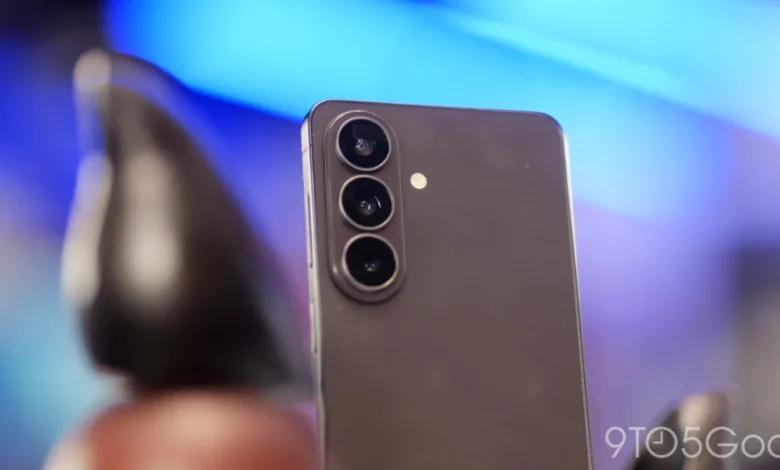
The landscape of mobile photography is bracing for a significant transformation as new reports emerge regarding the sensor configurations for Samsung’s upcoming Galaxy S27 series. According to internal data recently circulated by industry observers and corroborated by technical reports from SammyGuru, the tech giant is currently evaluating a multi-tiered camera strategy that differentiates the standard models from the high-end Pro and Ultra variants. While the Galaxy S27 series remains one of the most anticipated mobile hardware launches of the coming year, the current technical specifications suggest a shift toward hardware consolidation, leaving some industry analysts to question whether the company is prioritizing cost-efficiency over the iterative hardware improvements that flagship consumers typically expect.
The Proposed Camera Architecture
The technical breakdown of the proposed S27 lineup reveals a distinct bifurcation in hardware capability. The base Galaxy S27 and Galaxy S27+ appear to be maintaining a trajectory of incremental updates, if not stagnation, by utilizing primary camera sensors nearly identical to their predecessors. Specifically, these models are expected to feature 50MP main sensors—likely the Sony IMX955 or the Samsung S5KGNG—coupled with a 12MP ultrawide sensor that has remained largely unchanged since the Galaxy S23 era. While the telephoto and selfie hardware are slated for updates, early reports indicate these will not constitute substantial leaps in optical performance or sensor resolution.
In contrast, the premium tier—comprising the Galaxy S27 Pro and the Galaxy S27 Ultra—is slated to receive more aggressive hardware integration. Both devices are rumored to feature a 200MP primary sensor, specifically the Samsung S5KHP6, supported by a 50MP ultrawide shooter. However, the most notable deviation occurs in the telephoto department. The S27 Pro is expected to utilize a 50MP sensor with 3x optical zoom, while the Ultra model will likely push that capability to 5x. Notably absent from this high-end configuration is a secondary telephoto lens, a decision that departs from the multi-zoom versatility that has defined the "Ultra" moniker for the past several years.
A Chronology of Samsung’s Camera Evolution
To understand the weight of these leaks, one must view them through the lens of Samsung’s recent history. Since the introduction of the 200MP sensor in the Galaxy S23 Ultra, Samsung has leaned heavily into "pixel binning" technology—a method of combining data from multiple smaller pixels into one "super pixel" to improve light sensitivity and image detail.
In 2023, the move to 200MP sensors signaled an era of high-resolution focus. However, by 2025, the conversation shifted toward AI-driven computational photography, where the raw sensor hardware began to play a secondary role to the NPU (Neural Processing Unit) and the processing software. The reported decision for the S27 series to maintain specific sensor lineages suggests that Samsung has reached a plateau in raw sensor development, favoring internal stability and supply chain efficiency over the rapid hardware cycles observed in the 2020–2022 period.

This evolution is not happening in a vacuum. Industry trackers such as GalaxyClub and independent researchers like Ice Universe have been monitoring these developments for months. The consensus among these sources is that Samsung is attempting to normalize its camera hardware to better align with production cycles, perhaps in response to the tightening margins seen in the premium smartphone market globally.
Comparative Hardware Analysis
The following table summarizes the technical specifications currently under evaluation for the Galaxy S27 series:
| Model | Main Sensor | Ultrawide | Telephoto | Selfie |
|---|---|---|---|---|
| Galaxy S27 | 50MP (IMX955/S5KGNG) | 12MP (IMX564) | 12MP, 3x (S5K3K1) | 12MP (S5K3LU/IMX874) |
| Galaxy S27+ | 50MP (IMX955/S5KGNG) | 12MP (IMX564) | 12MP, 3x (S5K3K1) | 12MP (S5K3LU/IMX874) |
| Galaxy S27 Pro | 200MP (S5KHP6) | 50MP (S5KJN3/IMX855) | 50MP, 3x (S5KJN3/IMX855) | 16MP (S5K2P5) |
| Galaxy S27 Ultra | 200MP (S5KHP6) | 50MP (S5KJN3/IMX855) | 50MP, 5x (S5KJN3/IMX855) | 16MP (S5K2P5) |
The reliance on the S5KJN3 or the IMX855 sensors for both the ultrawide and telephoto modules on the higher-end models indicates a move toward modularity. By using the same high-performance sensor for different roles, Samsung can potentially streamline its manufacturing and lens-calibration processes. However, this raises questions about the optical optimization for specific focal lengths, as a single sensor type may not be perfectly suited to both wide-angle and telephoto light-gathering requirements.
Market Implications and Competitive Pressure
The broader implications of these findings suggest that Samsung is facing a strategic dilemma. While the company has long been the market leader in Android hardware, competitors—particularly those operating in the Chinese market—have begun to integrate larger physical sensor sizes and variable aperture technology at a faster pace.
Critics argue that by removing the secondary telephoto lens on the Ultra model, Samsung may be losing its competitive edge as the "do-it-all" photography flagship. For power users who rely on the seamless transition between short-range and long-range zoom, the loss of a dedicated intermediate lens could be perceived as a downgrade. Conversely, proponents of this strategy argue that modern 50MP sensors, when paired with high-quality computational cropping, can effectively emulate the focal range of a secondary lens without the physical space requirements of extra glass.
Furthermore, the "RAMageddon" phenomenon—where hardware resources are increasingly diverted to handle complex on-device AI operations—has placed immense pressure on the internal space of smartphones. Every square millimeter of a device’s internal chassis is currently contested between battery capacity, cooling solutions, and camera housing. Samsung’s choice to potentially consolidate its lens array suggests a pragmatic, if not conservative, approach to managing this physical limitation.

The Role of Software and Computational Photography
It is important to note that raw sensor specifications rarely tell the entire story in the modern era of mobile devices. Samsung’s ProVisual Engine and their ongoing integration of generative AI features have shown that software can compensate for hardware limitations. The company’s focus has visibly shifted toward features like "Object Eraser," "Nightography," and advanced AI-upscaling.
If the hardware remains stagnant, the burden of excellence will fall squarely on the software stack. If Samsung’s image processing algorithms do not see a corresponding leap in performance, the lack of hardware innovation may become more apparent to the average user. In recent flagship reviews, it has been noted that while Samsung’s color science and dynamic range are industry-leading, the physical fidelity of the images compared to competitors with larger-format sensors is becoming a point of contention.
Looking Toward the Official Launch
As of now, Samsung has not issued an official statement regarding the camera specifications for the Galaxy S27 series. It is standard practice for the company to maintain a strict "no comment" policy regarding unreleased hardware, and these leaks remain subject to change as the company nears its final mass-production validation phase.
The transition from the S26 to the S27 will be a critical test for Samsung’s leadership in the smartphone sector. With global consumer demand for expensive flagship devices showing signs of saturation, the pressure to deliver a compelling "reason to upgrade" has never been higher. Whether the proposed S27 camera configuration represents a calculated move to optimize performance or a missed opportunity to push the boundaries of mobile imaging remains to be seen. As the industry approaches the next official release window, the focus will likely remain on whether these hardware choices will be validated by superior software performance or if the market will demand a higher standard of physical optical innovation.
In conclusion, the leaked specs for the Galaxy S27 series highlight a company at a crossroads. By balancing the desire for hardware uniformity with the need for competitive differentiation, Samsung is navigating a complex path that will ultimately be decided by how these devices perform in the hands of the public. The shift from "more lenses" to "better-integrated, higher-resolution sensors" is a bold pivot, and it serves as a reminder that in the high-stakes world of flagship smartphones, even the most established players must constantly justify their place at the top.
Related posts: