The Era of Impossible Verification: How AI-Generated Misinformation is Redefining Digital Literacy

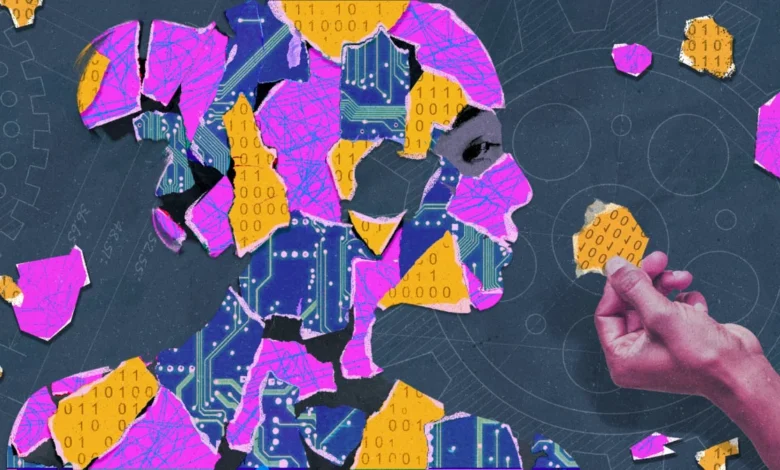
The visual indicators that once betrayed AI-generated content—clunky, multi-fingered hands, distorted facial features, and the unnatural, glossy sheen of skin—are rapidly disappearing. As generative models advance, the "Turing Test" of sight is becoming an unreliable metric for the average internet user. In an age where hyper-realistic fabrications can be generated in seconds, the burden of truth has shifted from visual inspection to critical inquiry. The reality of high-stakes misinformation, from manipulated images of political figures to deceptive deepfakes of local officials, has created a landscape where the human brain, rather than software, must serve as the primary line of defense.
The Evolution of the Digital Hoax
The sophistication of synthetic media has reached a critical inflection point. Historically, users could rely on "tells"—glitches in geometry or texture—to identify synthetic imagery. However, as Marijus Briedis, Chief Technology Officer at NordVPN, notes, these visual artifacts are becoming relics of a bygone era. "Any guide built on visual artifacts has a short shelf life," Briedis warns. "The tells are mostly gone, and whatever replaces them will likely be gone in a year too."
The impact of this technology is no longer confined to trivial pranks. In 2025 alone, digital scams—many bolstered by AI-generated social engineering and deepfakes—resulted in global losses exceeding $148 billion. This figure represents a 25 percent increase over the previous year, highlighting an economic crisis that runs parallel to the erosion of public trust. When an image of a prominent politician or a local official is synthesized to look authentic, the goal is rarely artistic; it is frequently malicious, designed to exploit the cognitive biases of the viewer.
Chronology of a Disinformation Crisis
The current crisis did not emerge overnight, but rather through an incremental escalation of technological capability and social media saturation.
- Early 2024: The proliferation of open-source generative models allowed for the mass production of "AI slop," creating a noise floor of low-quality images that made genuine photography harder to distinguish.
- Late 2024: The refinement of video-generation models began to facilitate the creation of short, out-of-context clips that could be used to manufacture political scandals or social unrest.
- 2025: A record year for synthetic fraud, where the rise of sophisticated voice cloning and video synthesis contributed to a surge in financial and reputational attacks.
- 2026: The current landscape, where high-fidelity deepfakes are regularly used in "ragebait" campaigns to manipulate public sentiment during election cycles and social debates.
These events have forced a reckoning among cybersecurity professionals, who now argue that the focus must move away from the "content" of a post and toward the "context" and "provenance" of its origin.
The Failure of the Visual Turing Test
For years, the public was encouraged to look for the "uncanny valley" in digital images. While reverse image searching on platforms like Google has been a staple of fact-checking, even these tools are losing their efficacy. Sofia Rubinson, senior editor at the misinformation watchdog NewsGuard, highlights a paradoxical development: "Fact-checkers used to depend on traditional search platforms like Google to help research the origins of photos and videos. But we have found that the AI-powered Google Search often misattributes imagery as depicting what misinformers claim."
Because AI-powered search engines are now designed to synthesize information rather than simply indexing it, they can inadvertently reinforce a hoax by generating summaries that treat the fabricated image as a legitimate historical record. This creates a feedback loop where the tools we use to verify reality are becoming the tools that disseminate falsehoods.
Strategies for Digital Resilience
If the eyes can no longer be trusted, and the tools we use to verify images are compromised, the user must adopt a rigorous methodology of verification. Cybersecurity experts like Roei Sherman, senior director of research at Mitiga, suggest a shift in mindset:
- Verification of Source: If an image appears to show a controversial event, seek out the original context. Does this clip appear on reputable news outlets? Is there a full-length interview or speech that provides the necessary context? Manipulation often relies on the "clip-and-context" method, where a snippet of a legitimate video is framed to imply a false reality.
- The Logic Test: Ask, "Is this plausible?" When encountering an image of a public figure in an outrageous or unlikely situation, apply Occam’s Razor. Does it align with the established patterns of their behavior? Often, the sheer intensity of a social media post is a red flag in itself.
- Emotional Monitoring: Misinformation is designed to trigger a visceral, emotional reaction—rage, fear, or moral indignation. If a post causes an immediate, explosive emotional response, it is likely engineered for virality rather than accuracy. "If you see one wild video appearing repeatedly in your feed that seems designed to evoke an emotional response, there is reason to be suspicious," says Rubinson.
Official Responses and the Regulatory Gap
As of 2026, federal regulation regarding synthetic media remains fragmented, often lagging behind the rapid pace of technological innovation. While some states have begun to implement laws regarding the disclosure of AI-generated political content, there is no unified national standard.
In the absence of a federal safety net, the responsibility has fallen to a combination of independent watchdogs and private enterprise. Organizations such as NewsGuard and McAfee have stepped into the void, providing monitors, newsletters, and databases to track and flag known deepfakes. However, these tools are ultimately reactive. They can tell you if an image is a known fake, but they cannot definitively verify that a new image is authentic.
The Broader Implications for Democracy
The proliferation of "AI slop" and synthetic disinformation presents a fundamental challenge to the democratic process. When the public cannot agree on a shared reality—when a photo of a politician or a video of a disaster can be dismissed as "fake" or accepted as "real" based on partisan affiliation—the mechanism of informed public debate begins to fracture.
The danger is not just that people will believe falsehoods, but that they will become so cynical that they cease to believe anything at all. This "liar’s dividend"—a phenomenon where bad actors can dismiss real, incriminating evidence by claiming it is AI-generated—is perhaps the most significant long-term risk.
Conclusion: A New Standard of Digital Literacy
The era of trusting our eyes is effectively over. The future of digital literacy requires a more skeptical, disciplined approach to the media we consume. As Briedis suggests, when something feels "off," it is the prompt to begin a deep investigation, not a signal to share or react.
We must move toward a culture where the provenance of information is as important as the information itself. Cryptographic watermarking and industry-wide content authenticity measures are currently in development, but they are not yet ubiquitous. Until such technology is standard, the most powerful tool remains the human capacity for critical thought. If a piece of content is unverified, the safest and most responsible action is to withhold judgment and, crucially, refrain from spreading it further. In the information age, silence is a tool of truth.