Dataminers Unearth Files Suggesting The Legend of Zelda: Ocarina of Time Remake May Include Master Quest DLC

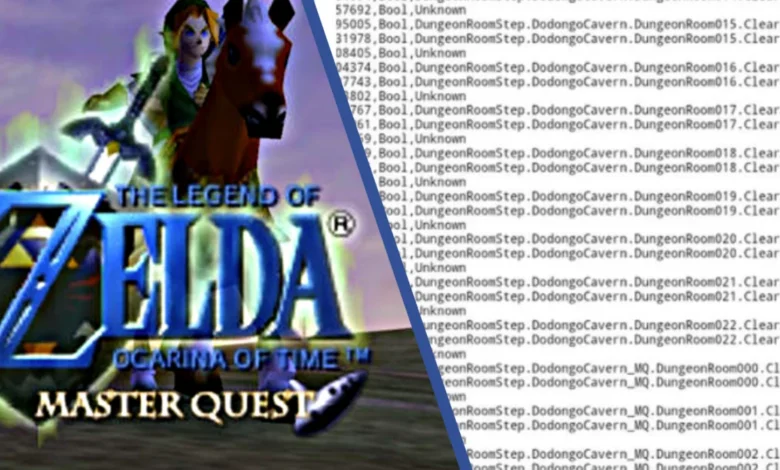
Recent findings by prominent dataminers have revealed compelling evidence within the game files of the newly released Nintendo Switch 2 remake of The Legend of Zelda: Ocarina of Time, suggesting that the notoriously challenging Master Quest mode could soon make a return to the franchise. Fresh off the heels of the critically acclaimed remake’s November 5 launch, community data analysts have begun dissecting the software package, unearthing internal tags, configuration strings, and mode parameters that point directly to expanded post-launch content.
While Nintendo has maintained an official silence regarding post-release support or downloadable content for the title, the digital archaeology performed by data mining specialists has provided a clear window into potential future updates. If the uncovered code translates into a finalized commercial release, players can expect a return of the mirrored-world mechanic, heavily modified dungeon layouts, and significantly elevated difficulty levels that have historically defined the ultimate test for veteran adventurers of Hyrule.
Uncovering the Code: What the Datamine Reveals
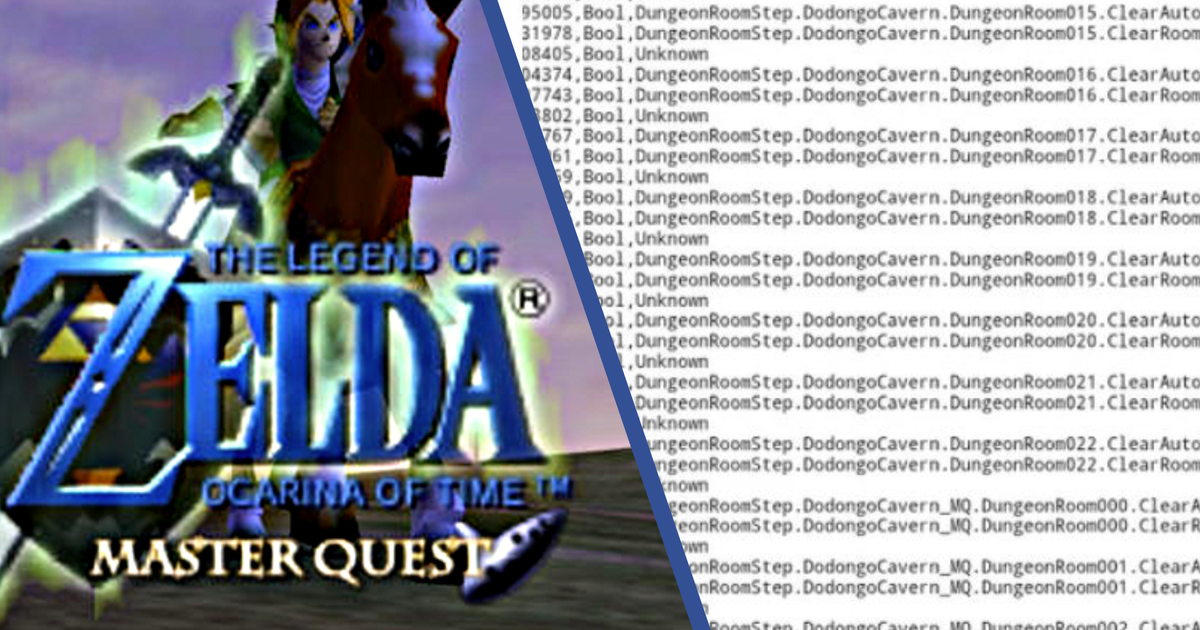
The discovery first came to light when dataminer MrCheeze published a compilation of internal string parameters discovered within the Nintendo Switch 2 remake’s software build. Shared via Bluesky, the cataloged files prominently featured the designation "MQ"—a widely recognized abbreviation for Master Quest—linked directly to iconic, early-game environments such as Dodongo’s Cavern.
Following this initial revelation, industry-focused data analysts expanded the search parameters, unearthing a broader array of functional strings. Among the discovered code variables were explicit commands and tags including "HasMQ", "IsMQModeExist", "NewGameMQ", and "ReleaseMQ". These variables imply not only that asset data for the alternative mode is embedded or partially prepared within the ecosystem, but that the game engine possesses functional parameters designed to toggle, initialize, and govern Master Quest gameplay loops.
Fellow dataminer OatmealDome subsequently corroborated these findings on social media platforms, providing vital architectural context regarding how the mode might eventually be integrated. According to OatmealDome’s analysis of the incomplete data package, access to the Master Quest mode appears tied specifically to ownership of downloadable content (DLC) rather than a baseline title update. Furthermore, early peeks at the modified geometry confirm that the game world will feature a mirrored layout—a staple of the 2011 Nintendo 3DS adaptation—alongside repositioned environmental hazards and restructured dungeon puzzles, famously highlighted by misplaced entities such as livestock roaming the corridors inside Jabu-Jabu’s Belly.
A Chronological Look at Master Quest
To understand the significance of the recent datamine, it is necessary to examine the historical pedigree of The Legend of Zelda: Ocarina of Time Master Quest. Originally conceived under the working title "Ura Zelda," the project was initially intended as an expansion for the original Nintendo 64 64DD (Disk Drive) peripheral, designed to offer upgraded dungeons and remixed challenges following the base game’s launch in 1998. Due to the commercial failure and eventual discontinuation of the 64DD peripheral in Japan, the expansion faced a protracted development cycle and was shelved for several years.
Master Quest eventually materialized in 2002 as a special promotional pre-order bonus disc for Nintendo GameCube owners in Western markets, bundled alongside a port of the original title and an emulation of the even older Zelda classic. This iteration preserved the original’s layout orientation while entirely revamping the interior architecture of dungeons, replacing standard puzzle solutions with obscure triggers, tighter resource management, and intensified combat scenarios.
Nearly a decade later, Nintendo revisited the concept for Grezzo’s 2011 remake, The Legend of Zelda: Ocarina of Time 3D on the Nintendo 3DS handheld system. In that iteration, Master Quest was integrated directly into the cartridge’s core contents, locked behind a completion wall that required players to finish the standard campaign before gaining access. Crucially, the 3DS version introduced a horizontally mirrored world map where left became right, forcing seasoned players to unlearn spatial muscle memory alongside navigating the more punishing dungeon layouts where enemies inflicted double damage.
Industry Context and the Nintendo Switch 2 Launch
The timing of this datamine coincides with the commercial debut of the Ocarina of Time remake on Nintendo’s successor console, the Nintendo Switch 2, which launched globally on November 5. Initial critical reception for the base game has been overwhelmingly positive. Industry reviewers have lauded the release as a technical and artistic triumph, with prominent outlets awarding the title rare, five-star accolades and praising it as an astonishing reimagining of one of gaming’s most influential milestones.

Nintendo’s hardware strategy for the Switch 2 has increasingly embraced modern distribution paradigms, including high-end visual overhauls, dedicated performance targets, and structured post-launch monetization models. The possibility of Master Quest arriving as paid or structured DLC—as opposed to an unlocked unlockable or a free system update—aligns with contemporary publishing trends where premium enhancements and substantial gameplay extensions are often packaged separately from foundational software.
However, industry analysts caution that datamined contents do not constitute an official product confirmation. Software development pipelines frequently leave behind legacy code, orphaned assets, experimental builds, and placeholder scripts that are ultimately abandoned prior to commercial rollout. Because the files identified by MrCheeze and OatmealDome are currently incomplete, it remains entirely unverified whether Nintendo intends to commercialize these assets, release them as a complimentary update, or leave them permanently dormant on the cutting-room floor.
Broader Implications and Future Outlook
The prospect of Master Quest returning to the modern platform carries notable implications for both the retro preservation market and Nintendo’s ongoing content roadmap. For purists and speedrunners, a mirrored world coupled with re-engineered dungeons provides an invaluable layer of replayability that extends the longevity of a single-player adventure far beyond standard completion metrics.
At the same time, the revelation highlights the ongoing cat-and-mouse dynamic between modern software publishers and the datamining community. As games grow increasingly complex and transition across generational hardware architectures, data analysis has become a primary vehicle for early consumer intelligence, frequently pre-empting official corporate marketing schedules by weeks or months.
As consumers and industry observers await an official statement from Nintendo, the burden of proof rests on the publisher to address whether the discovered strings represent an active expansion in development or merely residual code from the remake’s underlying engine architecture. Until an official announcement materializes, the fate of Master Quest on the Nintendo Switch 2 remains an enticing, yet unconfirmed, possibility for fans eager to test their mettle against Hyrule’s ultimate challenge once more.