Nvidia Board Announces Independent Probe After CEO Jensen Huang Admits to Affair Linked to Chinese Espionage Operation

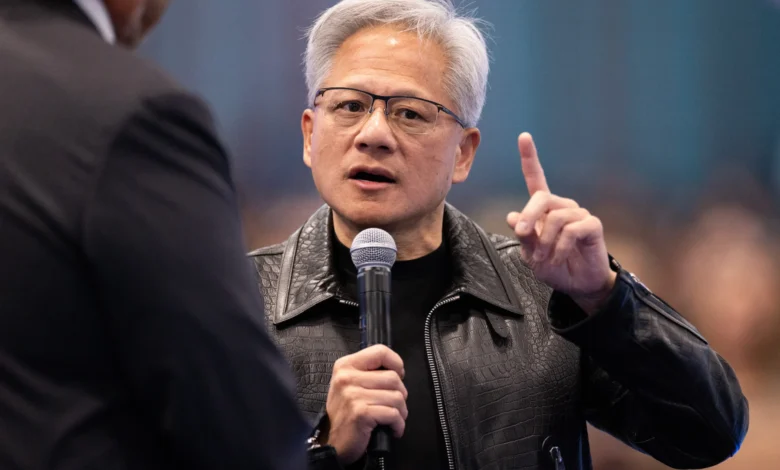
Nvidia’s board of directors announced on Sunday that it has initiated a comprehensive, independent investigation following revelations that Chief Executive Officer Jensen Huang was the target of a sophisticated Chinese intelligence operation. The probe was triggered after reports surfaced detailing an affair between Huang and Alice Huang, a former executive at Singapore-based semiconductor firm Megaspeed, who U.S. intelligence memos claim was recruited by China’s Ministry of State Security.
The unfolding situation places one of the world’s most influential technology leaders at the center of an international espionage inquiry, coinciding with heightened geopolitical tensions between the United States and China over the global supply of advanced artificial intelligence hardware. While Nvidia’s board has maintained that there is currently no evidence of a security breach, the investigation highlights the intense vulnerabilities high-ranking technology executives face as intellectual property becomes a primary battleground in modern statecraft.
Admission of Infidelity and Apology to Stakeholders
The board’s decision to launch an independent review comes directly on the heels of internal disclosures made by Jensen Huang himself. According to reports from Bloomberg and other media outlets, Huang addressed the company through a direct message acknowledging the personal relationship with Alice Huang.
In his communication to the organization, the Nvidia CEO did not mince words regarding his personal failures and their potential fallout for the enterprise.
"I owe my family and all of you an apology," Huang wrote in the message. "I was unfaithful to my wife. My actions hurt her and our children. There is no excuse for what I did. I am deeply sorry."
Beyond expressing remorse for the personal betrayal, Huang addressed the professional ramifications of his conduct, stating that he had "fallen short" of the immense responsibilities tied to running one of the world’s most valuable publicly traded corporations.
"To my colleagues at NVIDIA, including those I have worked alongside for decades, and to our board, partners, and shareholders around the world: you deserve better from me," he added.
The Intelligence Memo and Espionage Allegations
The personal indiscretion rapidly transformed into a matter of national security following the circulation of a U.S. intelligence memo earlier this year. According to findings highlighted by technology publication TechCrunch, national security officials grew concerned that Alice Huang—then an executive at Singapore-based Megaspeed—had been targeted and successfully recruited by China’s Ministry of State Security.
The primary objective of the alleged espionage operation, according to intelligence assessments, was to gain proximity to Jensen Huang to extract sensitive insights, strategic direction, or proprietary data regarding Nvidia’s cutting-edge hardware roadmap.
For months, the intersection of advanced technology and foreign intelligence has alarmed Western governments. Nvidia occupies a uniquely dominant position in the artificial intelligence ecosystem, designing the high-performance graphics processing units (GPUs) that power the vast majority of frontier AI models developed by hyperscalers, research institutions, and foreign competitors alike.
Chronology of Events
To understand how a personal relationship evolved into a corporate governance crisis and an international security concern, it is necessary to examine the timeline of events leading up to the board’s announcement:
- Early 2026 (Intelligence Assessment): U.S. intelligence agencies compile and circulate a memo among policymakers warning that Alice Huang, a former Megaspeed executive, was recruited by Chinese state intelligence to infiltrate or gather intelligence on Nvidia’s CEO.
- September 2026: Jensen Huang meets with political leaders, including U.S. President Donald Trump, to discuss industry growth and regulatory policies, reinforcing his role as a pivotal figure in national economic and technological strategy.
- Late 2026: Media inquiries begin closing in on the personal relationship between Jensen Huang and Alice Huang, prompting internal corporate evaluations.
- November 7, 2026: Public reports detailing the U.S. intelligence memo and the alleged Chinese espionage plot are published by TechCrunch and other outlets.
- November 8, 2026: Bloomberg and secondary news organizations report that Jensen Huang has sent a message to Nvidia employees and stakeholders admitting to the affair.
- November 8-9, 2026: Nvidia’s board of directors formally announces the launch of an independent investigation to review the circumstances surrounding the relationship and verify whether any security protocols were compromised.
Official Responses and Board Stance
In the wake of the public disclosures, Nvidia’s leadership and board of directors have moved swiftly to reassure investors, commercial partners, and regulatory bodies. In its Sunday statement, the board emphasized that an initial assessment has yielded "no reason to believe" that either classified national security information or proprietary company secrets were compromised during the course of the relationship.
Furthermore, the board noted that Jensen Huang "fully supports the review and has committed to cooperating with it" as independent directors, working alongside outside legal counsel, dig into the particulars of the case.
"The board has full confidence in Jensen and his leadership team," the statement read, signaling that the company does not currently intend to force the CEO’s resignation, provided the independent review uncovers no structural compromises or willful negligence regarding corporate security.
Prior to the formal launch of the investigation, Nvidia representatives had minimized the scope of the interaction, asserting to journalists that the personal communications between the two individuals were "not unusual" and reiterating that the chipmaker maintains strict boundaries regarding what information is shared with external parties and international clients.
Geopolitical Context and the U.S.-China Tech War
The timing of the scandal could hardly be more sensitive. For the past several years, Nvidia’s product line—particularly advanced accelerators like the H100, H200, and subsequent architectures—has sat at the absolute epicenter of the technological cold war between Washington and Beijing.
The U.S. Department of Commerce has implemented sweeping export controls designed to starve China’s domestic technology sector of the high-end silicon required to train frontier-scale artificial intelligence models. Jensen Huang has frequently found himself walking a tightrope, navigating stringent American trade restrictions while maintaining business ties within the broader Asian market and engaging directly with U.S. political leadership to shape export policy frameworks.
Given these stakes, foreign intelligence agencies have placed a premium on acquiring human intelligence (HUMINT) within the American semiconductor industry. Gaining access to a chief executive officer provides an asymmetric vector for intelligence gathering, bypassing even the most robust cybersecurity defenses by exploiting personal vulnerabilities.
Broader Industry Implications and Corporate Security
Nvidia is far from the only technology enterprise grappling with the threat of targeted espionage. In the wake of the generative AI boom, which has propelled firms like OpenAI, Microsoft, Google, and Nvidia into positions of unprecedented global influence, corporate security experts have issued stark warnings to employees at all levels.
Intelligence and corporate security agencies have increasingly documented cases where foreign operatives use professional networking platforms, academic conferences, and romantic or sexual pretexts—colloquially known in intelligence circles as "honey traps"—to compromise key personnel holding sensitive access.
Major AI developers have recently stepped up internal training programs, warning staff to remain vigilant against sophisticated social engineering campaigns orchestrated by state-backed actors. The Nvidia incident serves as a glaring proof
-of-concept for these warnings, demonstrating that even the most prominent leaders in the technology sector are susceptible to high-level influence operations.
As the independent investigation moves forward, legal counsel and board-appointed directors will review communications, travel logs, and corporate access records to definitively determine whether any proprietary data leaked during the affair. While the immediate corporate stability of Nvidia appears secure under the board’s vote of confidence, the episode leaves an indelible mark on Jensen Huang’s tenure and underscores the perilous intersection where personal conduct, corporate governance, and great-power competition collide.