Sony Pulls the Plug on Pulse Elevate Wireless Speakers Launch Just Days Before Release Following Unexpected Manufacturing Complications

Sony Interactive Entertainment has announced an indefinite postponement of the PlayStation Pulse Elevate wireless speakers, halting the rollout less than a week before the hardware was scheduled to reach consumers worldwide. The unexpected delay, revealed through an understated update to an official PlayStation Blog post initially published in September 2025, has left early adopters and industry watchers seeking clarity. According to the company, rigorous final-stage quality testing uncovered an undisclosed production issue, forcing executives to hit the brakes on a product that had already moved through the pre-order phase and was tracking toward a November 12 release date.
The abrupt shift in plans highlights the precarious nature of modern consumer electronics manufacturing, where tight production schedules, global supply chain dependencies, and high-stakes quality control standards frequently collide. For Sony, which has steadily expanded its proprietary audio ecosystem to capture the burgeoning desktop and multi-platform gaming market, the delay represents a minor tactical retreat designed to protect the overarching PlayStation brand equity rather than push out a potentially flawed device.
Anatomy of the Delay: What Sony Said and When
The decision to stall the Pulse Elevate rollout came to light on November 6, 2025, when sharp-eyed observers noticed a late-breaking addendum appended to the product’s inaugural announcement page. The statement issued by Sony was concise, offering few granular details regarding the nature of the manufacturing defect, yet firm in its commitment to rectifying the problem before allowing units to ship to retail partners and consumer doorsteps.
"As part of our ongoing quality testing of Pulse Elevate speakers, we have identified a production issue with the product and have made the decision to delay the launch," the official company statement read. "The additional time will allow us to ensure the product will deliver the experience we intended for our players. We apologise for the delay and appreciate your patience and understanding. We look forward to bringing Pulse Elevate to players soon."
At the time of the announcement, the global release was a mere six days away. Pre-orders had been actively processed since mid-September, when Sony first pulled back the curtain on the hardware alongside a broader hardware refresh. Because the sudden postponement caught retailers and consumers off guard, questions immediately surfaced regarding the status of existing financial transactions, pending shipments, and whether pre-order allocations would be honored once a revised launch window is finally established. As of this writing, Sony has not provided a definitive roadmap for refund procedures or a rescheduled release date, promising only to share further updates as internal evaluations progress.
Chronology of the Pulse Elevate Ecosystem
To understand the weight of this eleventh-hour delay, it is necessary to examine the timeline of Sony’s recent hardware pushes within the audio and accessories sector:
- September 24, 2025: Sony formally introduces the Pulse Elevate wireless speakers via the PlayStation Blog, positioning them as the company’s premier desktop audio solution designed specifically for modern gaming setups. Alongside the announcement, pre-orders open globally, and a targeted release date of November 12, 2025, is locked in.
- Late September to October 2025: Pre-order volumes surge as consumers snap up the units, which are priced at £199.99 in the United Kingdom and $219.99 in North America. Regional availability details are clarified, noting that the Midnight Black colorway will enjoy a worldwide rollout while the White variant will be restricted to select territories, including the UK.
- November 6, 2025: Sony quietly updates the original PlayStation Blog post to announce an indefinite delay, citing a newly discovered production issue during late-stage quality assurance checks.
- November 7–12, 2025 (Original Launch Window): The planned global rollout is officially suspended, leaving thousands of pre-order customers in limbo while industrial engineers work to isolate and correct the manufacturing defect.
Hardware Specifications and Market Positioning
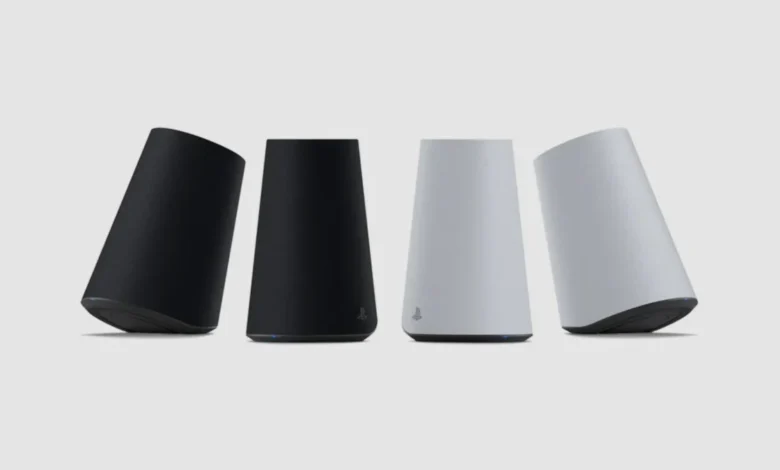
Priced at £199.99 ($219.99), the Pulse Elevate speakers were designed to bridge the gap between console-centric living room setups and dedicated desktop gaming environments. Visually characterized by their distinct conical architecture—featuring two black and two white aesthetic options, subtle blue indicator lights at the base, and prominent PlayStation branding—the speakers were engineered to complement existing ecosystem hardware like the Pulse Elite wireless headset and the Pulse Explore earbuds.
Technologically, the Pulse Elevate hardware relies heavily on PlayStation Link, Sony’s proprietary low-latency lossless wireless audio technology. This protocol allows the speakers to maintain a stable, high-fidelity connection across a broad spectrum of host devices, including the PlayStation 5 console, personal computers running Windows, Apple Mac hardware, and the PlayStation Portal remote player. Furthermore, the hardware supports simultaneous Bluetooth pairing, enabling users to seamlessly mix audio from their gaming rig while handling phone calls or streaming secondary audio sources from a mobile device.
Audio utility is further enhanced by an integrated microphone housed within the right speaker housing. Sony outfitted this microphone with advanced AI-enhanced noise rejection algorithms designed to filter out ambient room noise—such as mechanical keyboard clatter, PC fan whir, and household disturbances—ensuring clear voice communication during competitive multiplayer sessions or voice chat applications like Discord.
Broader Hardware Strategy and Regional Disparities
The Pulse Elevate speakers were not introduced in a vacuum. Their unveiling in September 2025 coincided with a broader hardware diversification strategy by Sony Interactive Entertainment aimed at capturing various niches within the contemporary gaming hardware market. This strategy included announcements such as a specialized 27-inch PlayStation gaming monitor, which drew mixed reactions from the gaming community upon the revelation that its distribution would be strictly limited to the United States and Japan.
This tiered approach to hardware availability has occasionally sparked friction among international consumer bases. While the Midnight Black version of the Pulse Elevate was slated for ubiquitous global distribution, the White variant faced regional restrictions akin to the company’s monitor rollout. Such logistical frameworks underscore the complex supply chain orchestration required by multinational hardware manufacturers, where component sourcing, regional compliance testing, and localized distribution networks must operate in precise synchronization.
When a production issue arises at this late stage, it typically points to one of several systemic manufacturing complications: sub-component failure within the proprietary PlayStation Link wireless transceiver chips, acoustic calibration anomalies discovered during mass-production batch sampling, or structural defects within the plastic injection-molding process of the conical chassis. Regardless of the exact engineering hurdle, Sony’s decision to halt distribution demonstrates a risk-averse posture designed to avoid the costly logistics of post-launch firmware patches, large-scale hardware recalls, and the erosion of consumer trust.
Industry Implications and Consumer Impact
The indefinite delay of the Pulse Elevate speakers sends a clear, if cautionary, message to the broader consumer electronics landscape. In an era where consumers have grown accustomed to day-one patches and iterative software updates designed to fix incomplete products, hardware launches remain uniquely unforgiving. Once physical units are manufactured, packaged, and shipped to global distribution centers, rectifying structural or component-level flaws becomes exponentially more expensive and logistically challenging.
By intercepting the defective batch prior to consumer delivery, Sony has absorbed an immediate operational headache—and likely considerable financial friction—to preserve its reputation for hardware reliability. For the end-user, however, the indefinite timeline is an exercise in frustration. Many consumers who structured their desktop setups, cable management, and audio routing around the impending arrival of the Pulse Elevate must now either pivot to third-party alternatives or wait indefinitely for Sony to clear its manufacturing hurdles.
As analysts monitor the situation, attention will turn toward how Sony handles customer communications regarding the trapped pre-order capital and whether a revised launch window can be established before the critical year-end holiday shopping rush closes. For now, the conical desktop speakers remain locked inside Sony’s manufacturing pipeline, serving as a reminder that even the world’s largest entertainment conglomerates remain susceptible to the unpredictable realities of industrial production.
Related posts: