M5 MacBook Pro vs Microsoft Surface Laptop Ultra: A Comprehensive Performance and Portability Showdown

The professional laptop market has reached a new threshold of capability in 2026, characterized by the emergence of high-performance silicon and specialized AI-processing hardware. For enterprise users, developers, and creative professionals, the choice between the M5 MacBook Pro and the Microsoft Surface Laptop Ultra has become a defining decision for their 2026 hardware refresh cycles. While Apple continues to refine its proprietary M-series architecture, Microsoft’s latest foray into the premium space with the Surface Laptop Ultra, powered by the Nvidia RTX Spark chipset, represents a significant departure from standard x86 architectures. This analysis evaluates the technical divergence between these two flagship machines, assessing their performance benchmarks, design philosophies, and practical implications for the modern mobile workforce.
The Evolution of Mobile Silicon: A Historical Context
To understand the current landscape, one must look back at the shift that occurred in late 2020, when Apple began its transition away from Intel chips to its own Apple Silicon. The M-series chips were designed with a focus on unified memory architecture and power efficiency. By 2026, the M5 chip represents the fifth iteration of this strategy, prioritizing thermal management and battery longevity.
Conversely, the Microsoft Surface Laptop Ultra enters a market where Windows-based devices are under pressure to match the "all-day" battery performance that users have come to expect from Apple devices. The inclusion of the Nvidia RTX Spark N1x chipset in the Surface Laptop Ultra is a strategic move to integrate high-end, on-device AI capabilities directly into a portable form factor. This pivot is part of a broader industry trend where laptop manufacturers are moving away from general-purpose CPUs toward specialized Neural Processing Units (NPUs) and high-performance GPUs capable of running Large Language Models (LLMs) locally without cloud latency.
Design Philosophy and Portability Constraints
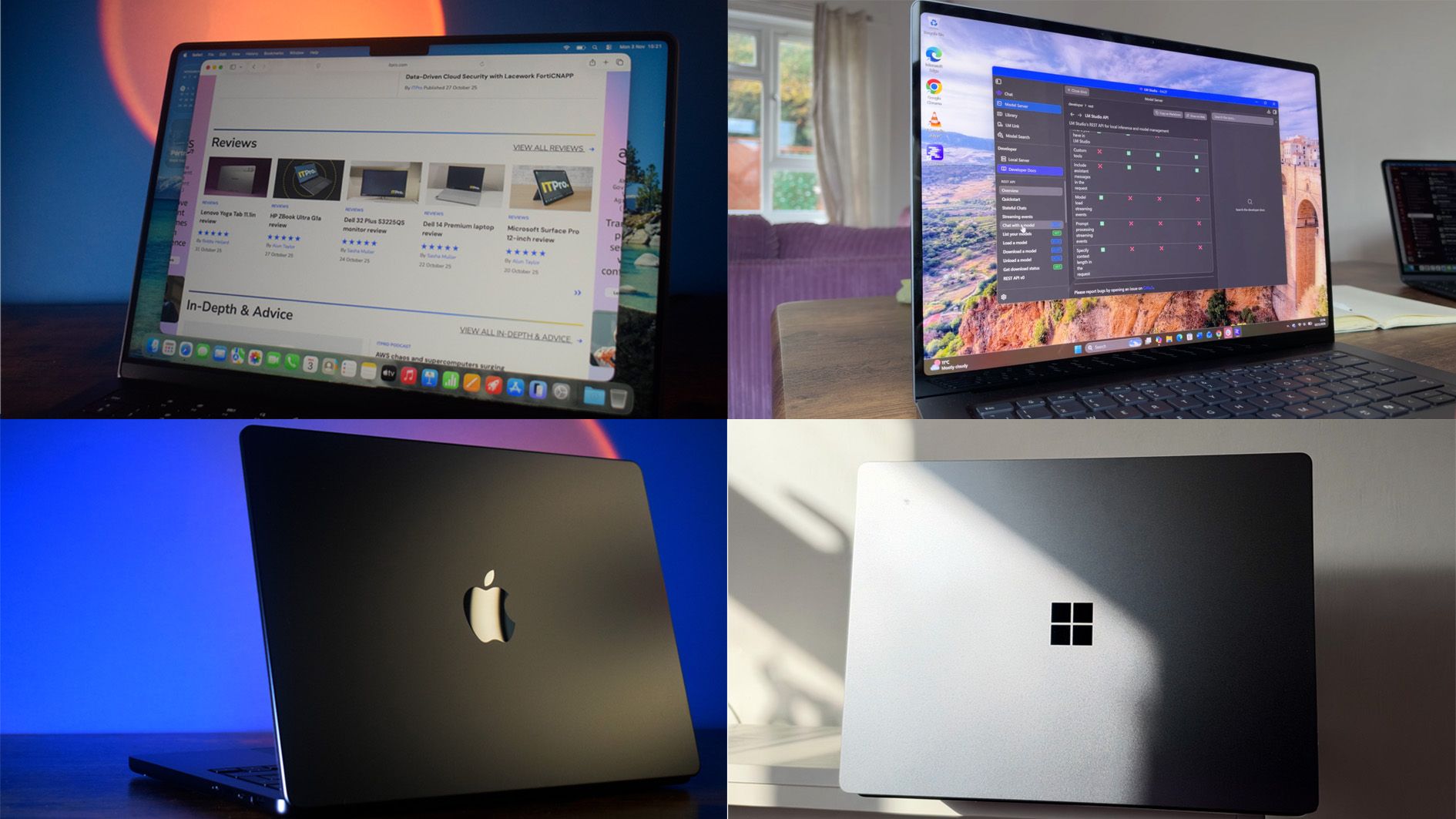
Physical form factor remains a primary differentiator between these two devices. The M5 MacBook Pro continues Apple’s design language, emphasizing a slim, unibody aluminum chassis that weighs approximately 1.55kg. This weight profile is achieved through a meticulous integration of components, allowing for a 14-inch model that is only 15.5mm thick.
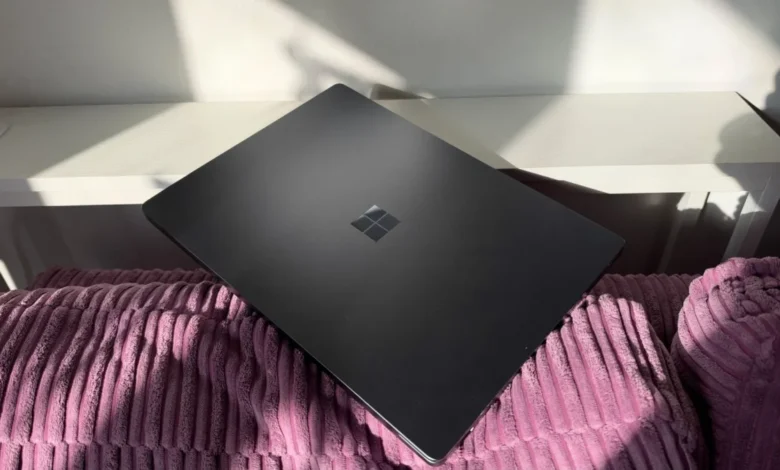
In contrast, the Microsoft Surface Laptop Ultra adopts a more utilitarian approach to accommodate its heavy-duty cooling and graphical requirements. Weighing in at 2kg and measuring 19.16mm in thickness, the Surface Laptop Ultra is noticeably denser. This weight penalty is not merely an aesthetic choice; it is a necessity driven by the thermal demands of the RTX Spark hardware.
For the mobile professional, the distinction is tangible. During daily commutes or frequent travel between office locations, the 450g weight difference—roughly equivalent to the weight of a standard tablet—becomes a significant factor. However, the Surface Laptop Ultra justifies its bulk through its connectivity suite. It provides a robust array of ports, including three USB-C slots, a traditional USB-A 3.1 port, an HDMI 2.1b output, and an SD card reader. Apple, while offering Thunderbolt 4 connectivity, requires users to rely on dongles for legacy USB-A support, maintaining a minimalist aesthetic at the expense of absolute physical versatility.
Comparative Benchmarking and Performance Analysis
Performance metrics derived from standardized testing environments, such as Geekbench 6, highlight the divergent strengths of the two architectures. The Apple M5, with its 10-core CPU architecture, demonstrates superior single-core performance, scoring 4248. This architecture benefits applications that rely on rapid, bursty tasks—common in web browsing, document creation, and interface responsiveness.
The Surface Laptop Ultra, however, takes the lead in multi-threaded throughput. With its 20-core Nvidia RTX Spark processor, it records a multi-core score of 18,771 compared to the MacBook’s 17,600. For developers compiling large codebases or data scientists running parallelized simulations, the Surface Laptop Ultra offers a measurable advantage in raw computational throughput.
The most critical performance differentiator lies in the GPU capabilities. The Surface Laptop Ultra’s integration of the Nvidia Blackwell RTX 5120-core GPU allows for superior on-device AI processing. This is a crucial feature for the 2026 enterprise environment, where data privacy regulations often necessitate that sensitive AI models be processed locally rather than on public cloud servers. While the M5 MacBook Pro is a powerhouse for traditional creative tasks, the Surface Laptop Ultra is positioned as a specialized tool for AI-driven workflows.
Display Technology and Color Accuracy
Both devices feature high-refresh-rate displays, but they cater to slightly different professional needs. The 14-inch Liquid Retina XDR display on the MacBook Pro remains the gold standard for color-critical work, boasting 99.7% sRGB coverage and an impressive 85.8% Adobe RGB rating. This makes the MacBook the preferred choice for print-grade color work and professional photo editing.
The Surface Laptop Ultra utilizes a 15-inch PixelSense touchscreen with a 3270 x 2180 resolution. While its 94.7% sRGB coverage is excellent for most professional applications, its 65.6% Adobe RGB rating suggests that it is better suited for general productivity and AI-augmented creative tasks rather than high-end color-grading work. The addition of touch functionality on the Surface provides an interactive layer that Apple continues to omit from its professional laptop lineup.
Battery Longevity: The Defining Gap
The most stark divergence occurs in power management. In standardized testing—involving a 170cd/m2 brightness loop in airplane mode—the M5 MacBook Pro achieved an industry-leading 20 hours and 32 minutes of playback. This longevity is the hallmark of Apple’s unified memory and power efficiency optimizations.
The Surface Laptop Ultra, hindered by the power-hungry nature of its RTX Spark chipset, managed 12 hours and 41 minutes. When users engage the HDR display capabilities, this runtime drops further to under 10 hours. For the remote worker who frequently finds themselves away from a power outlet, the MacBook Pro remains the undisputed champion. The Surface, while capable, requires a more disciplined approach to power management and, in many scenarios, necessitates carrying a charger for a full day of intensive use.

Broader Implications for the Enterprise
The competition between the M5 MacBook Pro and the Surface Laptop Ultra reflects a broader shift in how hardware is procured by enterprise IT departments. Traditionally, the choice was dictated by the operating system—Windows for compatibility, macOS for creative workflows. Today, the choice is increasingly dictated by the workload.
Industry analysts note that companies are beginning to adopt a "hybrid fleet" strategy. Creative and design departments are increasingly standardizing on the M5 MacBook Pro due to its color-accurate displays and exceptional battery life. Meanwhile, software engineering and data science teams are opting for the Surface Laptop Ultra, leveraging its multi-threaded performance and specialized AI silicon for local development environments.
Microsoft’s commitment to the RTX Spark platform signals that the company intends to keep Windows relevant in the era of decentralized AI. By bringing powerful, on-device AI to the laptop, Microsoft is effectively creating a new class of workstation that bridges the gap between high-end desktops and traditional laptops. Apple’s response, centered on the M5, continues to favor the "platform approach," where the hardware, software, and silicon are optimized in perfect harmony to provide a seamless, if somewhat restricted, user experience.
Conclusion: Making the Strategic Choice
The decision between these two machines ultimately rests on the user’s specific professional priorities. If the primary requirements are portability, battery endurance, and high-fidelity display work, the M5 MacBook Pro is the clear choice. It is a refined, mature product that excels in its primary use cases.
Conversely, for those whose work is defined by intense multi-threaded computation, local AI model development, or the need for a wider range of native connectivity, the Surface Laptop Ultra offers a compelling value proposition. While it sacrifices portability and battery life, it provides the computational headroom necessary for the next generation of enterprise AI applications. As 2026 progresses, the market will likely see further iteration, but for now, these two devices define the peak of their respective technological philosophies.