Amazon S3 Storage and Advanced Analytics Capabilities Arrive on Vercel Marketplace and v0

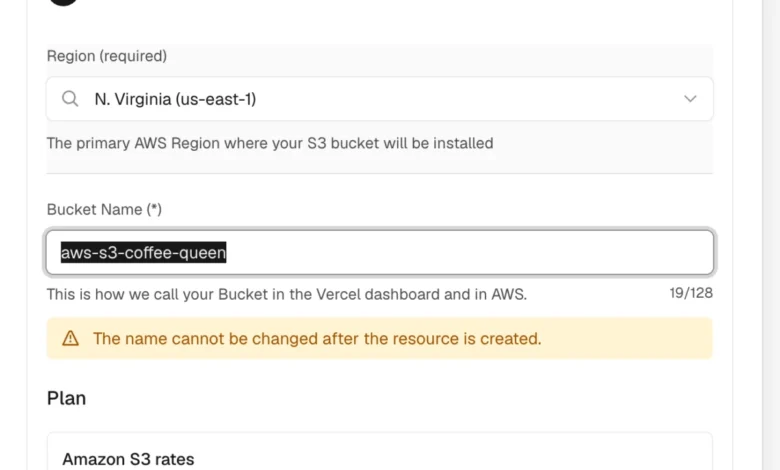
The modern paradigm of web and artificial intelligence application development reached a significant milestone today as Vercel and Amazon Web Services (AWS) announced the native integration of Amazon Simple Storage Service (Amazon S3) directly into the Vercel Marketplace and v0 by Vercel. This integration bridges the gap between Vercel’s streamlined, frontend-focused deployment workflows and the robust, scalable, and durable object storage infrastructure of AWS. Developers can now provision everyday object storage, high-performance analytics tables, and specialized vector databases without leaving the Vercel ecosystem, drastically reducing the friction historically associated with multi-cloud or hybrid infrastructure management.
Evolution of the Vercel-AWS Partnership and Background Context
Historically, building performant full-stack applications required developers to manage distinct provisioning workflows across multiple disconnected platforms. While Vercel revolutionized web deployments with its git-centric, serverless architecture optimized for frameworks like Next.js, integrating foundational backend services such as database management, authentication, and object storage often mandated manual configuration within the AWS Management Console. Developers had to meticulously set up Identity and Access Management (IAM) policies, configure cross-origin resource sharing (CORS), generate static security credentials, and inject environment variables manually.
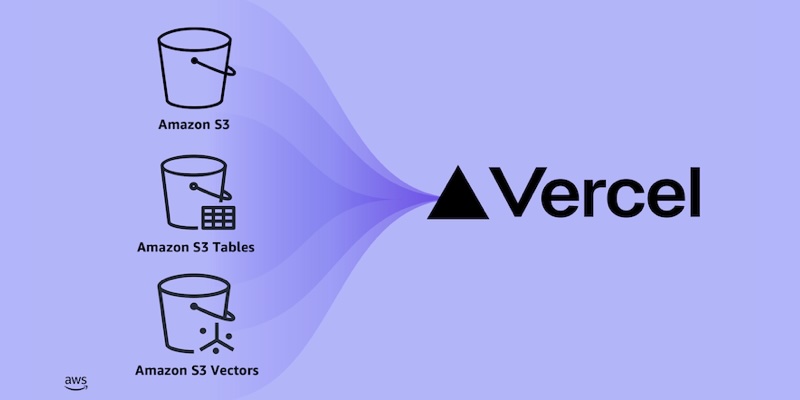
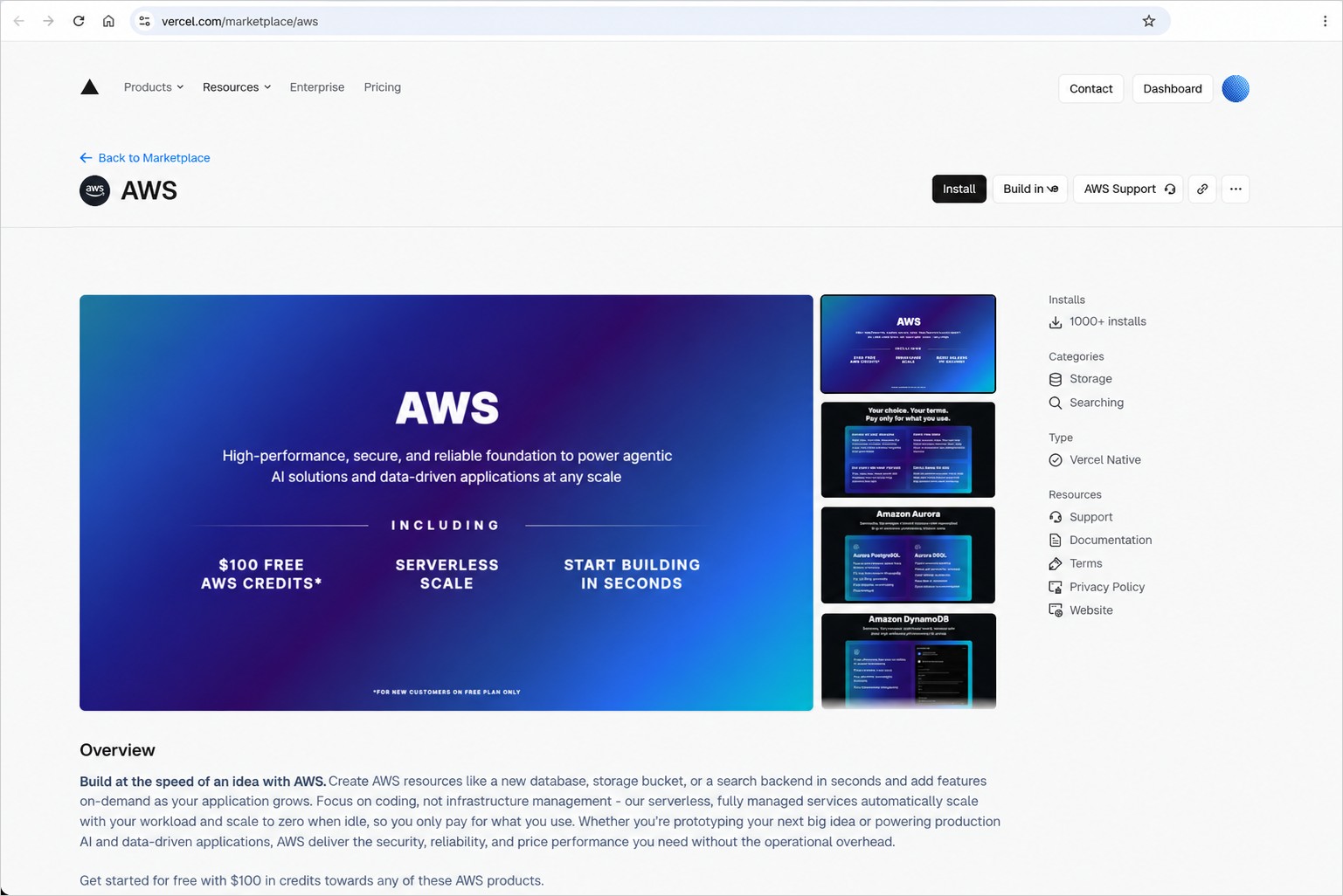
Over recent years, Vercel and AWS have systematically dismantled these administrative barriers. The introduction of previous integrations—including Amazon Aurora for relational databases, Amazon DynamoDB for NoSQL workloads, and Amazon OpenSearch Serverless for search capabilities—laid the groundwork for a comprehensive cloud stack managed entirely through a unified control plane. The addition of Amazon S3, S3 Tables, and S3 Vectors represents the final crucial pillar in this architecture, delivering a complete spectrum of storage capabilities that span standard data objects, analytical data lakes, and cutting-edge generative AI requirements.
Core Architecture and Technological Breakdown
The newly launched integration covers three distinct, mission-critical storage workloads designed to address the diverse needs of modern web and AI applications:
- General-Purpose Object Storage: Standard S3 buckets handle everyday web assets, user-generated content, media files, and document uploads. Through the Vercel integration, developers can execute standard object lifecycle operations using the AWS SDK for JavaScript, backed by secure runtime credential exchange.
- Amazon S3 Tables for Analytics: Tailored specifically for data-intensive applications, S3 Tables offer fully managed Apache Iceberg tables featuring automated maintenance and compaction. This capability allows developers to run analytical queries directly against data lakes using lightweight query engines like DuckDB embedded inside serverless functions, bypassing the need for a separate, heavy data warehousing infrastructure.
- Amazon S3 Vectors for AI and Semantic Search: As artificial intelligence agents, Retrieval-Augmented Generation (RAG) pipelines, and semantic search systems become standard features in web architecture, managing vector embeddings has become paramount. S3 Vectors provides cost-optimized, purpose-built vector storage natively within S3. Developers can store and query vector embeddings seamlessly alongside raw source documents without maintaining a separate, dedicated vector database infrastructure.
Provisioning Workflow and Security Infrastructure
The technical implementation of the Vercel-S3 integration prioritizes developer velocity and uncompromising security. Rather than relying on traditional long-lived static access keys—which present inherent security vulnerabilities if leaked—the integration leverages OpenID Connect (OIDC) authentication.

When a developer provisions an S3 resource through the Vercel dashboard or prompts it via v0, the system automatically injects standardized environment variables, including AWS_REGION, AWS_ROLE_ARN, and resource-specific identifiers. At runtime, Vercel’s native awsCredentialsProvider function from the @vercel/functions/oidc module exchanges a short-lived OIDC token with the AWS Security Token Service (AWS STS). This generates temporary, highly scoped credentials dynamically for each request.
For standard object storage, developers can initialize the standard AWS SDK S3 client with minimal configuration:
import  S3Client, PutObjectCommand  from "@aws-sdk/client-s3";
import  awsCredentialsProvider  from "@vercel/functions/oidc";

const s3 = new S3Client(
  region: process.env.AWS_REGION,
  credentials: awsCredentialsProvider(
    roleArn: process.env.AWS_ROLE_ARN,
  ),
);
Similarly, for advanced analytical workloads utilizing S3 Tables, developers can combine the dynamic credentials with DuckDB within serverless functions to perform complex aggregations over massive datasets. For AI applications utilizing S3 Vectors, semantic similarity searches can be executed with native API calls directly against the vector bucket index, streamlining the RAG architecture for AI support bots and semantic search engines.
Natural Language Provisioning via v0 by Vercel
Perhaps the most disruptive aspect of the release is its integration with v0, Vercel’s generative user interface creation tool. By leveraging natural language prompts, developers can now describe complex application requirements, and v0 will simultaneously provision the necessary AWS infrastructure, configure the secure connection parameters, and generate functional frontend and backend code.
For instance, requesting "a photo gallery where users upload images using AWS" automatically provisions a general-purpose S3 bucket. Asking for "a support bot that answers questions from my PDFs" initiates the creation of an S3 Vectors bucket paired with the appropriate semantic search logic. An "analytics dashboard for clickstream data" automatically provisions Amazon S3 Tables configured for high-performance querying. This capability drastically lowers the barrier to entry for building complex, data-heavy, and AI-driven applications.
Account Management, Pricing, and Availability
Flexibility remains a core tenet of the rollout. Developers possess the option to create a completely new AWS account directly through the Vercel platform—qualifying new accounts for $100 in AWS credits valid for six months—or link an existing AWS enterprise account to retain current billing structures and enterprise agreements. When linking an existing account, Vercel confines its automated provisioning to newly generated buckets created specifically through the platform, ensuring that legacy infrastructure remains undisturbed while granting immediate access to AWS-native tooling.
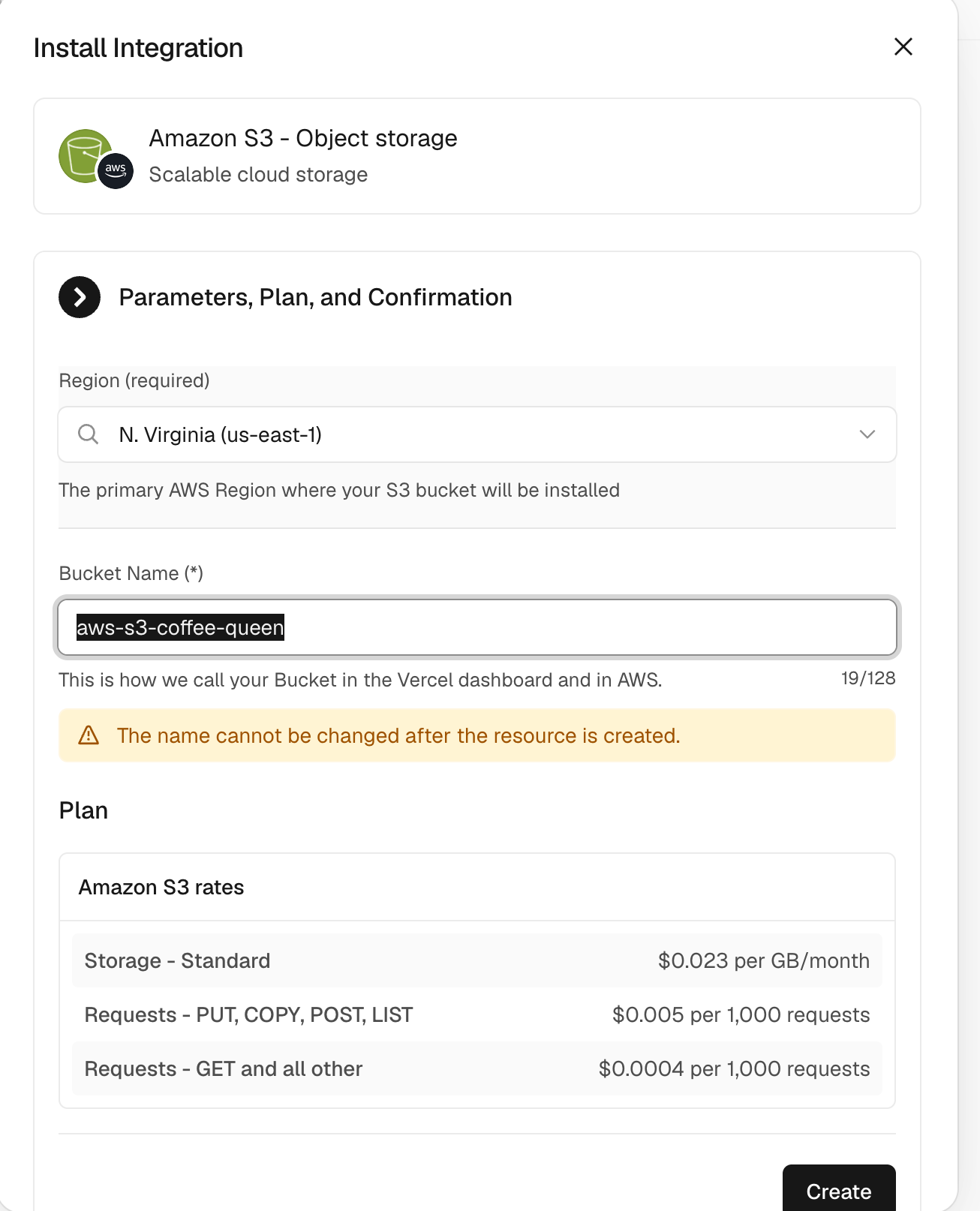
There is no additional platform charge levied by Vercel for utilizing the integration; developers simply pay standard, consumption-based Amazon S3 pricing for the storage resources they consume. The feature is available immediately across all commercial AWS regions supported by Vercel, accessible via the Vercel Marketplace and the v0 development environment.
Industry Implications and Strategic Analysis
The convergence of Vercel’s deployment ecosystem with AWS’s foundational storage layer underscores a broader industry trend toward unified, developer-first cloud infrastructure. As frontend frameworks increasingly absorb backend responsibilities through serverless functions, edge computing, and AI orchestration, the boundary between application code and cloud infrastructure continues to dissolve.
Industry analysts note that by removing the administrative friction of cloud provisioning, platforms like Vercel empower smaller engineering teams to deploy enterprise-grade architectures that previously required dedicated DevOps personnel. Furthermore, keeping data within a native AWS account ensures that enterprises do not sacrifice data sovereignty, security compliance, or observability. As organizations increasingly adopt multimodal AI applications requiring massive object, tabular, and vector storage, integrations of this scale signal a future where cloud infrastructure is provisioned contextually through code and natural language rather than manual console administration.