Sir Patrick Stewart, the legendary Shakespearean actor and iconic star of Star Trek and X-Men, has passed away at the age of 86.


The passing of Sir Patrick Stewart, announced via his official social media channels, marks the conclusion of a storied life and career that spanned seven decades. The statement confirmed that Stewart died following a brief and poignant struggle with Alzheimer’s disease and Lewy Body Dementia. His family noted that he spent his final days surrounded by loved ones, comforted by music, prayer, and the enduring grace that defined both his personal life and his illustrious professional trajectory.
A Legacy of Stage and Screen
Born in Mirfield, West Yorkshire, in 1940, Stewart’s path to global stardom was built upon the rigorous foundation of classical theater. He joined the Royal Shakespeare Company in 1966, an affiliation that would serve as the bedrock of his acting technique for the rest of his life. While he began his television work in the late 1960s with a role in the British soap opera Coronation Street, his true ascent to international prominence did not occur until the late 1980s.

In 1987, Stewart was cast as Captain Jean-Luc Picard in Star Trek: The Next Generation. The role was a departure from the traditional television hero of the era. Where William Shatner’s Captain James T. Kirk embodied the swashbuckling, action-oriented frontier spirit of the 1960s, Stewart’s Picard was an intellectual, a diplomat, and a moral philosopher. His portrayal brought a gravitas to science fiction that had rarely been seen before, transforming the genre into a medium for complex political and ethical exploration. Stewart’s ability to infuse the captain’s chair with a Shakespearean sense of authority—often by reciting dialogue from Hamlet or The Tempest—became a hallmark of the franchise, cementing his status as a pop-culture icon.
Chronology of a Remarkable Career
- 1966: Stewart officially joins the Royal Shakespeare Company, beginning a decades-long association with the Bard.
- 1967: His first television appearance occurs in the long-running British staple Coronation Street.
- 1971: Stewart makes his Broadway debut, further establishing his reputation as a premier stage actor.
- 1981: He gains critical attention for his role as Leondegrance in the epic film Excalibur.
- 1984: He portrays Gurney Halleck in David Lynch’s adaptation of Dune.
- 1987: The premiere of Star Trek: The Next Generation introduces Jean-Luc Picard to the world, launching Stewart into global superstardom.
- 2000: Stewart stars as Professor Charles Xavier in the blockbuster X-Men film, introducing a new generation to his command of complex, paternal leadership roles.
- 2010: Queen Elizabeth II confers a knighthood upon him at Buckingham Palace for his services to drama.
- 2026: Following a decline in health due to Alzheimer’s and Lewy Body Dementia, Sir Patrick Stewart passes away.
Beyond the Bridge: A Master of Character
Stewart’s career was defined by his uncanny ability to bridge the gap between high-brow theater and mainstream entertainment. Whether as the compassionate but powerful telepath Professor X or the principled Captain Picard, Stewart specialized in portraying leaders who bore the heavy burden of responsibility.
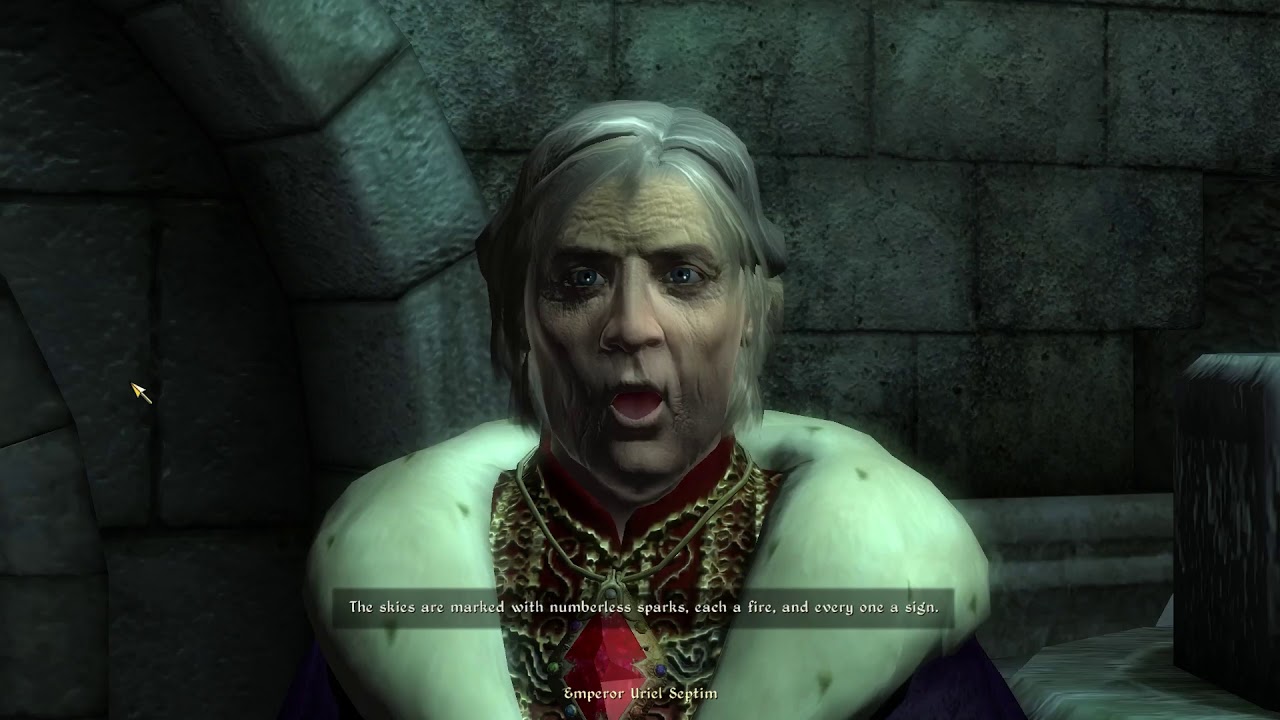
His impact extended into the realm of interactive entertainment. In 2006, he provided the voice for Emperor Uriel Septim VII in the landmark RPG The Elder Scrolls IV: Oblivion. His performance in the game’s opening sequences—characterized by a deep, resonant delivery that lent instant weight to the game’s fantasy world—is frequently cited by gaming historians as a turning point for the prestige of voice acting in video games. He also lent his talents to various Star Trek and X-Men titles, as well as the classic adventure game Lands of Lore: The Throne of Chaos.

Official Responses and Industry Impact
The loss of a figure of Stewart’s stature has prompted an outpouring of grief from the entertainment community. William Shatner, Stewart’s longtime peer and fellow Star Trek captain, expressed his profound sorrow on X (formerly Twitter). "What a heartbreaking week it has been," Shatner wrote. "Sir Patrick Stewart was a friend, a colleague, and a magnificent actor. From the stage to the bridge of the Enterprise, he brought intelligence, grace, and a deep sense of humanity to everything he did."
The sentiment was echoed by colleagues across the film and television industry, who remembered Stewart not only for his talent but for his advocacy and activism. Throughout his life, Stewart was a vocal supporter of organizations like Amnesty International and Refuge, a charity supporting victims of domestic violence. His public advocacy often mirrored the themes of social justice and equality that he championed through his iconic characters.
Broader Implications and Medical Context
The announcement that Stewart succumbed to Alzheimer’s and Lewy Body Dementia has brought renewed public attention to these neurodegenerative conditions. According to the Alzheimer’s Association, these diseases are among the most significant public health challenges of the 21st century. By choosing to disclose his diagnosis, Stewart’s family has encouraged discourse on the necessity of caregiving resources and the importance of continued research into the brain’s decline.

In lieu of flowers, the family has requested that memorial contributions be directed to the Johns Hopkins Alzheimer’s Disease Research Center Fund and the Alzheimer’s Foundation of America. This focus on research serves as a final, characteristically selfless act from an actor who spent his life committed to the advancement of arts and human understanding.
An Enduring Legacy
The death of Sir Patrick Stewart is not merely the loss of a famous actor; it is the closing of a chapter for the science fiction and theater communities. He demonstrated that popular entertainment could be a vehicle for profound empathy and intellectual rigor. Whether commanding a starship, running a school for mutants, or reciting soliloquies on a stage in Stratford-upon-Avon, Stewart held the audience in the palm of his hand.
In his final years, those close to him noted that he maintained his dignity and wit even as his health waned. The announcement of his death captured this, stating, "We will forever cherish the peaceful ease and reflection on his face, an enduring reminder of his invincible grace."
As fans and colleagues reflect on his work, the consensus remains that Stewart’s influence is indelible. He redefined the archetypal hero for a modern age, proving that true power lies in intelligence, patience, and an unwavering commitment to the common good. While the "big chair" on the bridge of the Enterprise may be empty, the cultural footprint left by Sir Patrick Stewart will continue to inspire audiences for generations to come. He was, in the words of those who knew him best, a man who stood for the very best of us—a sentiment that will ensure his name remains synonymous with the heights of human achievement and the depth of artistic integrity.