Xreal Aura Launches Globally with Android XR, Qualcomm Silicon, and Gemini AI Integration, Targeting the Future of Spatial Computing

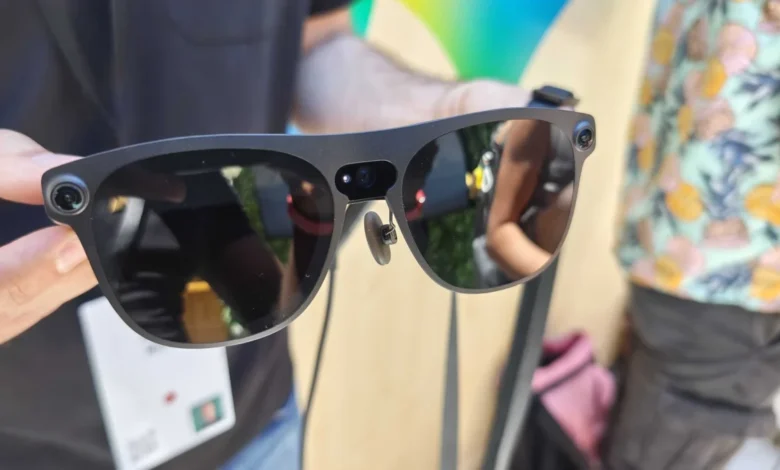
The consumer technology landscape witnessed a significant milestone today as Xreal officially launched its highly anticipated wired Android XR glasses, the Xreal Aura, across key global markets including the United States, Canada, Japan, and South Korea. Positioned as a bridge between immersive virtual environments and the physical world, the device merges spatial computing capabilities with a lightweight form factor. The launch follows months of intense industry speculation, robust pre-order demand, and a series of high-profile previews that began earlier in the year at developer conferences.
Pricing, Configurations, and Global Launch Timeline
To mark the official commercial release, Xreal has introduced a limited-time promotional pricing structure that cuts approximately $200 off the originally announced retail thresholds. Consumers can acquire the 12GB RAM and 256GB storage configuration for $1,099, while the higher-tier 16GB RAM and 512GB storage variant is priced at $1,299. According to official corporate statements, these promotional price points will remain active through December 2026, after which the hardware will revert to its standard baseline pricing of $1,279 and $1,499, respectively.
Physical shipments of the Xreal Aura are slated to commence in mid-November, reaching early adopters who secured reservations during the initial rollout phases. Direct-to-consumer orders are currently being processed through Xreal’s official web storefront, alongside simultaneous day-one retail availability at major electronics distributors such as Best Buy. Looking ahead to the broader retail strategy, Xreal has confirmed plans to expand the distribution footprint in 2027 to include a wider array of consumer electronics chains, alongside select Google Stores located in the United States and Japan.

The launch day enthusiasm reflects a strong wave of consumer interest that initially surfaced during the product’s reservation window. Corporate leadership reported that pre-orders surpassed 10,000 units as early as August, leading to multiple sellouts of specialized reservation bundles. This early traction was largely attributed to Xreal’s commitment to keeping the base consumer price below the $1,500 threshold before applicable taxes, a strategic move designed to lower the barrier to entry for mainstream spatial computing hardware.
Technological Architecture and Core Specifications
At the technical core of the Xreal Aura is a deeply integrated software and hardware ecosystem developed in close collaboration with industry heavyweights Google and Qualcomm. The glasses are powered by the advanced Qualcomm Snapdragon Reality Elite platform, a system-on-chip architecture specifically engineered to handle the demanding processing requirements of mixed-reality and extended-reality (XR) workloads. This silicon backbone is paired with Google’s sophisticated Gemini artificial intelligence ecosystem, allowing the device to deliver contextual awareness, natural language processing, and intuitive user interactions.
Despite packing an array of advanced components typically reserved for bulkier, standalone virtual reality headsets, the Xreal Aura maintains a remarkably lightweight profile, tipping the scales at just 95 grams. Visual fidelity is driven by state-of-the-art Sony Micro-OLED panels, which deliver a sharp 1200p resolution per eye at a fluid 120Hz refresh rate. Users are afforded a wide 70-degree field of view (FOV), providing an expansive canvas for multitasking, digital workspaces, and entertainment. Audio performance is handled by integrated Sound by Bose technology, ensuring spatial audio clarity that complements the visual immersion without completely isolating the user from ambient environmental sounds.
Because the device runs on the Android XR platform, wearers gain immediate, native access to millions of established mobile applications and games available through the Google Play Store, alongside specialized software titles designed specifically for spatial computing interfaces.

Content Ecosystem and Industry Partnerships
Xreal has curated a diverse content library for the Aura’s launch, securing high-profile partnerships across sports, media, and interactive gaming sectors. For sports enthusiasts, the integration of the official NBA app for Android XR brings advanced multiview capabilities—leveraging an NBA League Pass subscription—alongside real-time matchups, interactive statistics, and spatial data overlays. Simultaneously, the NASCAR XR application delivers live 3D track maps and detailed driver telemetry, offering motorsport fans a novel perspective on live racing events.
In the gaming and interactive media space, the Xreal Aura benefits from strategic collaborations with major entertainment entities. Amazon MGM Studios has contributed content integration for titles such as Project Hail Mary: Journey Among the Stars, while Modiphius Entertainment brings Fallout: Factions to the platform. These offerings underscore Xreal’s broader strategy to position the Aura not merely as a productivity accessory, but as a comprehensive entertainment device capable of delivering rich narrative and interactive experiences.
Leadership Perspective and Strategic Implications
Reflecting on the commercial introduction of the hardware, Xreal co-founder and CEO Chi Xu emphasized the broader philosophical shift the device represents for the consumer technology sector. "This is a defining moment for XR," Xu stated in an official company release. "We built AURA for people who want the power of spatial computing without being removed from the world around them. XREAL AURA sets a new benchmark for optical see-through [OST] XR glasses, bringing powerful AI-driven experiences to both work and everyday life."
Industry analysts view the launch of the Xreal Aura as a critical test for the viability of lightweight, wired extended-reality glasses in the consumer market. While previous generations of smart glasses often struggled with a lack of compelling software ecosystems or compromises in hardware performance, the convergence of Qualcomm’s specialized silicon, Google’s Android XR framework, and Gemini AI positions the Aura as a formidable contender in the evolving spatial computing landscape. By balancing high-end display specifications with a comfortable, sub-100-gram chassis, Xreal aims to capture both enterprise professionals and media-consumption enthusiasts who have previously resisted heavier, fully enclosed headset designs. As shipments ramp up in the coming weeks, market observers will closely monitor adoption rates and developer engagement to gauge whether the Xreal Aura can successfully usher in a new era of ubiquitous augmented and mixed reality.
Related posts: