Amazon Web Services Expands Enterprise AI Portfolio With OpenAI GPT-6 Models and Anthropic Claude Opus 5.5 Integration on Bedrock

The landscape of enterprise artificial intelligence underwent a significant evolution this past week as Amazon Web Services (AWS) announced the immediate availability of several frontier models on Amazon Bedrock. The latest integrations include OpenAI’s newly minted GPT-6 Sol and GPT-6 Luna, alongside Anthropic’s Claude Opus 5.5. This strategic expansion underscores a broader industry shift away from monolithic, one-size-fits-all AI deployments toward a highly nuanced, cost-conscious selection matrix where organizations optimize models based on specific parameters such as latency, token efficiency, and computational expenditure.
As businesses scale their generative AI implementations from experimental proofs-of-concept to deeply embedded production systems, the primary design challenge has transformed. Decision-makers are no longer asking simply whether a model possesses advanced reasoning capabilities; instead, they are evaluating economic and operational viability. The introduction of these advanced models on AWS addresses this exact requirement by offering diverse points along the intelligence-versus-efficiency curve.
Comprehensive Chronology and Deployment Timeline
The integration of these next-generation models follows a rapid acceleration in the release cycles of foundational AI developers throughout late 2025 and early 2026. The groundwork for this week’s announcements was laid during prior quarters, as AWS systematically expanded Amazon Bedrock to support multi-model architectures, providing enterprise clients with robust infrastructure abstractions, data governance controls, and security guardrails.
In the final week of the reporting period, OpenAI expanded its commercial offerings by launching the GPT-6 tier, targeting specific enterprise workloads. Shortly thereafter, AWS engineering teams validated and integrated these models into the Amazon Bedrock ecosystem. Concurrently, Anthropic advanced its flagship model line with the deployment of Claude Opus 5.5, which immediately became accessible to AWS clients globally via API endpoints. This synchronized rollout highlights the tight collaboration between hyperscale cloud providers and AI research laboratories to reduce deployment friction for enterprise developers.
Technical Specifications and Model Capabilities
The newly integrated models bring distinct technical architectures designed to optimize specific workflows across software development, operations, and high-volume data processing.
OpenAI GPT-6 Sol and GPT-6 Luna
OpenAI’s contributions to Amazon Bedrock arrive in two distinct variations, each tailored for specific operational burdens:
- GPT-6 Sol: Engineered specifically for demanding, recurring workloads associated with software development and cloud operations (DevOps). It excels in complex reasoning tasks, iterative code refactoring, and multi-step infrastructure management. Crucially, OpenAI and AWS have positioned GPT-6 Sol at a substantially lower price point compared to its predecessor, the GPT-5.6 family, drastically reducing the total cost of ownership for engineering organizations.
- GPT-6 Luna: Designed for focused, repeatable tasks that must be executed at high volume. Luna optimizes token throughput and latency, making it ideal for automated customer service routing, batch document summarization, and routine data extraction. Like Sol, Luna benefits from aggressive pricing structures relative to earlier iterations, enabling scalable deployments that were previously economically prohibitive.
Anthropic Claude Opus 5.5
Representing the inaugural release in the Claude 5.5 product family, Claude Opus 5.5 introduces critical architectural refinements over the preceding Opus 5 iteration. The model is specifically tuned for agentic coding—where AI systems independently plan, execute, and test software modifications—and long-running execution threads.
A standout feature of Claude Opus 5.5 is its superior token economy. The model achieves higher performance benchmarks while consuming fewer tokens than its predecessor. This efficiency directly translates to reduced inference latency and lower operational expenditures for enterprises running continuous, autonomous agent workflows.
Economic and Strategic Implications for Enterprise IT
The simultaneous introduction of these models on a unified platform like Amazon Bedrock signals a mature phase in enterprise AI adoption. Historically, organizations relied on a single flagship model for all internal and external use cases, leading to inefficient resource allocation where expensive, highly capable models were deployed for trivial tasks.

By providing a granular selection of models optimized for distinct operational profiles, AWS is encouraging a tiered architectural approach. Enterprises can now construct multi-model pipelines where routine data ingestion is handled by cost-effective engines like GPT-6 Luna, complex coding tasks are assigned to GPT-6 Sol, and long-horizon autonomous reasoning is routed through Claude Opus 5.5.
Furthermore, the aggressive pricing models accompanying these releases reflect intense market competition among foundational model providers. As inference costs decline, the barrier to entry for deploying sophisticated AI agents drops precipitously, accelerating digital transformation initiatives across heavily regulated industries such as finance, healthcare, and global logistics.
Ecosystem Observability and Governance
Alongside model integration, the broader AWS ecosystem has experienced parallel updates focusing on observability and management. Operating autonomous AI agents at scale requires sophisticated monitoring tools capable of tracking token usage, latency spikes, and behavioral drift in real time. AWS has continued to enhance its native monitoring suites to support these complex, multi-model deployments, ensuring that enterprise security and compliance teams maintain absolute visibility over automated workflows.
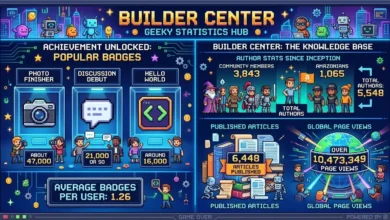
As these capabilities mature, the focus within the AWS Builder Center and upcoming developer conferences will increasingly center on best practices for model orchestration, cost governance, and security hardening. Organizations utilizing Amazon Bedrock retain full control over their data, ensuring that proprietary codebases and customer records used to query models like GPT-6 Sol or Claude Opus 5.5 are never utilized to retrain underlying foundational models without explicit authorization.
The rapid cadence of updates on Amazon Bedrock demonstrates that the cloud infrastructure layer is evolving rapidly to match the innovations of frontier AI laboratories. As enterprises digest these new options, the emphasis will shift from mere experimentation to disciplined, ROI-driven deployment strategies that leverage the unique strengths of each available model.