NASA Dexterous Robotics Team Pioneers Human-Machine Collaboration for Deep Space Exploration

The vision of humans and robots operating in seamless tandem—once relegated to the realm of science fiction—is rapidly transitioning into a fundamental component of modern space exploration. As NASA embarks on increasingly ambitious missions that aim to establish a permanent presence on the Moon and eventually reach Mars, the role of advanced robotic systems has shifted from mere novelty to critical infrastructure. At the heart of this transformation is NASA’s Dexterous Robotics Team, based at the Johnson Space Center (JSC) in Houston, which is currently architecting the hardware and software required to integrate robotic intelligence into the daily workflows of astronauts.
The Strategic Shift: Augmentation over Replacement
Contrary to popular misconceptions, the primary objective of NASA’s robotics initiative is not to replace human explorers, but to enhance their operational capacity. Shaun Azimi, the lead for the Dexterous Robotics Team, emphasizes that the goal is to create highly reliable, trustworthy systems capable of thriving in the high-stakes, extreme environments of space.
"Our team is not trying to replace human explorers with robots, but instead make human exploration safer and more sustainable," Azimi stated. By offloading monotonous, hazardous, or physically taxing tasks to robotic assistants, NASA intends to reserve the human crew for complex decision-making, scientific analysis, and adaptive problem-solving—areas where human intuition remains superior to current artificial intelligence.
This approach is rooted in risk mitigation. In deep space environments, where mission duration is measured in years rather than days, the physical toll on astronauts and the exposure to radiation or mechanical hazards can be significant. A dexterous robot, capable of performing manual labor that mimics human hand movements, serves as a force multiplier, extending the duration of mission-critical activities while preserving the crew’s health and focus.
A Legacy of Humanoid Innovation: From Robonaut 2 to Valkyrie
The current prowess of the Dexterous Robotics Team is built upon a decade and a half of iterative development. The group’s expertise is largely derived from two flagship projects that have defined NASA’s humanoid research:
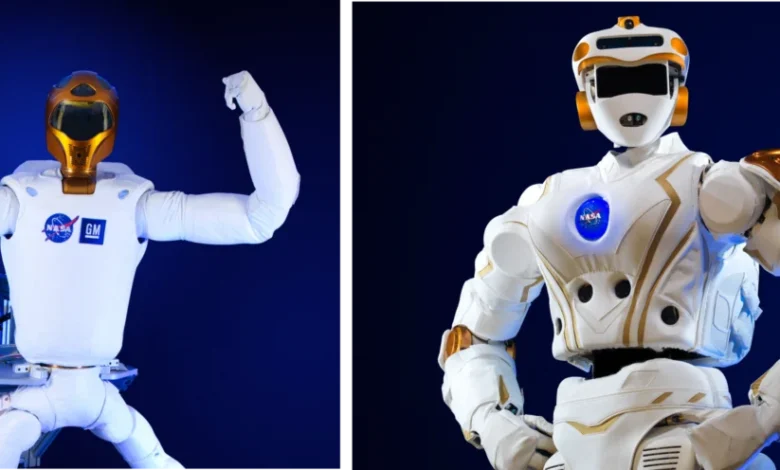
- Robonaut 2 (R2): Debuting in 2011, R2 became the first humanoid robot in space. It spent seven years aboard the International Space Station (ISS), performing technology demonstrations that tested its ability to operate in microgravity alongside astronauts. These tests provided invaluable data on human-robot interaction in confined spaces.
- Valkyrie (R5): Introduced as an evolution of the Robonaut concept, Valkyrie is a sophisticated bipedal humanoid. Designed for versatility, its development allowed the team to explore locomotion and full-body coordination, essential for navigating the uneven terrain of lunar or Martian surfaces.
The engineers who spearheaded these projects now form the backbone of the current Dexterous Robotics Team, which operates within the broader Robotic System Technology Branch. This branch manages a wide portfolio, ranging from high-dexterity manipulators to autonomous mobile rovers, ensuring a comprehensive approach to space mobility and manipulation.
The iMETRO Facility: Bridging the Gap Between Concept and Reality
A cornerstone of the team’s current operational strategy is the Integrated Mobile Evaluation Testbed for Robotics Operations (iMETRO). As NASA seeks to accelerate the deployment of robotic assets, iMETRO provides a centralized hub for hardware and software testing.
The facility acts as a "digital and physical sandbox." It integrates open-source software, high-fidelity simulations, mockups of lunar habitats and spacecraft, and a variety of mobile robot platforms. This enables engineers to test a single software algorithm or a complete robotic system in a simulated mission environment before it is ever launched into orbit.
The implications for external collaboration are profound. By providing a common testing ground, NASA allows commercial partners—ranging from aerospace contractors to private robotics startups—to understand the specific physical and logistical requirements of space exploration.
"It shows them the things we actually need done so they don’t have to speculate," Azimi noted. When a private entity designs a rover or a habitat, they often lack the "space-hardened" perspective. iMETRO allows these designers to witness firsthand how a robot perceives the world, identifies objects, and navigates obstacles. This collaborative environment often leads to design optimizations, such as better lighting or standardized interfaces, that benefit both the robot and the human crew.
Real-World Applications and Industrial Synergies
The utility of these developments extends far beyond the vacuum of space. The Dexterous Robotics Team frequently works with external partners, including the energy sector, which faces similar challenges in hazardous, remote environments.
Recent practical demonstrations underscore this synergy. For instance, PickNik Inc. utilized the iMETRO facility to test an autonomous robotic arm capable of complex mechanical interactions, such as recognizing and opening a spacecraft hatch, grasping a handle, and transferring cargo. This specific sequence of tasks—hatch operation and logistics management—is vital for the sustainability of a lunar base, where manual cargo transfer could consume hours of valuable astronaut time.
Furthermore, NASA interns have utilized the facility to develop software that enables standard commercial robotic arms to perform maintenance on cold stowage freezers. Such tasks are routine but essential, and automating them demonstrates how off-the-shelf technology can be adapted for the rigorous demands of orbital and lunar maintenance.
The Road to the Moon and Beyond
As NASA’s Artemis program pushes toward establishing the first sustainable lunar outpost, the Dexterous Robotics Team is concentrating on technologies that can support long-term lunar habitation. The lessons learned in the lunar environment—specifically regarding dust mitigation, extreme thermal fluctuations, and communication latency—will serve as the primary "proof of concept" for future crewed missions to Mars.
The team’s cross-disciplinary nature, which bridges mechatronics, software engineering, and systems analysis, positions them uniquely to address the complexities of the lunar environment. They are not merely building machines; they are designing an ecosystem where human environments are inherently "robot-friendly."
Future Challenges and Public Engagement
The scope of this robotics research is set to expand significantly. NASA has signaled that it will soon launch a public challenge, inviting researchers, students, and private innovators to contribute their ideas for technology solutions tailored to Martian exploration. This move reflects the agency’s recognition that the scale of future deep space exploration requires a diverse, open-innovation approach.
When asked why the Johnson Space Center requires a dedicated robotics team, Azimi’s answer remains consistent: the human element. "It’s really about the human elements—either working in environments designed for humans or working alongside humans. That’s our niche."
Analytical Perspective: The Future of Space Operations
The integration of robots into human-crewed missions represents a fundamental shift in the economics and logistics of space exploration. From an analytical standpoint, the reliance on dexterous robotics provides several key advantages:
- Extended Mission Lifespan: Robots do not require the life support, food, or sleep cycles that humans do, allowing for 24/7 monitoring and maintenance of habitats.
- Risk Reduction: By performing high-risk tasks—such as external repairs during solar events or in radiation-heavy zones—robots act as an insurance policy for the human crew.
- Standardization of Operations: The use of iMETRO to set industry standards for robotic interfaces ensures that future missions can utilize a modular, interoperable suite of robotic tools from various providers.
As the international community moves toward a new era of lunar exploration, the work being conducted in Houston serves as a blueprint for the future. By prioritizing the synthesis of human ingenuity and robotic reliability, NASA is ensuring that the next generation of explorers will have the tools necessary to survive and thrive on worlds beyond our own. The transition from "robot as a tool" to "robot as a partner" is well underway, setting the stage for a new chapter in the history of human spaceflight.
Related posts: