Apple Rumors Round-Up: Upcoming iPad Mini Leaks, Siri AI Class Action Settlement Website Goes Live, and Beats 360 Debuts

The relentless churn of the consumer technology industry continues to place Apple Inc. at the center of global consumer electronics reporting, with a flurry of hardware leaks, legal resolutions, and product launches capturing the attention of analysts and enthusiasts alike. Over the past week, the digital ecosystem surrounding the Cupertino-based tech giant has been dominated by a mix of expected hardware refreshes, structural changes to flagship device logistics, corporate accountability regarding emerging form factors, and financial fallout from previous software delays. From the preliminary emergence of an A20 Pro-powered iPad mini and a long-awaited Apple TV 4K update to the operational rollout of a quarter-billion-dollar legal settlement, Apple’s product and corporate pipeline remains under intense scrutiny.
Upcoming Hardware Pipeline: Leaks Reveal October Refresh for iPad Mini, HomePod Mini, and Apple TV 4K
Industry insiders and supply chain leaks have begun to coalesce around a prospective October product showcase, which is widely anticipated to feature a robust slate of hardware and software updates. Chief among these leaks are detailed specifications for the next-generation iPad mini, a refreshed HomePod mini lineup, and a completely redesigned fourth-generation Apple TV 4K.
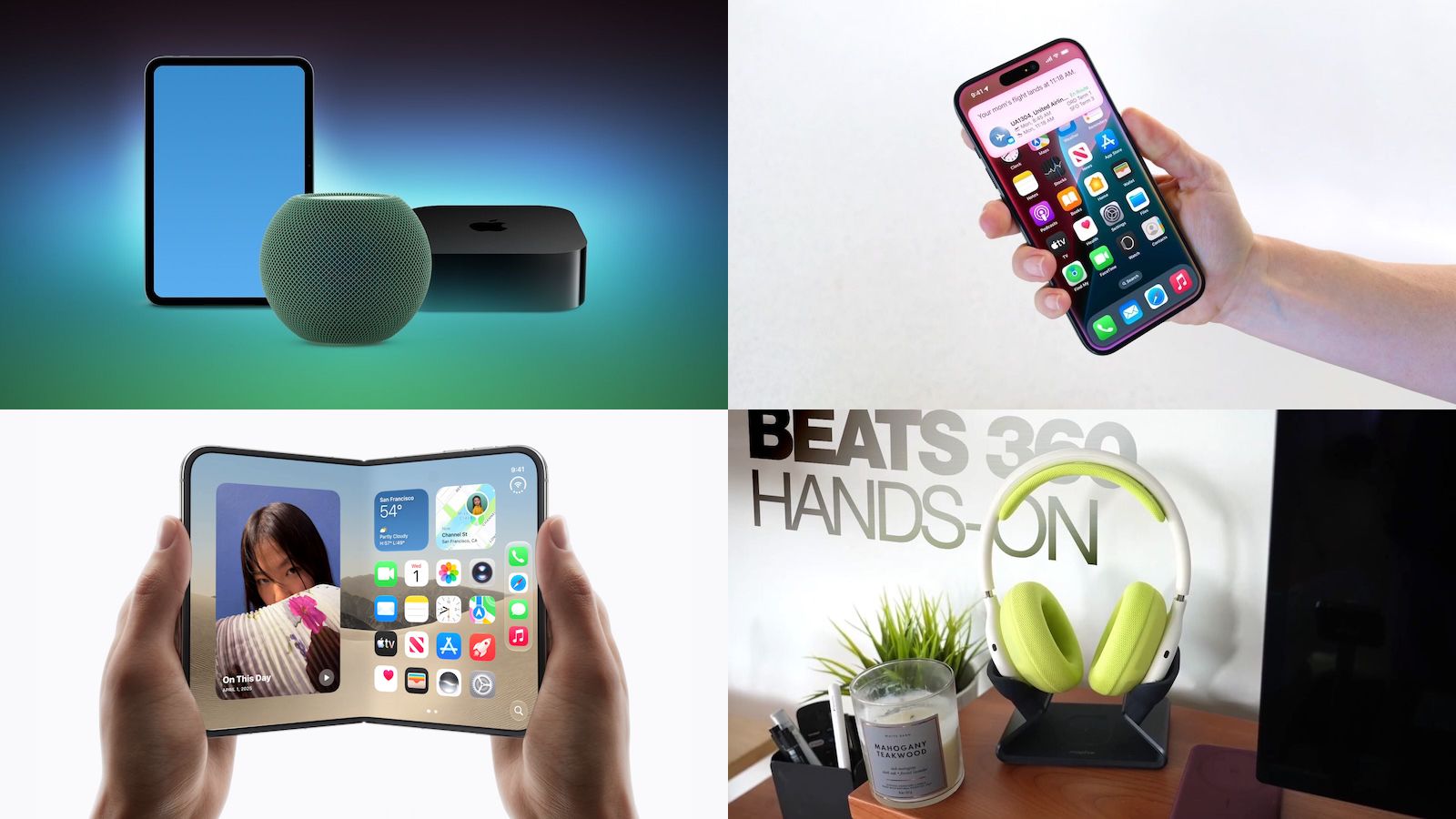
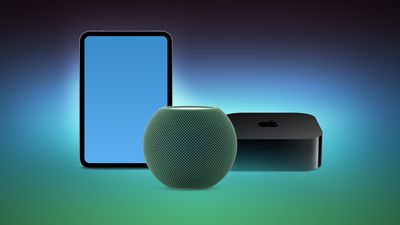
According to information sourced from component manufacturers and code strings uncovered by hardware analysts, the forthcoming iPad mini is slated to incorporate Apple’s advanced A20 Pro system-on-chip. This inclusion points to a significant computational and graphical leap for the compact tablet format, likely aligning its capabilities with high-tier mobile processing standards. Beyond silicon upgrades, the leaks indicate industrial design modifications, including a revised internal speaker architecture aimed at improving audio fidelity and a repositioned landscape front-facing camera—a design choice mirroring the ergonomic shifts seen in larger iPad models to optimize video conferencing utility.
Simultaneously, visual assets and packaging references indicate that the HomePod mini will receive a palette expansion, introducing vibrant new colorways such as green and pink to the existing audio accessory lineup. Meanwhile, living room entertainment setups may soon see their first major revision in years: evidence of an incoming fourth-generation Apple TV 4K suggests that Apple is preparing to update its set-top box architecture following a four-year hardware hiatus. Separate diagnostic code strings have also hinted at specifications for the forthcoming 12th-generation standard iPad, though market observers project that particular device will not see a commercial release until early next year.
Financial Accountability: Siri AI Class Action Settlement Portal Launches for Eligible iPhone Users
In the legal and regulatory sphere, Apple has officially initiated the claims process for a major consumer settlement stemming from delays in the rollout of promised artificial intelligence features. The legal action, rooted in consumer grievances over postponed generative AI capabilities integrated into Siri during earlier software cycles, culminated earlier this year in a $250 million class-action settlement agreement in United States federal courts.
The dedicated settlement portal went live on September 21, opening a three-month window concluding on December 21 for eligible consumers to file claims. Under the terms of the preliminary agreement, owners of specified iPhone models impacted by the functional delays are slated to receive an estimated baseline payout of $25 per device. However, legal administrators note that final compensation figures will fluctuate based on the total aggregate volume of validated claims processed, with individual payouts capped at a maximum of $95.
While Apple has formally denied all allegations of wrongdoing, misrepresentation, or liability associated with the delayed artificial intelligence deployment, corporate representatives acknowledged that the decision to settle was made to mitigate the substantial financial expenditures, operational distractions, and protracted legal risks associated with a prolonged federal trial.
Logistical Adjustments: Firmware Battery Drain Imposed on iPhone 18 Pro Max for Shipping Compliance
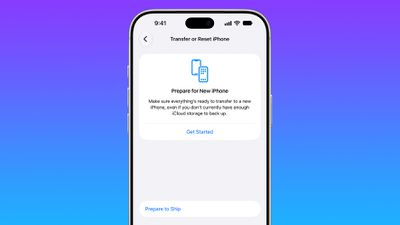
Operational protocols for high-capacity mobile devices have also made headlines following the release of the iPhone 18 Pro Max. Due to international transport regulations governing the shipment of lithium-ion energy storage units exceeding 20 watt-hours in single-cell configurations, Apple has implemented a mandatory firmware-level power limitation protocol dubbed the "Prepare to Ship" feature.
Because the standalone battery capacity of the iPhone 18 Pro Max surpasses the 20Wh regulatory threshold enforced by global logistics and aviation authorities, devices cannot be legally transported at full charge capacity without specialized hazardous materials declarations. To circumvent these restrictive commercial shipping constraints, Apple utilizes an internal firmware mechanism that artificially restricts the maximum available battery capacity to sub-20Wh levels between the factory floor and the end consumer’s unboxing experience. Upon initial device activation, the firmware restriction lifts automatically, restoring full access to the battery’s design capacity.
However, this logistical hurdle resurfaces should a customer need to return, repair, or trade in their device through mail-in channels. Owners are required to execute the "Prepare to Ship" routine via device settings, a process that actively discharges the battery below the statutory 20Wh limit and establishes a temporary firmware ceiling to ensure regulatory compliance throughout transit.
Engineering Transparency: Executive Addresses Crease Concerns Surrounding the Foldable iPhone Duo
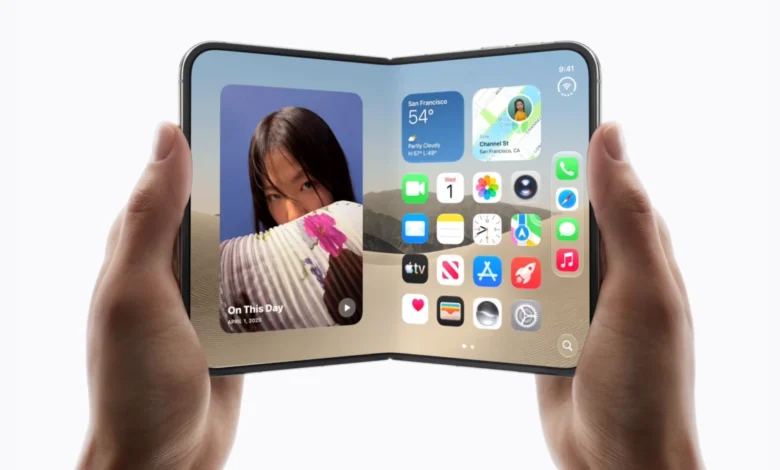
As Apple prepares to enter the foldable device market with its highly anticipated iPhone Duo, corporate leadership has adopted an unusually transparent posture regarding potential hardware compromises. In a recent interview with technology publication TechRadar, Apple Vice President of Hardware Engineering Tom Marieb discussed the intricate engineering challenges inherent to foldable display technology, specifically addressing the visibility of the central screen crease.
Marieb highlighted the inclusion of a specialized matte nano-texture display on the iPhone Duo, engineered explicitly to diffuse ambient light reflection and structurally soften the visual and tactile prominence of the display crease—a persistent pain point for early adopters of competing foldable handsets on the market. When queried by reporters regarding whether the structural crease would degrade or become more pronounced over extended periods of mechanical stress, Marieb welcomed the scrutiny, explicitly urging consumers and tech analysts to hold Apple’s engineering division "accountable" for the device’s long-term physical durability.
The executive’s commentary also touched upon the proprietary hinge mechanism developed for the Duo, alongside the integration of a reinforced second-generation Ceramic Shield front glass layer designed to protect the folding display substrate from impact damage.
Audio Evolution: Beats Brand Announces Customization-Focused Beats 360 Headphones
In the audio hardware sector, Apple’s subsidiary brand Beats has officially unveiled the Beats 360, an over-ear headphone model positioned at a $349.99 price point. Rather than serving as a direct successor or replacement for the existing Beats Studio Pro—which remains in the product portfolio at a reduced price of $299.99—the Beats 360 represents a comprehensive reimagining of the brand’s ergonomic and acoustic philosophy.
Engineered around a completely redesigned internal acoustic architecture, the Beats 360 delivers up to 1.75 times the active noise cancellation performance of previous generations, alongside a 12dB increase in maximum audio output. Crucially, the system maintains ultra-low harmonic distortion across all frequency spectrums under high-volume conditions. A standout feature of the new launch is its modular customizability: the headphones feature easily swappable ear cushions and headband pads, enabling users to mix and match materials and color configurations. Beats has capitalized on the launch by offering heavily discounted accessory cushion kits through online retail partners.
Horizon Scanning: Early Display Specs for the 2027 iPhone 20 Pro Lineup Surface
Even as the current generation of mobile hardware establishes its market footprint, supply chain trackers are already looking ahead to Apple’s twentieth-anniversary device cycle slated for 2027. According to leaked documentation and production forecasts published by prominent industry analysts on social platform Weibo, the upcoming iPhone 20 Pro series may feature marginally larger display real estate compared to the current iPhone 18 Pro iterations.
Preliminary specifications attributed to industry insider Digital Chat Station indicate that the iPhone 20 Pro is projected to feature a 6.41-inch display with a resolution of 2,686 by 1,236 pixels. In parallel, the larger iPhone 20 Pro Max is rumored to incorporate a 6.96-inch screen operating at a resolution of approximately 2,912 by 1,340 pixels. For comparative context, these dimensions represent incremental expansions over the iPhone 18 Pro and Pro Max, which measure 6.27 inches (rounded to 6.3) and 6.86 inches (rounded to 6.9) respectively, pointing toward a sustained industry trend of maximizing screen-to-body ratios through refined bezel reduction.