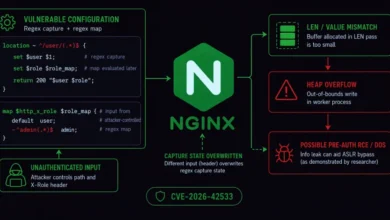
The cybersecurity landscape is currently undergoing a paradigm shift as the integration of advanced artificial intelligence into offensive operations creates a new tier of digital threats known as "Mythos-class" attacks. As vulnerability disclosures continue to proliferate, the traditional reliance on Common Vulnerability Scoring System (CVSS) metrics has proven insufficient. Security operations teams are now facing a critical challenge: the time compression between the public release of a Common Vulnerabilities and Exposures (CVE) identifier and the emergence of a weaponized, AI-driven exploit has shrunk to a window that renders weekly or quarterly assessment cycles obsolete.
The Evolution of the Threat Landscape
The emergence of Mythos-class attacks signifies a departure from traditional, manually intensive exploitation techniques. By leveraging generative AI and automated reconnaissance tools, threat actors can now perform rapid analysis of patch-diffing data to identify exploitable code paths within hours of a vulnerability disclosure. This speed poses a significant risk to organizations that rely on static, scheduled security audits.
In the past, security teams operated under the assumption that they had days, if not weeks, to triage, prioritize, and patch vulnerabilities after a disclosure. Today, that timeline is frequently measured in minutes. When an automated scanner identifies a vulnerability, the severity score—often a raw number between 0 and 10—provides an assessment of potential impact but fails to account for the actual exposure of the specific environment. The fundamental question for modern security operations centers (SOCs) is not whether a vulnerability is severe, but whether it is reachable, exploitable, and relevant to the organization’s specific attack surface.
Chronology of Modern Vulnerability Management
To understand the urgency of the current situation, one must look at the historical trajectory of exploit development. Throughout the 2010s, the time between a CVE release and the availability of an exploit was often measured in weeks or months. This allowed for a deliberate "patch management" workflow, where organizations could test updates in staging environments before rolling them out to production.
As of 2026, the velocity of exploitation has increased exponentially. The timeline now typically follows this pattern:
- Disclosure (T+0): A vulnerability is documented by a vendor or security researcher.
- Automated Analysis (T+1 hour): Offensive AI models ingest the patch details, identifying the underlying flaw.
- Exploit Synthesis (T+4 hours): Proof-of-concept code is generated, refined, and tested against common software configurations.
- Active Weaponization (T+12 hours): Threat actors integrate these exploits into automated botnets or ransomware delivery systems.
This acceleration leaves the traditional, periodic security cycle in a state of constant, reactive catch-up. Organizations that fail to shorten their "Mean Time to Validate" (MTTV) are effectively operating in an unprotected state for the majority of their patch cycle.
Supporting Data: The Limitations of Severity Scoring
Research into vulnerability management suggests that relying solely on CVSS scores leads to "vulnerability fatigue." Industry data indicates that while over 20,000 vulnerabilities are disclosed annually, only a small fraction are ever actively exploited in the wild. Prioritizing remediation based exclusively on a CVSS score often results in teams spending limited resources on patching flaws that are theoretically dangerous but practically unreachable.

Furthermore, security infrastructure is often composed of a mix of legacy and cloud-native systems. A vulnerability that might be critical in a web-facing application server may be rendered harmless by internal network segmentation or existing firewall rules. Without empirical validation, security teams often struggle to justify the resource expenditure required for "emergency" patching, leading to delays that attackers exploit to gain initial access.
The Validation Loop: Bridging the Gap
To address these challenges, industry experts like Ishak Celikkanat, Solutions Architect Lead at Picus, have advocated for the implementation of a continuous validation loop. This methodology moves beyond theoretical risk assessment toward evidence-based defense. By mapping a newly discovered vulnerability to specific attack techniques, security teams can test their existing controls against those behaviors.
This approach is critical for environments where running an actual exploit against production systems is prohibited by compliance or operational stability concerns. Instead of executing the exploit code, organizations can simulate the "behavioral footprint" of the attack. If a security control—such as an Endpoint Detection and Response (EDR) system or a Web Application Firewall (WAF)—correctly identifies and blocks the behavior, the organization has empirical proof of their resilience against that specific CVE.
Official Perspectives and Operational Challenges
The shift toward behavioral validation has gained significant traction among enterprise CISOs. The consensus is that security teams must move away from "assumption-based security." If an organization assumes their controls are effective, they are essentially gambling on their infrastructure.
"The goal is to replace assumptions with a defensible answer while the finding still matters," noted security architects at the forefront of the Mythos-class defense movement. This means that if a security team can validate their defense within minutes of a disclosure, they regain the initiative. By identifying which assets are truly exposed and which controls are genuinely effective, teams can focus their limited human capital on the most critical threats.
Broader Implications for Enterprise Security
The rise of Mythos-class attacks suggests that the future of cyber defense lies in automation and continuous, proactive simulation. As AI becomes a staple of the attacker’s toolkit, defenders must similarly adopt automated, machine-speed verification processes.
- Strategic Prioritization: Future security programs will likely prioritize vulnerabilities based on "Exploit Prediction Scoring Systems" (EPSS) combined with internal environmental validation, rather than raw CVSS severity.
- Operational Resilience: The ability to test and validate defenses without disrupting production is becoming a core requirement for modern IT operations. This requires a sophisticated integration between security testing tools and the underlying production environment.
- Resource Allocation: By automating the validation process, organizations can significantly reduce the "noise" generated by vulnerability scanners, allowing analysts to focus on genuine threats that bypass perimeter defenses.
Conclusion: Preparing for an Automated Future
The threat posed by Mythos-class attacks is not just a technological challenge; it is a fundamental shift in the pace of global cybersecurity. As AI continues to shorten the lifecycle of an exploit, the ability to rapidly validate risk becomes the primary differentiator between organizations that remain secure and those that suffer successful breaches.
In this environment, the "validation loop"—the process of continuously testing defenses against the latest threat intelligence—is no longer an optional security practice. It is a mandatory component of a mature cyber resilience strategy. As the gap between disclosure and exploitation continues to narrow, the organizations that succeed will be those that have effectively institutionalized the transition from static, score-based security to dynamic, evidence-based defense. For security leaders, the message is clear: in a world of AI-driven threats, the only way to prove you are ready is to demonstrate it, repeatedly and in real-time.