Meta Prepares to Launch Camera-Free Smart Glasses Amid Escalating Privacy Backlash

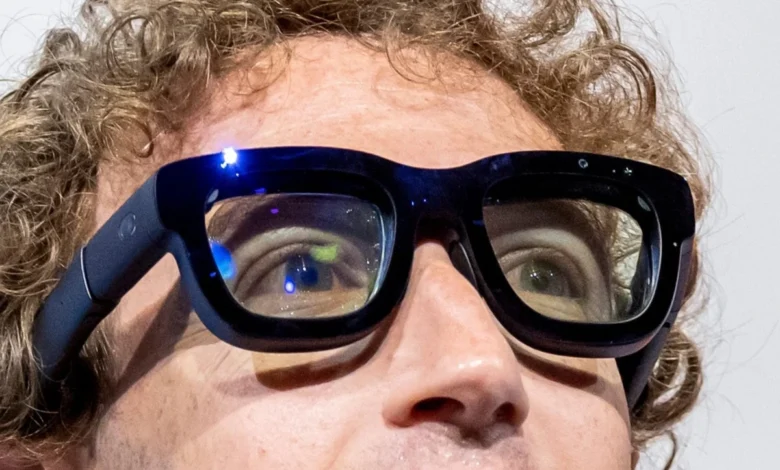
Meta Platforms is reportedly preparing to introduce a camera-free version of its popular smart glasses, codenamed "Luna," in a strategic move designed to mitigate mounting privacy concerns and broaden consumer adoption. The anticipated unveiling follows intense public scrutiny and criticism over the recording capabilities of Meta’s existing camera-equipped wearable devices, which critics have frequently labeled as invasive tools in an expanding surveillance landscape.
According to industry reports, the new Luna model is scheduled for introduction as early as next week during Meta Connect, the company’s premier annual hardware and developer conference held in Menlo Park, California. While the omission of a camera marks a significant departure from Meta’s current hardware trajectory, the device will retain advanced audio and artificial intelligence functionalities. Designed to serve as a hands-free conduit for the company’s expanding ecosystem, Luna will feature six integrated microphones and a physical activation button on the frame, allowing users to interact seamlessly with Meta’s native AI chatbot and consumer agent, Muse.
The evolution of Meta’s wearable strategy highlights a broader challenge facing the consumer technology sector: balancing the demand for ambient, AI-driven convenience with the fundamental right to privacy in public spaces. As competition in the augmented reality and smart eyewear market intensifies, Meta’s pivot toward a non-recording wearable could redefine consumer acceptance and shape regulatory compliance standards for the next generation of edge devices.
The Rise of Smart Eyewear and the Surveillance Debate
Over the past several years, smart glasses have transitioned from a niche science-fiction concept into one of the fastest-growing sectors in consumer hardware. Major technology conglomerates and specialized startups alike have invested billions of dollars into developing lightweight, connected eyewear designed to supplant the smartphone as the primary interface for digital interaction. Meta, under the leadership of Chief Executive Officer Mark Zuckerberg, has positioned itself aggressively at the forefront of this movement.
The company’s initial foray into mainstream smart glasses—developed in partnership with iconic eyewear manufacturer EssilorLuxottica—surpassed market expectations, outperforming many competing entries in terms of sales volume and consumer engagement. Equipped with discreet lenses capable of capturing high-definition video, taking photographs, and streaming live content directly to social media platforms, these devices offered users unprecedented convenience.
However, these exact features triggered immediate and severe pushback from privacy advocates, civil liberties organizations, and wary consumers. The inclusion of outward-facing cameras on everyday fashion accessories sparked widespread anxiety regarding surreptitious recording in private venues, offices, and public spaces. Critics quickly dubbed the devices "pervert glasses" on social media, amplifying public discomfort surrounding continuous, unannounced data collection. The cultural friction created by camera-equipped eyewear cast a long shadow over Meta’s marketing efforts, alienating a substantial demographic of potential users who desired AI integration and audio connectivity without the perceived threat of constant surveillance.
Chronology of Meta’s Wearable Hardware Journey
To understand the strategic significance of the Luna project, it is necessary to examine the timeline of Meta’s hardware evolution and its long-term bet on augmented reality (AR) and ambient computing:
- September 2021: Meta launches its first-generation smart glasses in collaboration with Ray-Ban, focusing primarily on audio playback and basic photo-capture capabilities.
- September 2023: The company introduces updated Ray-Ban Meta smart glasses featuring enhanced streaming capabilities and early integrations of multimodal artificial intelligence.
- September 2024: During the Meta Connect event, Mark Zuckerberg debuts "Orion," Meta’s first functional prototype of true augmented reality glasses, framing the device as a crucial stepping stone toward replacing the traditional smartphone.
- April 2026: Meta’s quarterly earnings report reveals that Reality Labs—the division responsible for AR, VR, and wearable hardware development—continues to record multi-billion-dollar operating losses, heightening pressure on the hardware division to deliver commercially viable products.
- September 2026: Industry reports surface regarding the imminent unveiling of the camera-free "Luna" smart glasses at Meta Connect, signaling a tactical diversification of the company’s wearable portfolio.
Technical Specifications and Ecosystem Integration
The forthcoming Luna glasses represent a calculated engineering compromise. By stripping away the optical sensors and camera modules that have served as both the primary selling point and the primary source of controversy for Meta’s hardware, engineers have focused entirely on audio-based AI interaction.

The integration of six built-in microphones serves a dual purpose: capturing vocal commands with high precision and isolating ambient noise in crowded environments. When a user presses the physical action button located on the temple of the frame, the device activates Meta’s proprietary AI assistant. This system allows wearers to ask questions, draft messages, translate languages, and interact with Muse—Meta’s dedicated consumer AI agent—entirely hands-free.
Industry analysts point out that removing the camera significantly reduces hardware manufacturing costs, lowers power consumption, and simplifies regulatory approval processes across international jurisdictions, particularly in regions with stringent biometric and surveillance laws, such as the European Union. Furthermore, a camera-free design effectively neutralizes the primary compliance hurdles that prevent corporate offices, schools, and private clubs from permitting smart eyewear on their premises.
Financial Realities and Market Dynamics
Despite the commercial momentum of Meta’s current smart glasses lineup, the hardware division operates under immense financial strain. Meta’s Reality Labs unit has consistently burned through gargantuan sums of money as the company races to build the foundational infrastructure for spatial computing, mixed reality, and AI hardware.
Financial analysts at institutions such as Citigroup have identified AI-enabled glasses as the next major growth vector for edge devices, predicting widespread adoption if manufacturers can successfully resolve cost, usability, and privacy hurdles. However, consumer hesitation remains a formidable barrier. Market research indicates that a significant percentage of potential buyers remain uncertain about the practical utility of smart glasses, frequently questioning whether the marginal benefits of wrist-free photography and AI voice prompts justify the purchase price and social friction.
By introducing Luna, Meta aims to capture a distinct segment of the consumer base: users who are enthusiastic about ambient artificial intelligence and audio convenience but adamantly opposed to carrying recording equipment. This diversification strategy allows Meta to market its AI ecosystem to privacy-conscious consumers who would otherwise boycott the brand entirely.
Industry Reactions and Corporate Response
As anticipation builds ahead of the Meta Connect conference in Menlo Park, technology observers have weighed in on the potential market impact of a camera-free wearable. While official statements from Meta regarding the Luna project remain pending following inquiries by technology publications, industry insiders suggest that the move reflects a pragmatic willingness to adapt to consumer sentiment without abandoning the overarching vision of ubiquitous wearable computing.
Privacy advocates, while cautiously welcoming the elimination of recording capabilities in the reported Luna model, maintain that tech companies must remain transparent regarding how voice data and user interactions are processed, stored, and utilized to train underlying large language models. The debate extends beyond physical cameras to encompass the passive collection of conversational data and environmental audio streams.
Broader Implications for the Wearable Technology Sector
The introduction of a camera-free AI wearable could establish a new design paradigm for the entire smart eyewear industry. Competitors racing to capture market share in the post-smartphone era may find that consumer resistance to surveillance devices necessitates a bifurcated product strategy—offering specialized tools for enterprise or media creation alongside privacy-first, audio-centric models for general daily use.
Ultimately, Meta’s decision to develop the Luna glasses underscores a maturing industry realization: technological capability must align closely with social acceptance. As augmented reality and artificial intelligence continue to converge, the success of future edge devices will depend less on packing every possible sensor into a single frame, and more on giving consumers granular control over how they interact with the digital world.
Related posts: