The State of Modern Cosmology: A New Survey Reveals Deep Divisions Among Physicists Regarding the Nature of the Universe

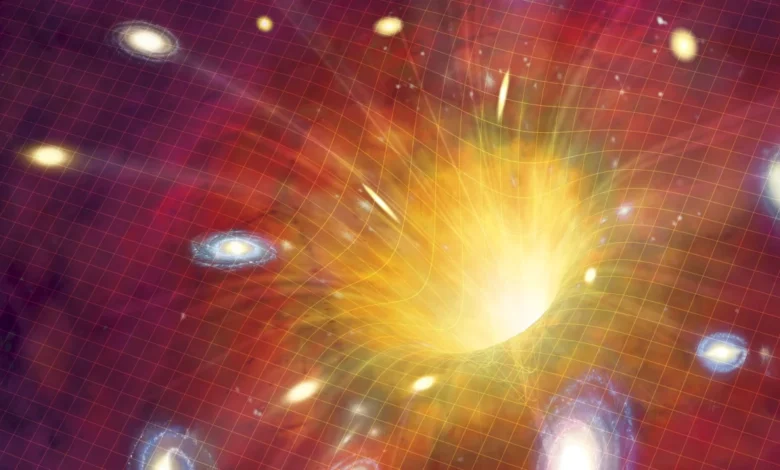
The foundations of our understanding of the universe are currently under intense scrutiny, not from amateur skeptics, but from the very architects of modern physics. A landmark study published earlier this year in Physics Magazine has provided the most comprehensive evidence to date that the global scientific community is far from unified on the fundamental mechanisms that govern our reality. By synthesizing the perspectives of over 1,600 working physicists, the "Big Mysteries in Physics" survey highlights a field in the midst of a profound intellectual transition, where long-held assumptions are being challenged by both theoretical friction and an evolving landscape of data.
A Chronology of the Inquiry
The seeds for this survey were planted in 2025, when a coalition of international researchers issued an open call for input from the global physics community. The project sought to move beyond anecdotal consensus and quantify the "temperature" of modern thought on topics ranging from the origins of the cosmos to the mechanics of gravity.
For decades, the standard model of cosmology—Lambda Cold Dark Matter (ΛCDM)—has served as the bedrock for scientific inquiry. However, as measurement technologies like the James Webb Space Telescope and next-generation particle colliders have provided increasingly precise, and sometimes contradictory, data, the community has seen a rise in competing hypotheses. The 2025 survey functioned as a "pulse check," inviting participants to weigh in on issues that have historically been sidelined or treated as settled dogma. When the results were compiled and analyzed throughout early 2026, they revealed that the "settled" nature of the universe is, in fact, a matter of significant academic debate.
The Myth of the Big Bang’s "Beginning"
Perhaps the most striking takeaway from the survey involves the Big Bang itself. In popular culture, the Big Bang is frequently visualized as a cosmic firecracker, a singular moment of creation where time itself flickered into existence. However, the survey found that approximately 68 percent of physicists reject the notion that the Big Bang necessarily marks the absolute beginning of time.
This perspective is rooted in a technical distinction often lost in public discourse. The Big Bang theory is a mathematical model that describes the rapid expansion of the universe from an incredibly hot, dense state. It does not explicitly account for what preceded that state, nor does it define the birth of time itself. By acknowledging this, the majority of surveyed physicists are distancing themselves from a literalist interpretation of the theory, suggesting that the universe may have existed in a different phase prior to the expansion event, or that our current mathematical framework is simply blind to the "pre-bang" era.
Inflation and the Contentious Seconds After
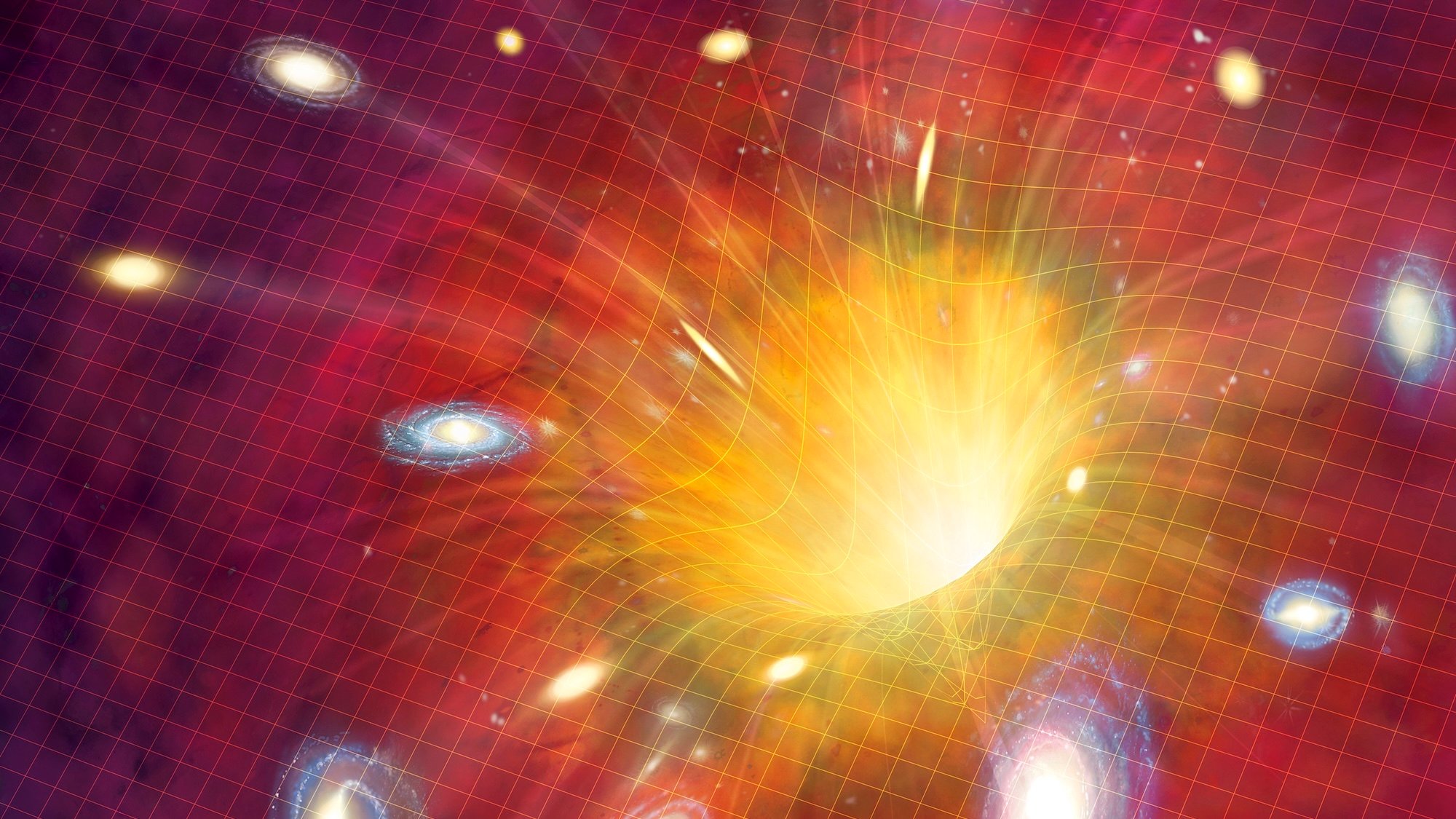
The survey also cast doubt on the uniformity of belief regarding cosmic inflation—the theory that the universe underwent an exponential expansion in the fractions of a second following the Big Bang. While inflation has been a cornerstone of cosmological models since the 1980s, only 51 percent of respondents expressed full agreement with the theory.
This narrow majority indicates a significant faction of the scientific community is actively seeking alternatives. Critics of inflation argue that the theory, while elegant, has become difficult to falsify and relies on hypothetical fields (the "inflaton" field) that have yet to be definitively observed. This lack of consensus is not indicative of a failing theory, but rather a sign that the scientific method is functioning as intended: testing the limits of a hypothesis against the growing pressure of observation.
Dark Matter and the Gravity Dilemma
The investigation into dark matter—the invisible substance that appears to exert gravitational pull on galaxies—remains one of the most significant "blind spots" in modern science. The survey results underscored this frustration. Only 17 percent of physicists believe that dark matter is definitively composed of an undiscovered particle.
Meanwhile, a splinter group of 12 percent advocates for "Modified Newtonian Dynamics" (MOND) or other gravitational adjustments, suggesting that we may not need to invent new particles if our understanding of gravity itself is slightly flawed at galactic scales. A larger portion of the respondents, roughly 21 percent, remain agnostic, suggesting that the truth likely lies in a hybrid model or an entirely new paradigm that has not yet been conceptualized. This diversity of opinion reflects a field that has grown weary of waiting for a "WIMP" (Weakly Interacting Massive Particle) detection that has yet to materialize despite decades of deep-underground experimentation.
Quantum Gravity and the Search for Unity
Perhaps the most chaotic area of debate identified in the study is the quest for a theory of quantum gravity—a mathematical framework that would reconcile the massive, predictable world of general relativity with the erratic, probabilistic world of quantum mechanics.
The survey revealed a splintered landscape:

- 19 percent favor String Theory, which posits that fundamental particles are tiny vibrating strings.
- 12 percent support Loop Quantum Gravity, which suggests that space-time itself is quantized into discrete loops.
- 18 percent hold a more pessimistic view, suspecting that gravity may be fundamentally incompatible with quantum mechanics, or that our current mathematical tools are incapable of bridging the gap.
This fragmentation is a testament to the scale of the challenge. Integrating these two pillars of physics is widely considered the "Holy Grail" of the field, yet the lack of a clear path forward has led to a productive, if noisy, competition of ideas.
Perspectives from the Frontline
Niayesh Afshordi, a physicist at the University of Waterloo and a co-author of the survey, has emphasized that this lack of consensus should be viewed as a positive indicator of a healthy, active field of study. In his assessment, the disagreement does not stem from a lack of data, but rather from an abundance of complex, sometimes conflicting, information that forces physicists to reconsider foundational assumptions.
"Consensus, or its absence, tells us where the evidence feels settled and where researchers still see room for radically different ideas," Afshordi stated. He noted that in the realm of theoretical physics, truth is not decided by a majority vote, but by the slow, often painful process of empirical verification. The survey, he suggests, is a map of the "frontier," marking the specific locations where the scientific community needs to dedicate more resources, sharper theories, and perhaps a new generation of observational instruments.
Implications for the Future of Science
The broader implication of this study is that the "Standard Model" of physics is under pressure. For the average person, the universe might seem like a clockwork mechanism governed by immutable laws. For the physicist, it is a dynamic, poorly understood mystery.
As we look toward the remainder of the 2020s, the implications of these findings are clear: the next decade of discovery will likely be defined by a move away from monolithic theories and toward a more nuanced, diversified approach to cosmology. Funding bodies, universities, and private research initiatives are already beginning to pivot, shifting resources toward projects that test the "fringe" of these theories rather than merely confirming established ones.
If history is any indicator, these periods of intense disagreement are usually the precursor to a major breakthrough. When the old maps no longer match the terrain, science is forced to draw new ones. Whether it is through the detection of dark matter, the refinement of gravitational models, or the discovery of a pre-inflationary state, the "alive" nature of the frontier suggests that our current understanding of the cosmos is merely the prologue to a much larger story. The physicists of 2026 are not lost; they are simply standing at the threshold of a new way of seeing the universe.