Looking Back at Japan’s Historic Kaguya Lunar Mission and Its Legacy in Deep Space Exploration

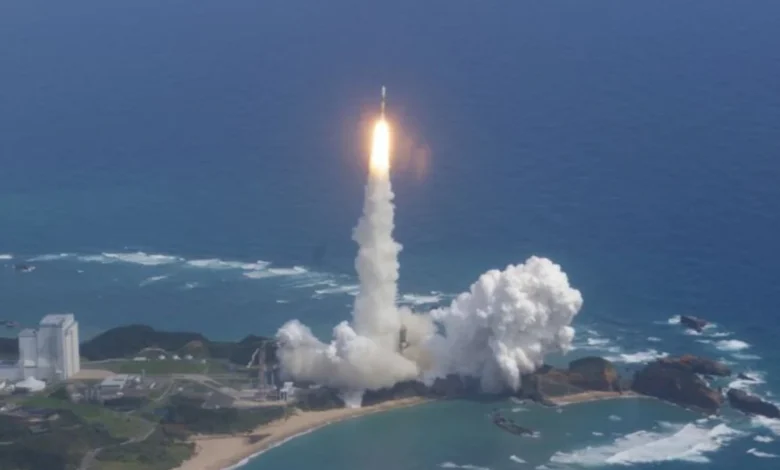
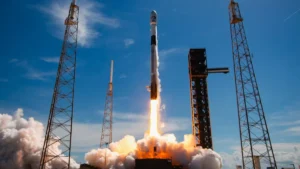
Seventeen years ago, on September 13, 2007, the Japan Aerospace Exploration Agency (JAXA) achieved a monumental milestone in its space exploration history. Liftoff occurred at the Tanegashima Space Center, situated on the picturesque southern coast of Kagoshima prefecture, sending an H-IIA rocket roaring into the daytime sky. Aboard the launch vehicle was the SELenological and ENgineering Explorer (SELENE), universally known by its poetic moniker, Kaguya. Named after the mythical moon princess from classic Japanese folklore, Kaguya represented a massive technological leap forward for the nation, serving as Japan’s second dedicated lunar venture and, crucially, its very first spacecraft designed to successfully enter orbit around Earth’s natural satellite.
While the launch was formally executed during the evening hours of September 13 in the United States Eastern Time zone, local time at the Japanese spaceport placed the historic event at 10:31 a.m. on September 14. This meticulous launch window kicked off a complex orbital dance. Rather than taking a direct trajectory to the moon, the heavy-lift H-IIA rocket placed Kaguya into an initial geostationary transfer orbit. The spacecraft looped twice around our home planet, gradually stretching its orbital ellipse over the course of nearly three weeks to build up the necessary kinetic energy before breaking free of Earth’s gravitational embrace and setting a direct course for the lunar realm.
Anatomy of a Complex Lunar Fleet
The Kaguya mission was not merely a single-probe operation; it was an integrated, multi-spacecraft flotilla engineered to examine the moon from multiple vantage points simultaneously. Upon completing its twenty-day interplanetary transit, the mission architecture separated into three distinct components: a main operational orbiter, a sub-satellite dedicated to relay communications, and a third specialized sub-satellite tasked with mapping the moon’s complex gravitational field.
The main orbiter carried a sophisticated payload consisting of fourteen distinct scientific instruments. These included high-definition video cameras, advanced spectrometers, radar sounders, and laser altimeters, all curated to unravel the geological and chemical mysteries of the lunar body. Meanwhile, the two smaller companion satellites—affectionately and culturally named Okina (the relay satellite) and Ouna (the radio source experiment satellite)—were deployed into specialized elliptical orbits. Together, this trio formed a comprehensive observation network designed to study the moon’s surface composition, subsurface structures, and global gravity anomalies with unprecedented precision.
The Stepping Stones: From Hiten to Kaguya
To fully appreciate the gravity of Kaguya’s success, one must examine the foundational steps taken by Japan’s space program in the late 20th century. Japan’s initial foray into deep-space lunar exploration began in 1990 with the launch of the Hiten spacecraft. Unlike Kaguya, Hiten was never designed to enter lunar orbit. Instead, it was engineered to test deep-space navigation techniques and aerodynamics using a highly elliptical Earth orbit.
Hiten made ten close lunar flybys over the course of its mission lifecycle, occasionally deploying a smaller companion probe named Hagoromo, which achieved lunar orbit but suffered a communications failure early on. Hiten’s mission ultimately concluded in 1993 when mission controllers intentionally directed the spacecraft to impact the lunar surface. While Hiten and Hagoromo successfully proved out critical deep-space technologies, they were fundamentally pathfinder missions. Kaguya was designed to take those experimental concepts and translate them into operational, high-yield scientific discovery.
Capturing the Public Imagination: High-Definition Views and Earthrise
While the quantitative data gathered by Kaguya’s fourteen instruments provided invaluable material for planetary geologists, the mission’s qualitative impact on the global public was driven by its visual artistry. Kaguya was equipped with two primary high-definition television (HDTV) cameras, engineered by NHK, Japan’s public broadcaster. These instruments allowed the spacecraft to capture the first-ever high-definition video and imagery of the lunar landscape.
Among the most celebrated visual milestones of the mission was the capture of breathtaking "Earthrise" sequences—the phenomenon of our blue marble rising above the stark, cratered horizon of the moon. Prior to Kaguya, such crisp views of Earthrise had not been documented since the heyday of NASA’s crewed Apollo missions in the late 1960s and early 1970s. The footage galvanized space enthusiasts worldwide, offering a poignant reminder of our planet’s fragile beauty viewed from the stark expanse of deep space.
In addition to captivating public attention, Kaguya’s scientific suite yielded ground-breaking discoveries. The mission successfully mapped the entire topography of the moon with extreme precision, revealing intricate details of impact basins, mountain ranges, and maria. Furthermore, the gravity-mapping sub-satellites enabled scientists to model the moon’s internal mass distribution, confirming complex gravitational anomalies on both the near and far sides of the lunar surface.
Another crowning achievement occurred near the lunar south pole. Using its advanced optical instruments, Kaguya captured the first-ever optical observations inside Shackleton Crater—a permanently shadowed region of immense scientific interest due to the potential presence of trapped water ice. These observations provided critical baseline data that informed future lunar exploration strategies for international space agencies.
Operational Timeline and Intentional Conclusion
Kaguya successfully completed its primary one-year scientific observation phase in October 2008. Encouraged by the exceptional health of the spacecraft and the high fidelity of the data being downlinked to ground stations, JAXA mission planners formulated a plan to extend the mission through early 2009. However, deep-space operations are inherently fraught with mechanical risk.
During the extended phase, engineers detected a failing reaction wheel—a critical component responsible for controlling the spacecraft’s orientation and attitude without expending propellant. Recognizing that attitude control would soon be compromised beyond safe recovery limits, JAXA made the pragmatic decision to bring the mission to a controlled close rather than risk an uncontrolled drift or orbital decay.
On February 12, 2009, mission controllers executed a series of engine burns that precisely lowered Kaguya’s orbit, guiding the spacecraft into a planned, high-speed impact on the lunar surface. The intentional crash landing occurred near Gill Crater on the near side of the moon, effectively concluding a brilliant 18-month chapter of lunar science.
Broader Impact and Legacy in Modern Space Exploration
The legacy of the Kaguya mission extends far beyond the termination of its telemetry signals in 2009. By cementing Japan’s capability to insert, maintain, and operate a complex multi-spacecraft network in lunar orbit, JAXA established itself as a premier spacefaring agency capable of executing high-complexity planetary science missions.
The vast repositories of topographical, gravitational, and geochemical data returned by Kaguya continue to be utilized by researchers worldwide. As contemporary space agencies and commercial entities turn their sights toward sustainable lunar exploration, including the establishment of long-term crewed outposts and robotic resource utilization near the lunar poles, the foundational cartography and thermal data provided by Kaguya remain indispensable references.
Ultimately, Kaguya bridged the gap between early experimental lunar probes and modern planetary science. Through a harmonious blend of rigorous engineering, public engagement, and pioneering visual technology, the moon princess spacecraft forever altered humanity’s perspective of its closest celestial neighbor, leaving an enduring mark on the history of international space exploration.
Related posts: