The Engineering Behind the AI Boom: How Meta is Revolutionizing Data Center Cooling to Sustain Massive Compute Growth

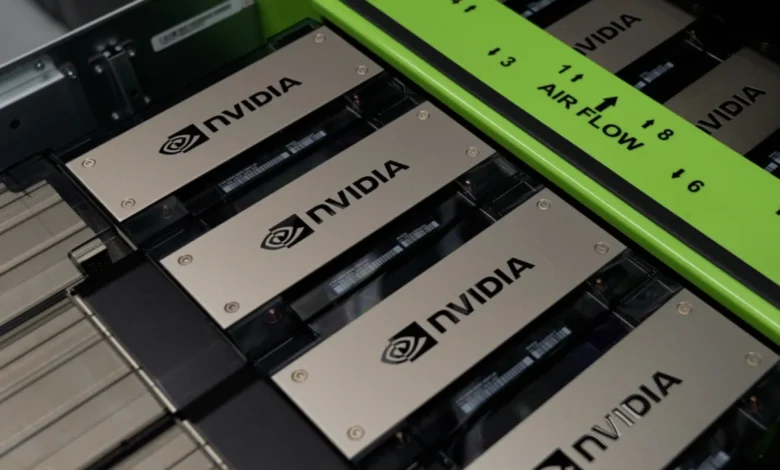
The rapid expansion of artificial intelligence has fundamentally altered the physical requirements of modern computing. As AI models grow in complexity, the hardware supporting them—specifically high-performance Graphics Processing Units (GPUs)—demands an unprecedented amount of electrical power, which in turn generates significant thermal output. For data center operators, this shift has transformed cooling from a standard maintenance task into a critical engineering bottleneck. In recent years, the industry has reached a tipping point where traditional air-cooling methods, which have sustained the internet for decades, are no longer sufficient to manage the heat density of next-generation AI infrastructure.
The Evolution of Cooling Architectures
Historically, data centers functioned on a relatively simple thermodynamic principle: draw air through a facility, pass it over server racks to absorb heat, and exhaust it outside. This method worked effectively for standard compute tasks, such as social media engagement, video streaming, and basic database management. Even as recently as the early 2020s, air cooling remained the gold standard for high-density deployments. For instance, facilities in regions with moderate climates, such as Altoona, Iowa, successfully maintained thousands of Nvidia H100 GPUs using only sophisticated air-management systems. These installations utilized minimal water for evaporative cooling during peak summer months, but the hardware itself remained dry.
However, the thermal design power (TDP) of modern AI-accelerated chips has surged. Current silicon architectures, which process billions of parameters in real-time, generate heat levels that can cause hardware throttling or failure if not managed with surgical precision. To address this, industry leaders like Meta have pivoted toward closed-loop liquid cooling (CLLC). This transition represents a shift from cooling the entire room to cooling the component directly, a process often referred to as "direct-to-chip" cooling.
Mechanics of Closed-Loop Liquid Cooling
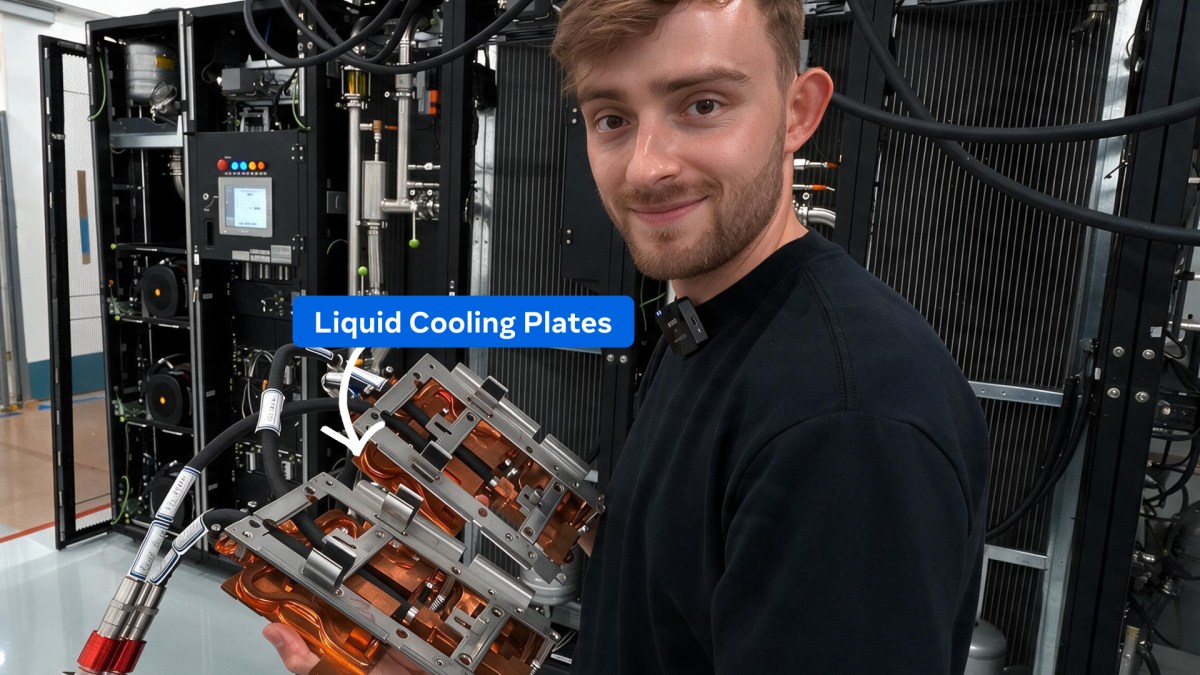
The transition to liquid cooling is frequently misunderstood by the public as a massive increase in water consumption. Contrary to the perception that AI data centers are significant water sinks, modern closed-loop systems operate on a principle of recirculation. A cooling medium—typically a highly engineered mixture of water and glycol—is circulated through cold plates attached directly to the processors.
This fluid absorbs heat through conduction, which is vastly more efficient than convection via air. The heated fluid is then routed out of the server rack and into a series of heat exchangers. These exchangers transfer the thermal energy into a secondary loop or a dry cooler, effectively shedding the heat into the atmosphere without the fluid ever leaving the sealed system. Because the loop is hermetically sealed, the coolant remains within the infrastructure for years, with Meta projecting that these mixtures can remain operational for up to a decade before needing replenishment.
For legacy facilities not originally designed for massive liquid plumbing, engineers have developed Air-Assisted Liquid Cooling (AALC). This modular approach brings the benefits of liquid cooling to older buildings by utilizing self-contained racks that house their own pumps and heat exchangers, allowing for high-density AI clusters to be deployed in environments where retrofitting the entire building’s piping would be prohibitive.
Space Optimization and Scalability
Beyond the environmental necessity of efficient thermal management, liquid cooling provides a substantial advantage in spatial efficiency. Air cooling requires significant clearance to ensure adequate airflow, necessitating larger server trays and greater distances between racks to prevent "hot spots." In an air-cooled environment, engineers often reach a physical ceiling where adding more compute power results in diminishing returns because the cooling equipment takes up the space that should be occupied by servers.
Direct-to-chip liquid cooling eliminates the need for bulky fans and air-duct infrastructure within the rack. By removing these physical constraints, data center operators can increase the density of GPUs per rack, effectively doubling or tripling the compute capacity within the same square footage. This allows for the scaling of massive AI training clusters without the need to expand the physical footprint of the data center, which is a critical consideration in land-constrained or power-constrained regions.
The Open Compute Project and Industry Standardization
Meta’s approach to this infrastructure transition is rooted in its long-standing commitment to the Open Compute Project (OCP), an initiative founded in 2011 to standardize and share hardware designs. The philosophy behind the OCP is that infrastructure, unlike proprietary software, benefits from a collective industry standard. By open-sourcing its cooling designs, Meta aims to accelerate the maturation of the supply chain for liquid-cooled components.
In 2025, the company made a significant contribution to this effort by open-sourcing "IcePack," a liquid-cooled network rack platform. By sharing these specifications, Meta is enabling smaller data center operators, research institutions, and competing firms to adopt advanced cooling methodologies without the immense overhead of proprietary R&D. This collaborative environment is essential for the industry to keep pace with the power demands of generative AI, as the standardization of fittings, pump pressures, and cold-plate designs reduces costs and improves global reliability.
Reinforcement Learning in Facility Management
The most sophisticated layer of modern data center cooling is the integration of artificial intelligence to manage the cooling infrastructure itself. Cooling a data center is a dynamic problem; ambient humidity, local temperature, internal server load, and energy pricing fluctuate constantly. Static settings are inherently inefficient, as they often over-cool to account for worst-case scenarios.
Meta’s engineering teams have implemented reinforcement learning (RL) models to manage these variables in real-time. To avoid the risks associated with testing experimental algorithms on live production servers, the team constructed high-fidelity, physics-based digital twins of their data centers. These simulators model the interaction between external weather patterns, internal heat dissipation, and cooling fan speeds.
The RL model is tasked with a singular, complex objective: maintain the hardware within its optimal operating temperature range while minimizing energy and water consumption. Through millions of simulated cycles, the model learns the precise cooling required for any given workload. The results of initial pilots have been striking. In one major data center, the integration of an RL-based cooling controller reduced the energy consumption of cooling fans by an average of 20% and achieved a 4% reduction in overall water usage. When scaled across a global fleet of massive data centers, these percentages represent tens of millions of kilowatt-hours saved annually, significantly reducing the carbon footprint of AI operations.
Broader Implications and Future Outlook
The engineering shift toward liquid cooling and AI-driven facility management marks a maturing phase for the technology sector. As AI becomes a foundational utility rather than an experimental tool, the physical infrastructure supporting it must transition from "growth-at-all-costs" to a model of resource-efficient sustainability.
The implications are twofold. First, the move to liquid cooling reduces the strain on local municipal water and power grids, which is a primary concern for local communities hosting large-scale data centers. Second, the use of RL to optimize these systems sets a new benchmark for industrial energy efficiency. As energy costs continue to rise and environmental regulations tighten, the ability to do more compute with less energy will be the defining metric of success for hyperscale operators.
Ultimately, the plumbing of a data center is no longer a secondary consideration. It is the backbone of the AI era. By treating cooling as a high-precision engineering discipline, Meta and its peers in the Open Compute Project are ensuring that the computational explosion required for the next generation of AI is not only possible but sustainable. The data center of the future will be defined not just by the power of the chips it contains, but by the efficiency with which it dissipates the heat they generate.