Russia has launched 32 Rassvet communications satellites as Moscow works toward building a domestic network capable of competing with Starlink.

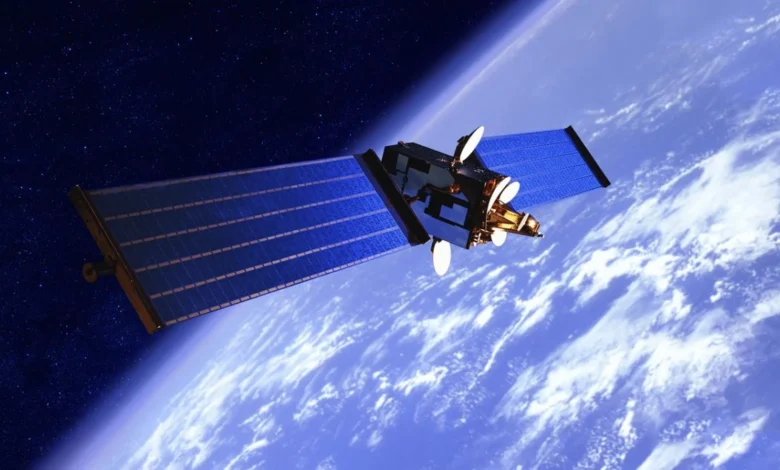
This ambitious endeavor, representing a significant investment of 102.8 billion rubles (approximately $1.3 billion), is intended to establish a sovereign broadband infrastructure for the Russian Federation. However, despite the recent deployment of these 32 units, the project currently faces substantial technical, logistical, and operational hurdles that place it far behind global leaders in satellite internet, most notably SpaceX’s Starlink.
The Current State of the Rassvet Constellation
The Rassvet (meaning "Dawn") project is Moscow’s answer to the rapid proliferation of Low Earth Orbit (LEO) satellite constellations. The Russian government views such infrastructure as essential for maintaining secure, high-speed communication channels for both civilian and military applications. Unlike traditional satellite communications that rely on a small number of geostationary satellites, LEO constellations require hundreds or thousands of spacecraft to provide continuous, low-latency coverage to users on the ground.
With only 32 satellites currently in orbit, the Rassvet constellation is, by definition, incapable of providing continuous service. For a satellite network to be effective, it must be able to "hand off" signals from one satellite to the next as they traverse the sky. At the current density, the gaps between satellites are simply too large, leading to significant periods of service unavailability.
Chronology of Development and Strategic Goals
The roadmap for Rassvet is aggressive, reflecting the Kremlin’s desire to bridge its digital divide and secure communications against external interference. The timeline for the project is as follows:
- Initial Deployment: The launch of the initial 32 satellites marks the foundational phase of the project, serving as a testbed for orbital maneuvering and signal integrity.
- Expansion Phase (2026): Russian authorities have announced plans to launch 156 additional satellites throughout 2026, which would represent a massive scaling effort if achieved.
- Operational Readiness (2027): The government aims to initiate commercial operations by 2027, provided that a total of 292 additional satellites are added following the 2026 campaign.
- Long-term Scaling (2028–2035): The ultimate objective is to reach a constellation size of 318 satellites by 2028, with an expansive vision to grow the network to 900 satellites by the mid-2030s.
Technical Hurdles and Orbital Failures
The viability of this timeline is increasingly being called into question by reports of technical instability. Spaceflight observers and intelligence agencies have noted that several satellites from the initial batch have struggled to maintain their designated orbital altitude. In some documented instances, satellites have begun to drift downward, suggesting a failure in their propulsion systems or guidance software.
Specifically, intelligence reports from late August 2026 indicated that at least one Rassvet-3 satellite was classified as lost, with two others showing signs of decaying orbits that could lead to premature atmospheric reentry. These failures are particularly damaging to the program’s momentum for two reasons: they decrease the total number of operational assets, and they necessitate a forensic investigation that consumes valuable time and engineering resources.
Furthermore, the launch capacity remains a bottleneck. To reach the 2028 target of 318 satellites, Russia must significantly increase its launch cadence. Currently, the Russian space sector performs approximately six to eight Soyuz-2.1b missions annually. To sustain the planned expansion, the country would need to dedicate at least 18 launches per year exclusively to the Rassvet project—a feat that exceeds the current operational output of the Russian space industry, especially given the existing demands on launch vehicles for other military and scientific missions.
Intelligence Assessments and Military Implications
The strategic importance of satellite internet has been highlighted throughout the ongoing conflict in Ukraine. The reliance on Starlink by Ukrainian forces has proven to be a decisive technological advantage, allowing for real-time communication and drone operation in environments where traditional radio links have been jammed or destroyed.
Oleh Ivashchenko, the chief of Ukraine’s Defense Intelligence, has been vocal about the limitations of the Russian project. During recent briefings, he emphasized that the current effectiveness of the Rassvet system is low. “We know that today the Russians are trying to put satellites into orbit. But so far, there are not enough of them, and their effectiveness is low,” Ivashchenko stated.
The Ukrainian intelligence assessment suggests that the Rassvet network is currently unable to provide the reliable, encrypted, and persistent connectivity required by modern military units. In a pointed critique, Ivashchenko noted that while Russia aims for its "Rassvet" (Dawn) to facilitate communication, the current trajectory may result in a "Zakat" (Sunset) for the project—implying that the technical failures may ultimately lead to the system’s abandonment or collapse.
Comparative Analysis: Rassvet vs. Starlink
To understand the scale of the challenge Russia faces, one must compare the nascent Rassvet constellation with the industry-leading Starlink network. Starlink currently operates over 12,000 satellites in orbit. This number continues to grow, with SpaceX consistently launching roughly 200 additional spacecraft every month.
The disparity in scale is profound. Starlink’s massive number of satellites allows for "overlapping coverage," where multiple satellites are visible from any point on Earth at any given time. This redundancy is what makes the network resilient to local failures or atmospheric interference. Russia’s Rassvet, with its current count of 32, is effectively an experimental prototype. Even if Russia meets its 2028 goal of 318 satellites, it will still represent less than 3% of the current size of the Starlink network.
Broader Economic and Geopolitical Impact
The drive to establish a domestic satellite network is part of a larger push by the Russian government to achieve "technological sovereignty." By developing a native LEO network, Moscow hopes to insulate its military and state-run enterprises from reliance on foreign infrastructure—an objective that gained urgency after reports surfaced that Russian forces were attempting to utilize unauthorized Starlink terminals in the theater of operations.
The economic cost is also significant. Allocating 102.8 billion rubles to a project that is currently struggling with basic orbital maintenance highlights the high priority the Kremlin places on this technology. However, if the technical failures persist, the financial burden may escalate. Each lost satellite requires a replacement, effectively doubling the cost of those specific units and creating a "replacement cycle" that may drain funds from other areas of the Russian space program.
Conclusion
The Rassvet program is at a critical juncture. While the successful launch of 32 satellites demonstrates a tangible, ongoing effort to build a national LEO constellation, the gulf between these initial steps and a fully operational, reliable network is vast. Technical challenges regarding orbital maintenance, coupled with the difficulty of scaling up launch operations to meet the ambitious 2027-2028 goals, suggest that Russia remains years away from achieving a functional equivalent to Western satellite internet systems.
For now, the project serves more as an ambitious statement of intent rather than a practical tool for communication. Whether Moscow can overcome the engineering hurdles currently plaguing the constellation remains to be seen, but as it stands, the "Rassvet" project faces a steep, uphill battle to secure its place in the competitive landscape of space-based broadband.
Related posts: