A Sequel to Yuji Horii’s Iconic 1983 Adventure Game The Portopia Serial Murder Case Quietly Announced During Japanese Nintendo Direct


While international audiences tuning into recent Nintendo Direct presentations were treated to high-profile reveals such as new entries in the Kirby and Metroid franchises alongside a high-definition remake of The Legend of Zelda: Ocarina of Time, the Japanese broadcast featured a surprising exclusive announcement. Amidst the blockbuster lineups, the stream quietly debuted a brand-new trailer for an official sequel to The Portopia Serial Murder Case, an influential 1983 adventure game created by legendary game designer Yuji Horii, widely recognized as the mastermind behind the Dragon Quest series.
The announcement has sent ripples of excitement through the Japanese gaming community, particularly among veteran players and industry historians who recognize the original title’s towering historical importance. According to newly launched promotional materials, including a dedicated Steam page and official broadcast segments, the upcoming sequel is slated for a release window in 2027, targeting platforms including Nintendo’s successor system, the Switch 2, and PC. Notably, original creator Yuji Horii is returning to the project to supervise development as an executive director, ensuring that the sequel remains faithful to the core tenets that made the 1983 original a foundational milestone in interactive storytelling.
Historical Roots and Industry Legacy
Originally released over four decades ago, The Portopia Serial Murder Case (known in Japanese as Kōshū Wakare Satsujin Jiken) debuted on early Japanese personal computer platforms such as the NEC PC-6001 and PC-8801 before being successfully ported to the Family Computer (NES) in 1985 by Enix (now Square Enix). The game tasked players with solving a complex homicide investigation set in Kobe, Japan, utilizing a text-based, menu-driven command system to interrogate witnesses, gather physical clues, and explore various locations.

The game’s cultural and technical impact on the video game industry cannot be overstated. Decades before visual novels and modern narrative-driven detective games became global mainstays, Portopia established foundational design paradigms for interactive fiction and mystery games. Its influence extended directly to some of the industry’s most prominent figures. Notably, legendary game creator Hideo Kojima, creator of the Metal Gear and Death Stranding franchises, has frequently cited The Portopia Serial Murder Case as a primary inspiration that motivated him to enter the video game industry. Kojima has often recounted how the game’s depth of narrative immersion and logical investigation mechanics demonstrated the untapped potential of video games as a storytelling medium.
Narrative Premise and Gameplay Mechanics
The newly unveiled sequel returns players to the atmospheric backdrop of 1980s Kobe. According to official developer descriptions, the upcoming title will introduce an entirely fresh cast of characters while offering a completely new detective experience. Players will once again step into the shoes of investigators tasked with untangling a fresh string of homicides, with the narrative carefully weaving connections to the dark secrets hidden behind the events of the original 1983 murders.
From a mechanical standpoint, the sequel aims to preserve the nostalgic appeal of its predecessor while modernizing the interface for contemporary platforms. The gameplay will retain the classic menu-driven, command-selection text adventure format. Rather than relying on modern action mechanics or abstract puzzle-solving, success in the game depends on meticulous deduction. Players must utilize a diverse array of investigation commands to examine crime scenes, extract consistent statements from wary witnesses, and analyze physical evidence piece by piece until the complete truth behind the serial murders is brought to light.
Recent History and the AI Tech Preview Controversy
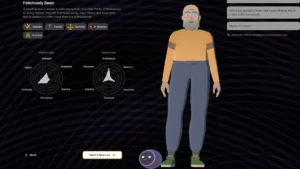
The announcement of a traditional, human-led sequel comes three years after Square Enix attempted to revive interest in the dormant intellectual property through an experimental lens. In 2023, the publisher released a specialized PC release titled SQUARE ENIX AI Tech Preview: THE PORTOPIA SERIAL MURDER CASE. This release functioned less as a traditional remaster and more as an educational demonstration of Natural Language Processing (NLP) and artificial intelligence technology.

The 2023 experiment sought to test whether modern generative AI and language processing could replace rigid command inputs, allowing players to type natural language commands and converse freely with non-player characters. However, the technical demonstration was poorly received by consumers and critics alike. Players encountered rigid parser limitations, nonsensical AI responses, and a general lack of engaging gameplay depth. Consequently, the experiment was heavily criticized on digital storefronts, resulting in a ‘Very Negative’ user review rating on Steam.
Industry observers have noted with interest that Square Enix does not appear to be directly involved in the development of this newly announced 2027 sequel. Instead, the project is being managed under the watchful eye of Yuji Horii himself, signaling a return to traditional, handcrafted narrative design rather than high-concept technological testing.
Global Availability and Market Implications
As of the current announcement phase, official support for languages other than Japanese has not been confirmed. The initial trailer and promotional materials debuted exclusively during the Japanese regional Nintendo Direct broadcast, and the current Steam page listings focus primarily on the domestic market. However, given the global renaissance of classic Japanese adventure games and the immense historical reverence held for Yuji Horii’s early work, international enthusiasts remain hopeful that publisher announcements regarding localized releases or multi-language subtitle support will follow as the 2027 release window approaches.
The project’s planned arrival on the upcoming Nintendo Switch successor platform and PC highlights a growing trend among Japanese publishers to leverage legacy intellectual properties for both nostalgic older demographics and younger generations of gamers interested in retro history. With Yuji Horii supervising creative direction, the sequel to The Portopia Serial Murder Case stands as a fascinating bridge between the earliest days of Japanese computer gaming and modern multiplatform development, promising to test the deductive reasoning of a new generation of armchair detectives.