Anticipating the 12th-Generation iPad: A Comprehensive Look at Apple’s Next Affordable Tablet

As of Wednesday, July 22, 2026, industry reports and supply chain whispers indicate that Apple is diligently developing the 12th-generation iteration of its most accessible tablet, the standard iPad. While the release is not anticipated to bring a radical overhaul, sources suggest it will incorporate critical internal upgrades, particularly in processing power and connectivity, aligning it with Apple’s broader ecosystem advancements. Consumers contemplating an iPad purchase in the near future may find it prudent to await the arrival of this updated model, projected to launch in the first quarter of 2027. This forthcoming device is poised to uphold the series’ reputation for affordability while integrating significant enhancements, notably support for Apple Intelligence, which necessitates a substantial bump in RAM.
The Evolving Role of the Entry-Level iPad
The standard iPad has long served as the gateway into Apple’s tablet ecosystem, providing a balance of performance, features, and price point that appeals to a wide demographic, from students and casual users to those seeking a reliable device for media consumption and basic productivity. Its journey began with the original iPad in 2010, revolutionizing the personal computing landscape. Over the years, the entry-level model has undergone numerous refinements, consistently adapting to evolving user demands and technological progress. The 10th-generation iPad, released in October 2022, marked a significant design departure, shedding the iconic home button in favor of a more modern, edge-to-edge display reminiscent of its Pro and Air siblings, albeit retaining thicker bezels and relocating Touch ID to the power button. This design shift signaled Apple’s commitment to modernizing even its most affordable offerings. The subsequent 11th-generation model, introduced in 2025, primarily focused on internal chip upgrades. The 12th-generation, while not expected to alter the exterior design, is set to deliver a pivotal upgrade under the hood, particularly with its potential to unlock Apple Intelligence capabilities, which represents a new frontier for the company’s device integration and user experience.
Design Continuity and Display Specifications
Current intelligence suggests that the 12th-generation iPad will maintain the established aesthetic introduced with the 10th-generation model. This implies a continued presence of the 11-inch Liquid Retina LED display, characterized by its prominent bezels and the integration of Touch ID into the side button. The design, while modernized from its predecessors, still distinguishes itself from the more premium iPad Pro and iPad Air lines, which boast thinner bezels and more advanced display technologies.
A key differentiator for the standard iPad remains its display technology. Unlike the iPad Pro and some iPad Air models that feature ProMotion for adaptive refresh rates and P3 wide color gamut support, the entry-level iPad’s Retina LED display lacks these enhancements. Furthermore, it continues to utilize a non-laminated display, which can result in a slight air gap between the glass and the LCD panel, potentially impacting visual clarity and stylus precision compared to fully laminated screens found on higher-tier models. While these specifications keep manufacturing costs down, they also clearly define its position within Apple’s tablet hierarchy.
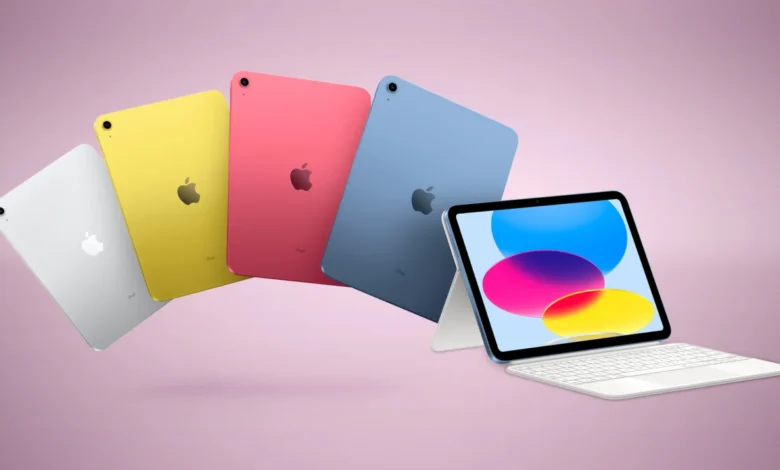
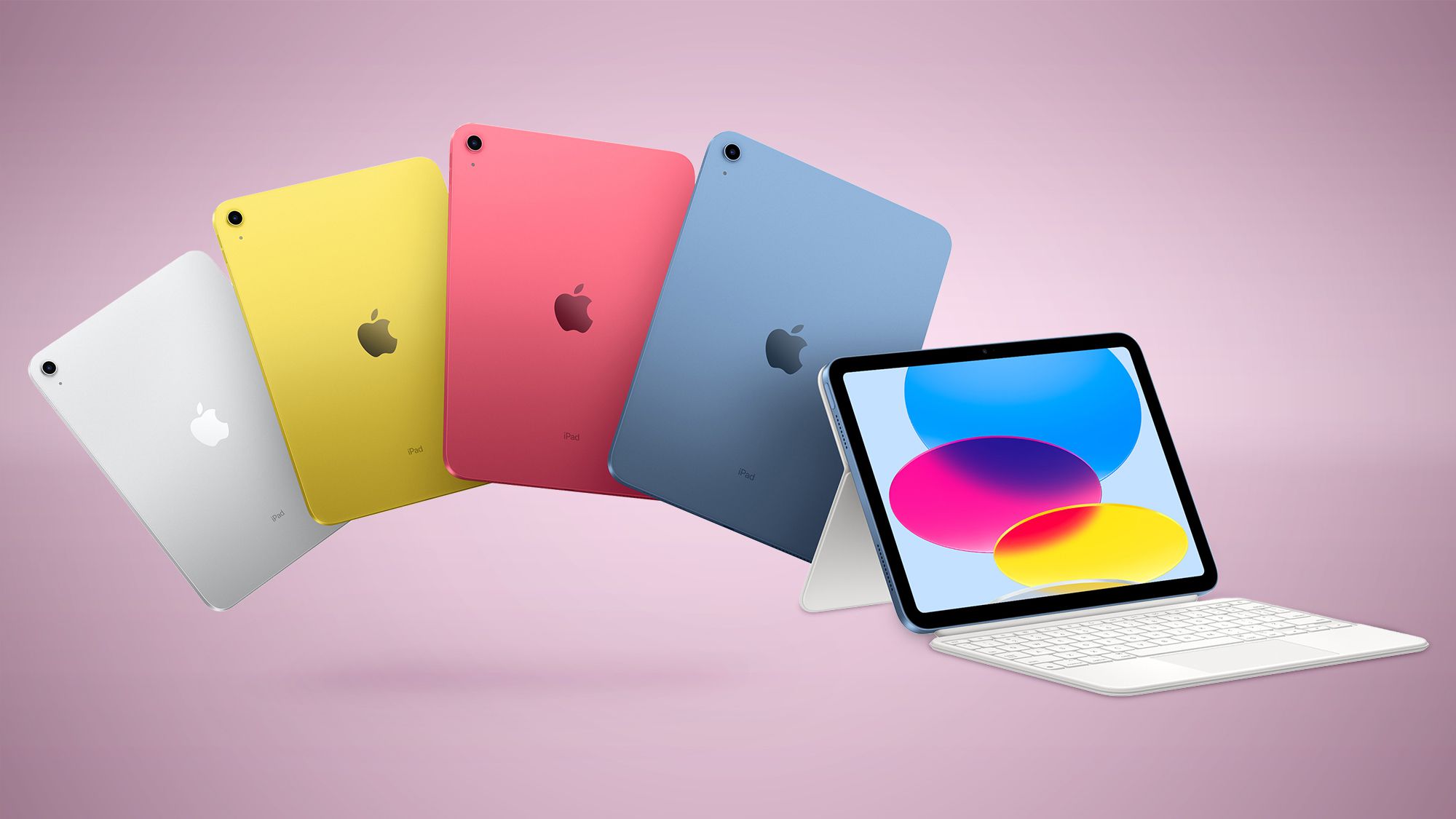
Physically, the 12th-generation iPad is expected to retain its 7mm thickness, making it Apple’s chunkiest tablet, a design choice that contributes to its robust build and potentially accommodates a larger battery. Apple has historically offered the low-cost iPad in a vibrant array of colors, and the 12th-generation could introduce new shades to its current palette of blue, pink, silver, and yellow, offering users more personalization options. No significant alterations are anticipated for the rear or front-facing cameras, the USB-C charging port, or compatibility with existing accessories such as the Apple Pencil (likely the 1st or USB-C version, given the current model’s compatibility).
Performance Leap: A-Series Processor and Apple Intelligence Integration
The most compelling upgrade for the 12th-generation iPad lies within its silicon. Rumors point to the integration of Apple’s A18 or A19 chip, a significant generational leap from the A16 chip found in the current 11th-generation model. Both the A18 and A19 chips are expected to be manufactured using a 3-nanometer process, a cutting-edge fabrication technology that promises substantial improvements in both raw processing power and energy efficiency. This advancement will translate into faster app loading times, smoother multitasking, and enhanced performance across demanding applications and games.
Beyond raw speed, the adoption of the A18 or A19 chip is crucial for enabling Apple Intelligence, Apple’s recently unveiled suite of generative AI features. The A16 chip, which powered the 2025 iPad, notably lacks support for Apple Intelligence. This makes the chip upgrade a pivotal moment for the entry-level iPad, as it will unlock a new realm of intelligent capabilities previously unavailable to the most affordable tablet in Apple’s lineup. Apple Intelligence is expected to leverage on-device processing for features like advanced natural language understanding, context-aware suggestions, and sophisticated image and video manipulation, providing a more personalized and intuitive user experience.
To fully support these advanced AI functionalities, a corresponding upgrade in system memory is also anticipated. While the 11th-generation iPad currently features 6GB of RAM, industry insights and Apple’s own requirements for Apple Intelligence suggest that the 12th-generation model will need to increase its RAM to 8GB. This bump in memory is critical for efficiently running the complex neural network models and large language models that underpin Apple Intelligence, ensuring smooth performance without compromising battery life. Furthermore, the updated A-series chips are expected to offer hardware-accelerated ray tracing and other advanced graphics features, significantly improving the gaming experience on the device, bringing it closer to the capabilities of more premium tablets and even some gaming consoles.
Enhanced Connectivity: The N1 Chip and Wireless Advancements
In a strategic move towards greater vertical integration, Apple debuted its proprietary Wi-Fi and Bluetooth chip, dubbed the N1, with the iPhone 17 models. This custom-designed silicon has since been integrated into the iPad Pro line, and there is a strong possibility that Apple intends to deploy the N1 chip across all its future devices starting from 2026 onwards. Should the 12th-generation iPad receive the N1 chip, it would mark a substantial upgrade in wireless connectivity.
The N1 chip is engineered to support Wi-Fi 7, the latest generation of wireless networking technology. This would allow the entry-level iPad to connect to faster 6GHz networks for the first time, delivering significantly higher throughput, lower latency, and improved network efficiency, especially in congested wireless environments. For users, this translates to faster downloads, smoother streaming of high-resolution content, and more responsive online gaming. In comparison, the 11th-generation iPad is limited to Wi-Fi 6.
In addition to Wi-Fi 7, the N1 chip also supports Bluetooth 6, an advancement over the current Bluetooth 5.3 standard. Bluetooth 6 is expected to offer enhanced audio quality, improved power efficiency for connected accessories, and more robust connections, benefiting users of AirPods, external keyboards, and other Bluetooth peripherals. Furthermore, the N1 chip incorporates Thread networking technology, a crucial component for smart home devices, promising seamless and reliable connectivity within the Matter smart home ecosystem. However, a lingering uncertainty exists: based on leaked internal code, there’s a possibility that Apple might reserve the N1 chip for its more premium devices. If this proves to be the case, the 12th-generation iPad would likely retain its current Wi-Fi and Bluetooth modules, limiting its connectivity advancements.
Apple’s Vertical Integration: The Custom Modem Initiative
Beyond Wi-Fi and Bluetooth, Apple has been making significant strides in developing its own cellular modem chips, moving away from its reliance on Qualcomm. The company introduced its C1 and C1X modem chips in iPhones and iPads in 2025, and the 12th-generation iPad, particularly its cellular models, is a strong candidate to incorporate an Apple-designed modem.
This strategic shift towards in-house modem development is driven by several factors. Firstly, it provides Apple with greater control over its supply chain, reducing dependency on external suppliers and mitigating potential disruptions. Secondly, Apple’s custom modem chips are designed for optimal power efficiency while delivering comparable or superior performance to third-party solutions. This means that cellular-enabled 12th-generation iPads could offer longer battery life during cellular usage without compromising network speeds. The integration of custom modems is a testament to Apple’s long-term vision of complete vertical integration, similar to its successful transition to Apple Silicon for its processors, allowing for deeper hardware-software optimization and unique feature sets.
Navigating Pricing and Market Dynamics
The pricing strategy for the 12th-generation iPad remains a critical point of analysis, especially in light of recent market trends. Apple implemented a price increase in June 2026, which saw the 11th-generation iPad’s starting price climb to $449 for the 128GB model, a $100 increase from its predecessor. This adjustment was attributed by Apple to rising component costs, particularly for RAM, a trend that shows no signs of abatement in the lead-up to the 12th-generation’s launch.
Given the persistent inflationary pressures on component costs, particularly for memory and advanced silicon, and the significant internal upgrades anticipated (A18/A19 chip, 8GB RAM, potential N1 chip), it is highly probable that the 12th-generation iPad will maintain the $449 starting price point. While a price increase would be unwelcome for consumers, Apple faces the challenge of balancing profitability with maintaining the "affordable" positioning of this device. The tablet market has seen increasing competition, but the standard iPad continues to hold a dominant position in its segment, largely due to its robust ecosystem, strong brand loyalty, and consistent performance. The new financing options, such as the 36-month carrier financing for cellular iPads through AT&T and Verizon (introduced in July 2026), could help mitigate the impact of the higher upfront cost for consumers, making the device more accessible over an extended payment period.
Anticipated Launch Window and Strategic Implications
Initial reports from sources like Bloomberg had suggested a refresh of the standard iPad sometime in 2026. However, more recent and refined intelligence indicates a revised timeline, with the 12th-generation iPad now expected to make its debut in the first quarter of 2027 at the earliest. This potential delay could be attributed to several factors, including supply chain complexities, strategic product roadmap adjustments to better align with other Apple product launches (such as the iPhone 17 and new iPad Pro/Air models), or a desire to ensure the seamless integration and robust performance of new technologies like Apple Intelligence and the N1 chip.
A Q1 2027 launch would position the 12th-generation iPad strategically for the back-to-school season later that year, a key sales period for Apple’s more accessible devices. The delay also allows Apple to fine-tune the software experience, ensuring that Apple Intelligence features are polished and fully optimized for the new hardware. For consumers, waiting for the 2027 model appears to be the most advisable course of action, given the significant performance and intelligent feature upgrades it is expected to bring over the current 11th-generation device.
Looking Ahead: The Future of Apple’s Most Accessible Tablet
The 12th-generation iPad, while maintaining its familiar exterior, is shaping up to be a pivotal release for Apple’s entry-level tablet line. Its projected internal upgrades, particularly the powerful A18/A19 chip and the requisite 8GB of RAM, are not merely incremental improvements but foundational changes designed to usher in the era of Apple Intelligence. This integration of advanced AI capabilities will redefine user interaction and productivity on the most affordable iPad, making it a more intelligent and versatile companion.
Furthermore, the potential inclusion of the N1 chip with Wi-Fi 7 and Bluetooth 6, alongside Apple’s custom modem, underscores the company’s commitment to enhancing connectivity and strengthening its vertical integration strategy across its entire product portfolio. While the $449 starting price maintains a premium position in the broader tablet market, the added value derived from these technological advancements, coupled with Apple’s robust ecosystem and ongoing support, is likely to justify the investment for many users. The 12th-generation iPad is poised to reinforce its role as a compelling and accessible entry point to Apple’s tablet experience, equipped for the demands of the coming years.