The Celestial Somersault: How a Massive Disk Flip and Ancient Mergers Sculpted the Modern Milky Way

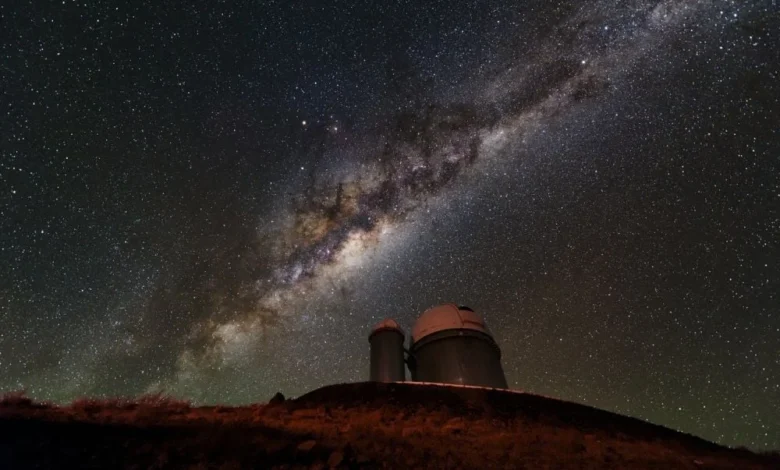
The Milky Way galaxy, our cosmic home, is not the static, serene spiral it appears to be from our vantage point within the Orion Arm. Instead, new research suggests that its history is defined by violent upheaval, including a dramatic "disk flip" that fundamentally altered the trajectory of its stars. For decades, astronomers have been puzzled by the distinct mechanical differences between the galaxy’s two primary disk structures. Recent findings, presented at the Royal Astronomical Society’s National Astronomy Meeting in Birmingham, have provided a breakthrough in understanding this disparity. By utilizing high-resolution cosmological simulations and data from the European Space Agency’s (ESA) Gaia mission, researchers have reconstructed a billion-year-old narrative of galactic collisions and structural inversion that challenges our previous understanding of galactic stability.
The Milky Way is an ancient structure, with its first stars igniting shortly after the Big Bang, approximately 13.8 billion years ago. Throughout its long life, it has acted as a cosmic predator, merging with other galaxies and absorbing smaller satellite systems to reach its current mass. While these interactions are common in the observed universe, piecing together the specific sequence of events for our own galaxy is a complex task of "galactic archaeology." Central to this mystery is the Milky Way’s disk, which is divided into two separate components: a thin disk and a thick disk. These structures do not merely differ in density and age; they rotate at vastly different speeds, a phenomenon that has long lacked a definitive explanation.
The Architecture of the Galactic Disk
The vast majority of the Milky Way’s stars, including our Sun, reside in the thin disk. This region is characterized by its spiral arms, rich gas reserves, and active star formation. However, surrounding this thin disk is a more expansive, more sparse structure known as the thick disk, or stellar halo. While the thin disk rotates rapidly, the thick disk is a more chaotic environment. Observations from the Gaia mission have revealed that this stellar halo possesses a remarkably weak net rotation, moving at a mere 10 to 20 kilometers per second—significantly slower than the 220 kilometers per second at which the Sun orbits the galactic center.
The stars within this thick disk are distinct markers of the galaxy’s past. They are generally older, "metal-poor" (meaning they lack heavy elements formed in later generations of stars), and follow eccentric or random orbits. Astronomers have long suspected that these stars did not originate within the Milky Way but were instead "immigrants" absorbed during ancient mergers. The question remained: why did these mergers result in such a specific, sluggish rotation for the halo while the inner disk maintained its momentum?
The Auriga Simulations: A Window into the Past
To investigate this discrepancy, a team of researchers led by Kirill Batrakov, an astronomer at Durham University, turned to the Auriga simulations. Auriga is a sophisticated suite of magnetohydrodynamical cosmological zoom-in simulations designed to model the formation of Milky Way-like galaxies from the early universe to the present day. These simulations are incredibly complex, accounting for the gravitational influence of dark matter, the hydrodynamics of interstellar gas, the lifecycle of stars, the explosive energy of supernovae, and the growth of supermassive black holes.
The research team simulated 25 galaxies with masses and structures similar to the Milky Way, allowing these digital universes to evolve over billions of years. The study focused on a redshift range of 0 to 2.5, covering roughly the last 11 billion years of cosmic history. This timeframe is critical, as it encompasses the "cosmic noon"—an era approximately 2 to 3 billion years after the Big Bang when star formation reached its peak and major galactic mergers were frequent.
"Gaia observations have revealed that the Milky Way stellar halo has a weak net rotation… yet the origin of this rotation remains unexplained," the researchers noted in their findings. By comparing the simulated galaxies that successfully replicated the Milky Way’s slow halo rotation with those that did not, Batrakov’s team identified three common denominators: early formation, a massive head-on collision, and a subsequent "disk-flip" event.
The Gaia-Enceladus-Sausage Merger and the Disk Flip
The most significant event in the Milky Way’s developmental history is the collision with the Gaia-Enceladus-Sausage (GES) galaxy. Occurring between 8 and 11 billion years ago, this was a massive head-on collision with a dwarf galaxy about 25% the size of the Milky Way at the time. The impact was so profound that it essentially "puffed up" the existing galactic disk and contributed the majority of the stars now found in the inner stellar halo.
However, the Durham University research suggests that the GES merger did more than just add mass. It likely triggered a "disk flip." In this scenario, the gravitational torque and angular momentum exchange during the merger were so intense that the entire orientation of the Milky Way’s disk shifted. "We already know that the Milky Way had a massive head-on collision in the past… So, we think that the Milky Way disc likely flipped in the past," Batrakov explained.
This revelation has profound implications for the history of our own Solar System. A disk flip means that the stars of the Milky Way were once moving on entirely different trajectories than they are today. While the Sun formed roughly 4.6 billion years ago—long after the primary GES merger—the residual instability and the restructured gravitational field mean that our "stable" position in the galaxy might be the result of a much more turbulent lineage than previously thought.
The Role of Dark Matter and the Twisted Halo
The study also sheds light on the invisible scaffolding of the galaxy: the dark matter (DM) halo. Dark matter makes up about 85% of the total matter in the universe, and every large galaxy sits at the center of a massive DM halo. The Auriga simulations suggest a direct correlation between the rotation of the stellar halo and the rotation of the dark matter halo.
According to the researchers, the Milky Way’s dark matter halo likely rotates relatively slowly, echoing the sluggish pace of the stellar halo. This finding is supported by independent research published in 2025 in the journal Astronomy and Astrophysics. That study used Gaia data to suggest that the Milky Way’s dark matter halo is "twisted." While the inner regions of the DM halo align with the visible disk (within a radius of about 20 kiloparsecs), the outer regions become vertically oriented. This "twist" is a signature predicted by the disk-flip scenario, providing a secondary line of evidence that our galaxy underwent a massive reorientation.
A Chronology of Galactic Evolution
The emerging picture of the Milky Way’s life follows a violent and transformative timeline:
- The Formative Era (13+ billion years ago): The Milky Way begins as a collection of smaller gas clouds and star clusters. The proto-disk starts to form.
- The GES Collision (8–11 billion years ago): The Gaia-Enceladus-Sausage galaxy collides head-on with the Milky Way. This event deposits "metal-poor" stars into the halo and provides the energy for the disk flip.
- The Disk Flip and Reorientation: Under the gravitational stress of the merger, the Milky Way’s angular momentum vector shifts, flipping the disk and creating the slow-rotating stellar halo we observe today.
- Cosmic Noon (8–10 billion years ago): Following the merger, a surge of star formation occurs, fueled by the influx of gas from the collision.
- Stabilization of the Thin Disk: Over several billion years, new gas settles into a flat, rapidly rotating thin disk, where the Sun eventually forms.
- Ongoing Accretion (Present Day): The Milky Way continues to grow by devouring smaller neighbors, such as the Sagittarius Dwarf Spheroidal Galaxy and the Large and Small Magellanic Clouds.
Broader Implications for Astronomy
Understanding the Milky Way’s specific history is about more than just local pride; it serves as a "testbed" for the rest of the universe. Because we reside inside this galaxy, we can measure the positions and velocities of billions of individual stars with a precision that is impossible for distant galaxies.
"Finding that its disc flipped adds a new chapter to that story, one we must account for when placing the Milky Way in a broader context of other galaxies," Batrakov said. This research suggests that many spiral galaxies we observe in the deep universe may have undergone similar inversions. If a disk flip is a standard consequence of a major merger, then the "stability" of spiral galaxies may be a late-stage characteristic rather than an inherent one.
The findings also emphasize the indispensable nature of the Gaia mission. Launched by the ESA in 2013, Gaia has been creating the most detailed 3D map of our galaxy ever made. By providing the "present-day observations" of stellar movement, Gaia allows scientists to work backward, using tools like the Auriga simulations to reconstruct events that happened billions of years before the Earth existed.
Conclusion: A Living History
The reality of living inside a galaxy that has flipped its disk and consumed its neighbors does not change the daily lives of humans on Earth, but it fundamentally shifts our intellectual place in the cosmos. We are residents of a dynamic, evolving structure that is still responding to the echoes of ancient collisions.
The work of Batrakov and his colleagues highlights a burgeoning era of "galactic archaeology," where the motion of a single star can reveal a collision that occurred 10 billion years ago. As the Gaia mission continues to release data and as simulations become more refined, the story of the Milky Way will likely continue to surprise us. For now, the "celestial somersault" stands as a testament to the violent beauty of galactic evolution and the power of modern astronomy to peer through the veil of deep time.
Related posts: