No Mans Sky is Getting a Major Visual Upgrade on PS5 as Hello Games Adopts Sonys QSSR Upscaling Technology

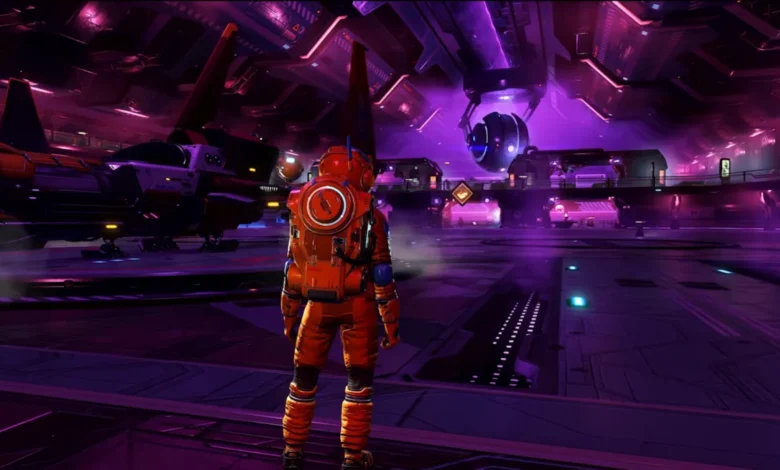
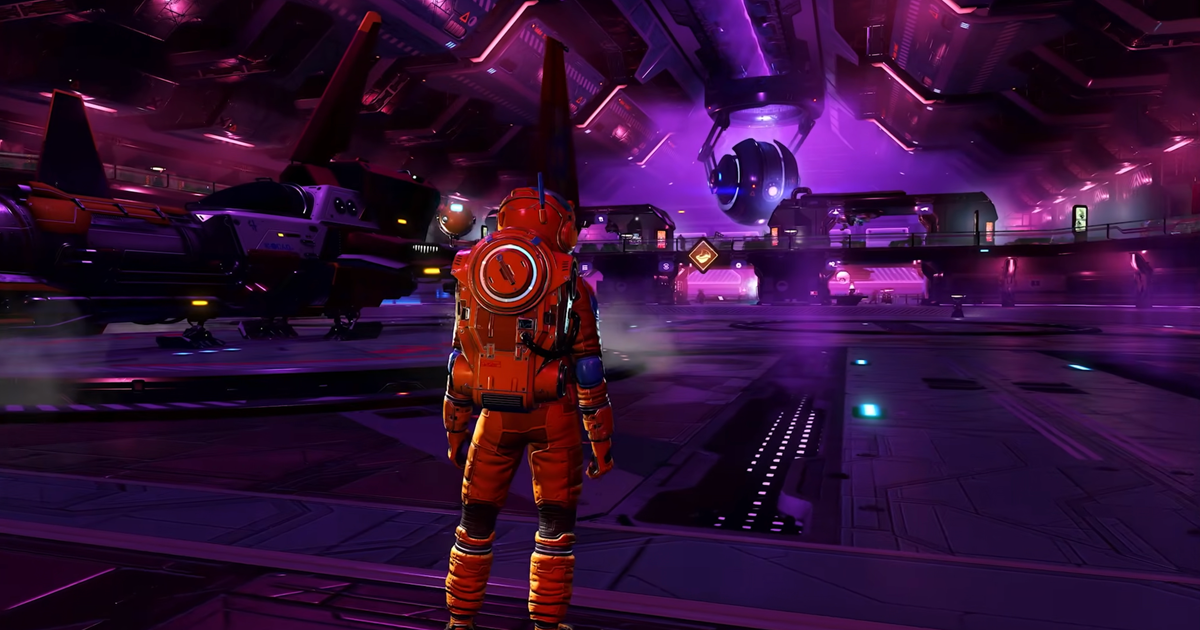
No Man’s Sky, the landmark procedurally generated space simulation title developed and published by Hello Games, is poised to receive a transformative visual enhancement on the standard PlayStation 5. The studio has officially confirmed that it is completely swapping out its existing AMD FidelityFX Super Resolution (FSR)-based upscaling pipeline in favor of Sony’s newly introduced Quick Spectral Super Resolution (QSSR) technology. This architectural shift is expected to unlock unprecedented levels of visual fidelity, sharp edge stability, and overall rendering efficiency for players exploring the infinite solar systems of the expansive sci-fi universe.
The integration of QSSR into No Man’s Sky represents a major milestone in the ongoing technological evolution of the game, which originally debuted to a mixed reception in 2016 before staging one of the most remarkable redemption arcs in modern video game history. By leveraging advanced machine learning-based and AI-guided upscaling algorithms, Hello Games aims to push the hardware limits of the base PlayStation 5 console, delivering visual clarity that bridges the gap between traditional rasterized rendering and next-generation deep learning super sampling solutions.
The Technical Leap: From FSR to QSSR
The announcement was first brought to light by Martin Griffiths, engine programmer at Hello Games, who took to social media to share his firsthand impressions of the newly implemented upscaling technique. Describing the visual delta between the legacy FSR implementation and the incoming QSSR framework as "night and day," Griffiths highlighted the stark improvements in pixel clarity and geometric stability observable during direct play tests.
"Replacing our older FSR-based upscaling with QSSR provides a substantial boost in image quality—it’s night and day when you see it in person," Griffiths stated on X (formerly Twitter). He also underscored the collaborative nature of the development process, noting that working closely with Sony’s internal engineering divisions on bleeding-edge proprietary technology proved to be a remarkably rewarding endeavor for the studio’s technical team.
Hello Games founder Sean Murray further reinforced these sentiments, emphasizing the core design philosophy of No Man’s Sky and why visual precision remains a paramount priority for the developers. Because the game dynamically generates an infinite universe where every visible star in the night sky corresponds to a fully realized, visitable solar system, maintaining the highest possible standard of individual pixel rendering is critical to preserving player immersion.
"No Man’s Sky gives players an infinite procedural universe to explore," Murray explained. "When every star in the night sky is a real solar system players can visit, we care a great deal about the quality of every pixel. QSSR allows us to render the universe in sharper, cleaner, and more beautiful detail, while delivering the best possible framerate. Look for it in the next few weeks."
Origins of QSSR and the Sony-AMD Partnership
Quick Spectral Super Resolution does not emerge in a vacuum; rather, it is part of a broader, highly strategic push by Sony Interactive Entertainment to elevate the graphical standards across its entire ecosystem. QSSR brings AI-guided upscaling capabilities directly to the standard, base-model PlayStation 5. It is built upon the foundational research and architectural breakthroughs established by the PlayStation Spectral Super Resolution (PSSR) engine, which was originally developed to power the high-end, mid-generation hardware refresh, the PS5 Pro.
Both PSSR and QSSR are the direct commercial and technical fruits of "Project Amethyst," a protracted, multi-year engineering collaboration between Sony and semiconductor giant AMD. Through Project Amethyst, Sony aimed to design custom machine learning hardware blocks and software libraries tailored specifically to gaming workloads, allowing console titles to achieve native-like resolutions and fidelity profiles while running at significantly reduced computational costs.
Traditional spatial and temporal upscalers, such as standard iterations of AMD FSR, often suffer from temporal instability, shimmering artifacts on thin geometry, and ghosting during high-velocity camera movements. In contrast, deep-learning-based spectral upscalers analyze multiple preceding frames alongside current motion vectors, reconstructing missing pixel data with contextual awareness. Sony’s official documentation for QSSR notes that the technology consistently delivers "sharper details, cleaner edges, and more stable images than traditional upscalers," effectively mitigating common visual anomalies like aliasing and shimmering on distant planetary rings, complex spaceship hulls, and dense flora.
Broader Industry Rollout and Ecosystem Impact
No Man’s Sky is far from the only high-profile title slated to benefit from this new upscaling pipeline. Earlier in the month, Sony officially unveiled a targeted roster of premier third-party and first-party software products that are incorporating QSSR support as part of a staggered firmware and game-patch rollout.
Alongside Hello Games’ space simulator, Sony’s initial wave of QSSR integration encompasses critically acclaimed blockbusters and competitive multiplayer experiences, including:
- Marvel’s Spider-Man 2 (Insomniac Games / Sony Interactive Entertainment)
- Control Resonant (Remedy Entertainment)
- The Finals (Embark Studios)
- Arc Raiders (Embark Studios)
- Hell Let Loose: Vietnam (Team17 / Covert Operations)
Industry analysts point out that the democratization of machine learning upscaling for the standard PlayStation 5 hardware base is a significant strategic move for Sony. As modern game engines increasingly rely on heavy ray-tracing features, complex global illumination models, and dense geometry processing via technologies like Unreal Engine’s Nanite, developer studios face immense pressure to maintain stable 60 frames-per-second performance targets without sacrificing visual crispness. By supplying developers with an optimized, platform-native AI upscaler like QSSR, Sony ensures that the millions of standard PS5 consoles currently in circulation will remain viable platforms for cutting-edge, graphically demanding software well into the latter half of the decade.
A Banner Year of Multi-Platform Expansion and Content Updates
The integration of QSSR technology is merely the latest in a relentless stream of major developments for No Man’s Sky throughout the year. Hello Games has continued to defy expectations regarding the long-term support lifecycle of the title, refusing to slow down its development cadence despite the game having been on the market for over eight years.

In recent months, the studio successfully ported the massive exploratory universe to mobile ecosystems, bringing No Man’s Sky to Apple iPhone and iPad hardware via advanced optimization techniques, allowing players to carry their procedurally generated universes in their pockets. Concurrently, the studio has been actively developing its upcoming survival-crafting fantasy title, Light No Fire, while continuing to deliver robust content updates to the core No Man’s Sky player base.
Most recently, Hello Games launched the "Forsaken" update across all supported platforms, introducing seasonal atmospheric shifts, eerie exploration mechanics, and a touch of autumnal spookiness to the traditionally solitary sci-fi experience. This sustained stream of updates has fostered a deeply dedicated community. Cultural phenomena surrounding the game remain vibrant, with niche communities—such as player groups dedicated to building cooperative utopias at the literal edge of the observable universe—continuously capturing public attention.
Chronology of Key Events
- August 2016: No Man’s Sky launches globally on PlayStation 4 and PC, drawing intense debate over its initial feature set before beginning its transformative multi-year redemption arc.
- November 2020: The game receives comprehensive native enhancements for the launch of the PlayStation 5, incorporating improved draw distances, 60 FPS support, and enhanced environmental density.
- November 2023–2024: Hello Games expands the title across additional platforms, eventually bringing the experience to mobile devices via iPad and iPhone iterations, while teasing future standalone projects like Light No Fire.
- Early November 2026: Sony officially announces QSSR (Quick Spectral Super Resolution) for the standard PlayStation 5, detailing an initial wave of supported titles including Marvel’s Spider-Man 2, The Finals, and No Man’s Sky.
- Late November 2026: Hello Games engine programmer Martin Griffiths and founder Sean Murray officially confirm that No Man’s Sky’s QSSR integration is imminent, promising a dramatic upgrade over the legacy FSR-based pipeline within the coming weeks.
Implications and Future Outlook
The transition to QSSR marks an important conceptual shift in how console developers optimize aging hardware. Rather than forcing studios to choose between aggressive resolution scaling drops or crippling framerate degradation, platform-level machine learning solutions offer a sustainable middle ground.
For No Man’s Sky, a game whose entire identity is anchored in the boundless scope of its vistas, the ability to render distant planetary horizons, intricate space stations, and complex fleet battles with crystal-clear spatial stability enhances the fundamental gameplay loop. As the update rolls out over the coming weeks, players on standard PlayStation 5 hardware will be able to experience the universe with a level of visual fidelity previously restricted to high-end personal computers or mid-generation console refreshes.
Ultimately, Hello Games’ swift adoption of Sony’s latest toolkit underscores the studio’s enduring commitment to technical excellence. What began as a turbulent launch over a decade ago has matured into a masterclass in software longevity—proving that with the right architectural foundations and persistent developer dedication, virtual universes can continue to expand and sharpen indefinitely.