The Growing Hardware Gap in the Smart Home Ecosystem: Why Google’s Stagnation Is Driving Users Toward Amazon and Beyond

The current landscape of smart home hardware is undergoing a significant shift as consumer demand for sophisticated, high-fidelity, and visually integrated displays reaches an all-time high. While the market for smart displays has matured, a notable divergence has emerged between the strategies of major technology conglomerates. Specifically, the prolonged absence of updated hardware from Google’s Nest division has created a vacuum that competitors, most notably Amazon and Apple, are aggressively filling. This trend has become particularly pronounced during the 2025 holiday shopping season, where deep discounts on competing hardware are challenging the loyalty of consumers deeply embedded in the Google Home ecosystem.
A Chronology of Stagnation: The Nest Hub Timeline
Google’s approach to the smart home market has historically been characterized by software-first innovation, often relying on the robust capabilities of the Google Assistant rather than frequent hardware iterations. However, this strategy has led to a significant aging of the company’s physical product lineup.
The Nest Hub, which serves as the cornerstone of Google’s smart home strategy, has not seen a major hardware revision since the second-generation release in March 2021. Even that iteration was largely an incremental update, refining the sleep-tracking capabilities and audio drivers of the 2018 original. The situation is even more stark when examining the Nest Hub Max, a device intended to serve as the premium command center for home automation. The Nest Hub Max was released in September 2019, meaning the flagship device has now gone over six years without a hardware successor.
For comparison, the broader smart home industry typically operates on a two-to-three-year refresh cycle for display-based hardware. This rapid pace allows manufacturers to integrate faster processors, improved camera sensors for video conferencing, and higher-resolution display panels. Google’s failure to maintain this cadence has left its users relying on legacy hardware that lacks the processing power required for the modern, AI-driven smart home features that Google is simultaneously pushing through its software updates.

Market Dynamics and the Competitive Landscape
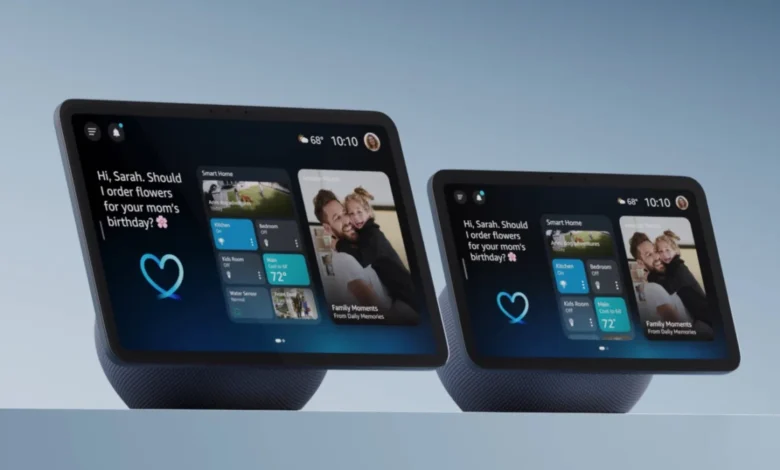
The vacuum left by Google’s lack of activity has allowed competitors to capture significant market share. Amazon, in particular, has maintained a relentless release schedule for its Echo Show series. By offering a tiered range of devices—varying from compact bedside units to large, wall-mountable displays—Amazon has successfully addressed different consumer use cases that the Nest Hub line currently fails to cover.
The latest Echo Show models, specifically the 8.7-inch and 11-inch variants, represent a generational leap over the aging Nest Hub hardware. These devices feature modern, high-contrast displays, advanced beamforming microphone arrays, and speakers capable of room-filling audio—areas where the current Nest Hub models struggle.
Furthermore, the entry of Apple into the smart display market, coupled with the continued refinement of the HomeKit ecosystem, has introduced a third pillar of competition. Apple’s focus on privacy-centric hardware and seamless integration with its existing mobile ecosystem has provided an alternative for users who are disillusioned with Google’s hardware trajectory but hesitant to move to Amazon’s data-heavy environment.
Economic Factors: The Black Friday Catalyst
The 2025 holiday shopping season serves as a critical case study in how hardware availability influences consumer behavior. With retail giants like Amazon slashing prices on their latest Echo Show displays—often by $100 or more, bringing entry-level prices to approximately $99.99—the cost-to-value ratio has skewed heavily in favor of the competition.
When a consumer evaluates the need for a smart display, the decision is no longer based solely on software preference. Instead, it has become a question of utility and longevity. A user who is already invested in the Google Home ecosystem may find the prospect of buying a $100 Amazon device more practical than continuing to troubleshoot a six-year-old Google device that is increasingly sluggish. This price-driven migration represents a potential long-term threat to Google’s ecosystem, as once a consumer adopts a competing smart display, the "stickiness" of that ecosystem makes it significantly harder for Google to reclaim them.

Analysis of Technical and Strategic Implications
The lack of a new Nest Hub is not merely a complaint from enthusiasts; it reflects a deeper strategic challenge for Alphabet. Smart displays are the primary interfaces for users to interact with smart home protocols like Matter and Thread. By not providing the latest hardware, Google is effectively limiting the performance of these protocols for its users.
Modern smart displays are increasingly expected to function as local hubs for AI processing. As Google shifts its focus toward Gemini and other generative AI models, the requirement for local on-device compute becomes essential to reduce latency. The hardware in the 2019-era Nest Hub Max is fundamentally incapable of supporting these modern AI demands. Consequently, the user experience of the Google ecosystem is being hampered by the very devices intended to showcase it.
Industry analysts note that Google’s hesitation may be linked to a broader reorganization of its hardware division, particularly as it merges Nest and Pixel teams to prioritize mobile-first AI development. However, the cost of this organizational pivot is the erosion of its "home base"—the literal home environment where Google once held a dominant position.
Official Responses and Future Outlook
While Google has remained largely silent regarding specific release dates for a next-generation Nest Hub, recent regulatory filings and patent disclosures suggest that internal development is ongoing. Rumors persist regarding a "detachable" smart display concept that would bridge the gap between a tablet and a wall-mounted console, aiming to compete with the versatility of the Echo Show series.
In recent earnings calls, Google executives have emphasized that the company’s focus remains on the "ambient computing" vision, where the software layer—Google Assistant and the Gemini AI—is more important than the specific vessel that carries it. Yet, the reality of the consumer market suggests otherwise: hardware is the gatekeeper of the ambient experience. Without a high-quality, responsive, and modern display, the software’s utility is diminished.

The Broader Impact on Consumer Ecosystems
The shift in market dynamics serves as a warning for tech giants: consumer patience regarding hardware longevity is finite. As households become increasingly "smart," the devices that manage these homes become utility appliances rather than just luxury gadgets. When a utility appliance fails to keep pace with industry standards, the consumer will inevitably seek a replacement from a competitor.
For the average household, the transition is seamless. Because most modern smart home apps are cross-platform, a user can maintain their Google Calendar and YouTube Music subscriptions while utilizing an Amazon Echo Show or an Apple-based interface. The hardware, therefore, is no longer the anchor that keeps a user in a specific ecosystem; it is a commodity that is subject to the forces of pricing, design, and performance.
As we look toward the remainder of 2025 and into 2026, the burden of proof rests with Google. To regain its footing, the company must address not just the software capabilities of its smart home vision, but the physical reality of the devices that reside on kitchen counters and nightstands across the globe. Until a successor to the Nest Hub line is announced, the company risks further fragmentation of its user base, as the allure of modern, discounted, and capable hardware from rivals continues to prove irresistible. The question remains whether Google can pivot fast enough to reclaim the living room, or if the opportunity to lead the next generation of home automation has already begun to slip away.