NASA Space Crop Production and Precision Health Experiments Head to International Space Station on Northrop Grumman Mission 25

The International Space Station (ISS) is set to host a suite of pioneering scientific investigations as Northrop Grumman prepares to launch its 25th Commercial Resupply Services (CRS-25) mission. Among the cargo manifest are critical biological and physical science experiments developed by NASA’s Biological and Physical Sciences (BPS) Division, specifically designed to address the challenges of long-duration human spaceflight. As humanity sets its sights on establishing a sustainable presence on the Moon through the Artemis program and eventually conducting crewed missions to Mars, the requirement for self-sustaining life support systems and advanced medical monitoring has become paramount. This mission represents a significant technological leap in how NASA intends to feed and protect the astronauts of the future.
Pioneering Sustainable Agriculture in Microgravity
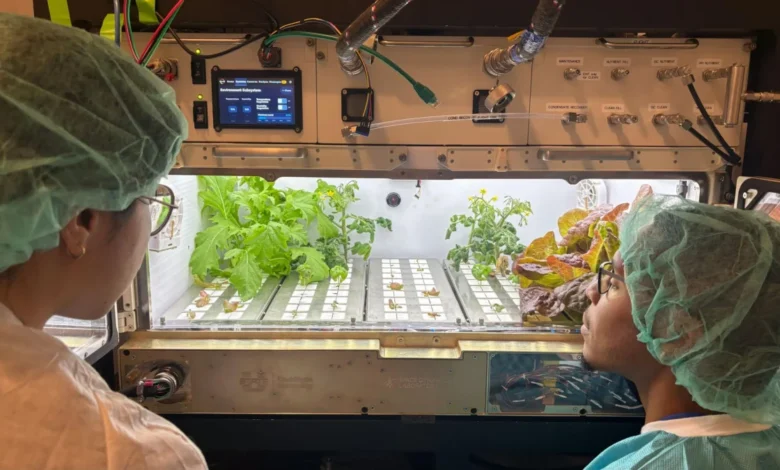
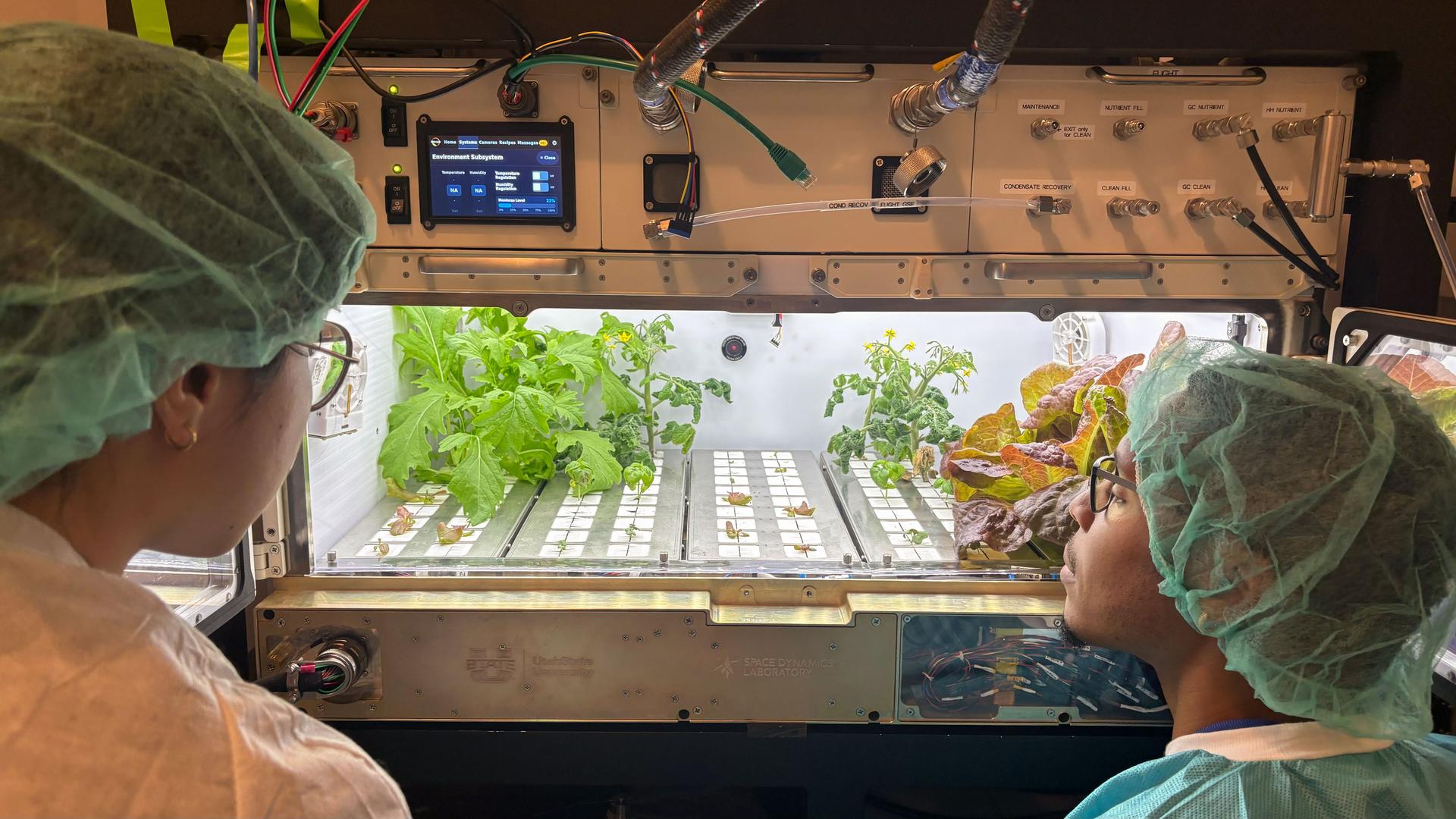
One of the most anticipated payloads on the Northrop Grumman mission is a next-generation space crop production system. For decades, NASA has experimented with growing plants in orbit, ranging from early studies on the Space Shuttle to the current Advanced Plant Habitat (APH) and Veggie units aboard the ISS. However, the new prototype system represents a shift toward industrial-scale agricultural viability.
The experiment, known as OHALO-III, aims to validate sophisticated water delivery and volume optimization technologies. In the absence of gravity, the physics of fluid dynamics changes significantly; water does not simply pool at the roots as it does on Earth. It tends to float, potentially drowning plants or failing to reach the root zone entirely. The new chamber utilizes a closed-loop fluid management system that precisely meters water to the root substrate, ensuring that crops receive optimal hydration while minimizing waste—a critical factor for spacecraft where every milliliter of water must be accounted for and recycled.
This research carries profound implications for Earth-based agriculture as well. As the global population grows and climate change impacts traditional farming, interest in vertical farming and controlled-environment agriculture (CEA) has surged. The data gleaned from these microgravity trials will help engineers refine automated irrigation and nutrient-delivery systems that could be scaled for urban farms on Earth, where space is limited and water conservation is an economic and environmental necessity.
Advancing Precision Health and Neurological Research
While the crop system focuses on sustaining the body, the second major payload on the CRS-25 mission focuses on preserving the brain. The Avatar-ORG4 investigation marks a crucial milestone in the study of neurological health in deep space. Following previous missions that successfully sent “miBrains”—small, lab-grown organoids of human brain tissue—to the ISS, this experiment aims to refine the hardware used to sustain these tissues in orbit.
The primary objective is to validate a miniature, automated fluid-handling system. Keeping brain organoids alive in a space environment is a complex engineering feat that requires the constant, precise delivery of nutrient-rich media to replace fluids that have been consumed. If successful, this system will allow researchers to observe how human neural cells respond to long-term exposure to microgravity and ionizing radiation.
The data gathered from these organoids is intended to assist NASA in identifying potential neurological risks that might affect astronauts on multi-year missions. By understanding how cosmic radiation and the unique stressors of the space environment affect brain tissue, medical teams can develop pharmacological or behavioral countermeasures to protect the mental and physical health of crew members. Furthermore, these miniature models serve as high-fidelity platforms for testing neuroprotective drugs, which could eventually lead to breakthroughs in treating neurodegenerative diseases like Alzheimer’s or Parkinson’s on Earth.
Chronology of NASA’s Biological Research Evolution
To understand the significance of this mission, one must look at the timeline of NASA’s biological research initiatives. The journey began with foundational experiments in the 1980s and 90s, where scientists sought to understand if plants could even grow in space.
- 2014: The launch of the Veggie system provided the first opportunity for astronauts to consume space-grown produce.
- 2018: The commissioning of the Advanced Plant Habitat (APH) provided a more controlled environment for long-term botanical research.
- 2022: The successful deployment of initial miBrain organoid studies (Avatar-ORG1) proved that human neural tissues could survive and remain viable for study on the ISS.
- 2026: The CRS-25 mission marks the transition from simple observational growth to high-precision, automated system validation, paving the way for autonomous habitats.
This trajectory demonstrates a clear transition from exploratory research to the development of operational infrastructure. The agency is no longer just asking if we can grow food or keep cells alive; it is now focused on building the hardware that will function reliably in the harsh, isolated environment of a lunar base or a deep-space transit vehicle.
Supporting Data and Technical Specifications
The biological payloads scheduled for this mission are supported by rigorous laboratory testing conducted at NASA’s Ames Research Center and the Kennedy Space Center. The fluid-handling systems were subjected to hundreds of hours of simulation to ensure that they can operate under the vibrations of a rocket launch and the subsequent transition to microgravity.
Regarding the space crops, the system is designed to manage a high-density root zone with a volume-to-yield ratio that is significantly more efficient than previous iterations. According to preliminary data released by the BPS Division, the optimized delivery system reduces water consumption by approximately 30% compared to traditional terrestrial drip irrigation, while providing a 15% increase in growth rate for specific leafy greens.
The miBrain investigation, meanwhile, utilizes a bioreactor roughly the size of a standard shoebox. This device is capable of maintaining constant temperature, pH levels, and oxygenation, simulating the environment of a human body with unprecedented fidelity. These specifications are essential for ensuring that the data collected is statistically significant and applicable to actual human physiological outcomes.
Official Perspectives and Agency Strategy
NASA’s Biological and Physical Sciences Division has emphasized that these experiments are not merely academic; they are essential prerequisites for the agency’s "Moon to Mars" initiative.
"We are moving from a phase of exploration to a phase of habitation," noted a spokesperson from the BPS research coordination team. "Whether it is growing a salad for a crew on a six-month trip to Mars or understanding the long-term impact of deep-space travel on our neurological pathways, these experiments provide the empirical foundation for survival outside the Earth’s protective magnetic field."
The partnership with Northrop Grumman for the CRS-25 mission highlights the collaborative nature of modern space exploration. By utilizing commercial launch providers, NASA can focus its resources on scientific innovation while leveraging the logistics expertise of private industry. This symbiotic relationship ensures that the ISS remains a robust testbed for the technologies that will define the next half-century of human spaceflight.
Broader Implications for Humanity
The implications of these experiments extend far beyond the confines of the International Space Station. The technology being developed for NASA’s space crops is currently being looked at by companies specializing in closed-loop, sustainable agriculture. As the global climate shifts, the ability to produce high-density, nutrient-rich food in controlled environments with minimal resource input will become an essential component of food security.
Similarly, the precision health investigations represent a paradigm shift in medical research. By testing the resilience of human tissue against the extreme conditions of space, scientists are effectively stress-testing the limits of human biology. The knowledge gained regarding cell-to-cell signaling, DNA repair mechanisms, and the impact of cosmic radiation could yield insights that remain inaccessible in terrestrial labs.
As the Northrop Grumman mission prepares for liftoff, it carries the hopes of an agency—and a global scientific community—that recognizes the necessity of mastering the biological requirements of life. The success of the CRS-25 payloads will move humanity one step closer to a reality where the stars are not just a destination, but a habitat. Through the fusion of advanced fluid dynamics, automated robotics, and biotechnology, NASA continues to turn the challenges of the final frontier into the solutions of the future.
Related posts: