As the holiday shopping season reaches its annual crescendo, consumer behavior is increasingly shifting away from purely luxury items toward practical, long-term investments in household security and disaster resilience. The current Black Friday market reflects a broader trend of "prepper-lite" preparedness, where households are prioritizing infrastructure that provides energy independence and mobility during climate-related power outages and extreme weather events. This year’s retail cycle offers significant discounts on high-capacity portable power stations, jump starters, and industrial-grade illumination tools, providing a rare opportunity for families to build or upgrade their emergency kits without the high cost of acquisition.
The Evolution of Household Preparedness
The focus on emergency hardware aligns with the guidelines established by the Federal Emergency Management Agency (FEMA) under their Ready.gov initiative. Historically, disaster preparedness was a niche concern; however, the rising frequency of severe weather events, grid instability, and prolonged utility outages has mainstreamed the need for home-based redundancies. A fundamental emergency kit is no longer defined solely by shelf-stable food and water; it now necessitates robust power management.
Building a kit requires a systematic approach. Experts recommend identifying gaps in existing household inventory—such as functional flashlights, heavy-duty storage containers, and manual tools—before allocating funds to more complex electronic systems. This methodology ensures that every piece of equipment serves a specific function during a crisis, reducing the likelihood of purchasing redundant or unnecessary items during the shopping frenzy.
Strategic Power Management: The Core of Modern Kits
Portable power stations have become the cornerstone of the contemporary emergency kit. Unlike traditional gasoline-powered generators, which are limited by carbon monoxide emissions and fuel storage requirements, modern lithium-ion and LiFePO4 battery systems offer a safe, indoor-friendly alternative.
The Bluetti Elite 30 V2, currently retailing at approximately half its standard price, represents a significant entry point for households seeking basic energy security. With a 288Wh capacity and a 600W inverter, it is designed to maintain critical low-wattage devices, including modems, routers, and mobile communication equipment. The shift toward LiFePO4 chemistry is particularly notable, as these batteries offer a superior lifespan, often exceeding 3,000 charge cycles before reaching 80% capacity.
For larger domestic requirements, the Anker SOLIX C1000 Gen 2 offers a more substantial 1,024Wh capacity. Capable of powering full-size appliances and providing a 10ms uninterruptible power supply (UPS) switchover, this unit is engineered for prolonged outages where maintaining refrigeration or medical devices is essential. The integration of rapid-recharge technology, which allows the unit to reach full capacity in under an hour, addresses one of the primary weaknesses of portable energy storage: long downtime between utility failures.
Automotive Resilience and Mobility
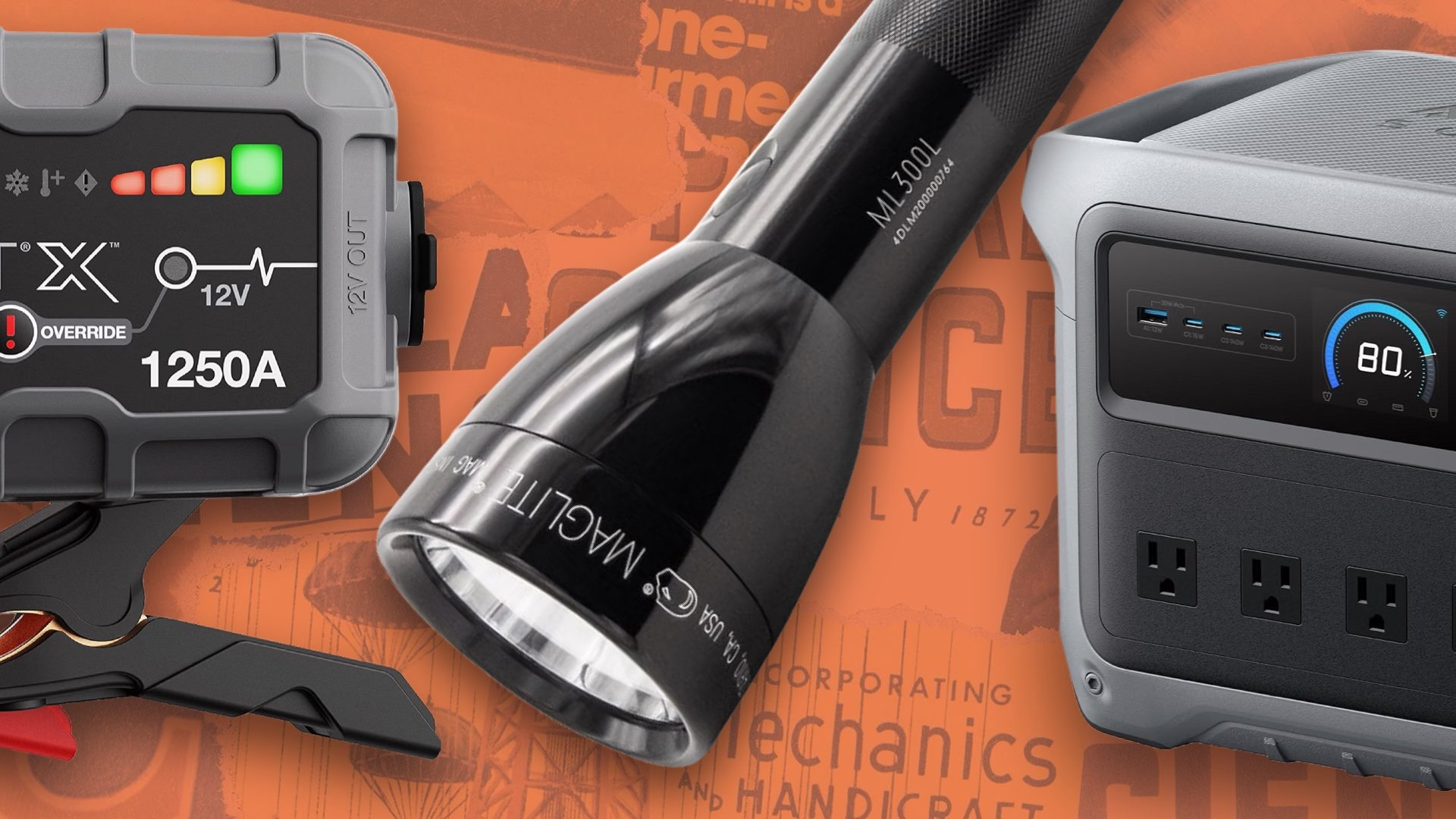
Vehicle-based emergencies remain a primary risk factor during winter months, particularly in regions prone to extreme cold, which rapidly degrades lead-acid car batteries. The market has moved away from traditional jumper cables—which require a secondary vehicle—toward high-capacity lithium jump starters like the NOCO Boost X GBX45.
Technologically, these devices have evolved to include spark-proof technology and reverse-polarity protection, making them accessible to users with minimal mechanical experience. The inclusion of multi-directional USB-C ports allows these devices to double as high-capacity power banks, serving a dual purpose as essential communication tools when a vehicle is immobilized. The standard operating parameters for these units—supporting gas engines up to 6.5 liters—cover the vast majority of consumer passenger vehicles, providing a vital layer of mobility during evacuation scenarios.
Illumination and Environmental Safety
While electronic solutions gain prominence, traditional hardware remains the backbone of a reliable emergency response. The Maglite ML300L, a long-standing standard in heavy-duty illumination, continues to outperform many modern rechargeable alternatives in terms of sheer reliability during long-term grid-down scenarios. Utilizing standard D-cell batteries, this device bypasses the need for an external power source, offering a runtime of up to 434 hours in low-power modes.
However, lighting must be paired with safety monitoring. The deployment of fuel-burning heat sources or portable stoves during an outage creates an immediate, life-threatening risk of carbon monoxide poisoning. Consequently, the acquisition of battery-operated carbon monoxide detectors, such as the First Alert CO400, is statistically more critical than the purchase of luxury electronics. These sensors act as an essential fail-safe, providing audible warnings that can prevent fatalities in poorly ventilated living spaces.
Economic Implications and Procurement Strategy
The broader economic impact of these Black Friday discounts allows for a more comprehensive approach to risk management. By securing high-end power stations and safety equipment at 40% to 50% discounts, consumers can reallocate savings toward perishable essentials that are not typically discounted, such as long-term water storage, non-perishable food, and medical supplies.
Data from recent retail performance suggests that the consumer segment interested in preparedness is becoming increasingly sophisticated. Buyers are looking for specific certifications, such as LiFePO4 battery chemistry and high-speed recharge capabilities, rather than settling for generic, low-capacity bundles. This professionalization of the consumer market indicates that preparedness is no longer viewed as a "one-off" purchase but as a recurring investment in household infrastructure.
Fact-Based Analysis of Disaster Readiness
The necessity for these tools is supported by the increasing duration of utility interruptions across North America. According to grid reliability reports, the average duration of power outages has trended upward over the last decade, primarily due to aging infrastructure and increased climate volatility.
A logical, tiered approach to building an emergency kit involves the following chronology:
- Immediate Survival (0–72 hours): Prioritize water (one gallon per person, per day), non-perishable nutrition, and manual can openers.
- Communication and Visibility (Continuous): Ensure the availability of hand-crank or battery-powered NOAA weather radios and high-lumen lighting.
- Infrastructure Redundancy (Long-term): Integrate portable power stations to manage medical devices, communications, and basic climate control.
- Mobility and Evacuation: Prepare a "go-bag" containing copies of essential documentation, prescriptions, and portable jump-starting equipment.
Professional Recommendations for Future-Proofing
While the current deals provide an excellent entry point, the most resilient households are those that treat preparedness as a dynamic, ongoing process rather than a static goal. Experts advise that after the initial procurement of hardware, consumers must perform biannual checks on their supplies. This includes rotating water stocks, testing battery-operated electronics, and ensuring that firmware for smart-enabled power stations is updated.
Furthermore, the integration of portable power into the home should be done with safety at the forefront. Portable power stations, while much safer than gas generators, still require proper ventilation and should never be stored in extreme temperatures, as lithium-ion cells lose efficiency and safety integrity when exposed to freezing or excessive heat.
In summary, the 2026 Black Friday cycle offers a unique window to bolster household resilience. By focusing on high-quality, long-cycle energy storage, reliable lighting, and non-negotiable safety equipment like carbon monoxide alarms, households can significantly mitigate the impact of unforeseen crises. The transition toward a more prepared citizenry is not merely a reaction to current events but a necessary adaptation to a changing climate and a more fragile energy landscape. Through careful selection and strategic investment in durable, high-performance equipment, families can ensure that they remain operational, connected, and secure when the broader utility grid fails to meet the demands of an unpredictable environment.