The Betta Fish Nebula: A Rare Glimpse into the Violent Aftermath of a Stellar Cataclysm

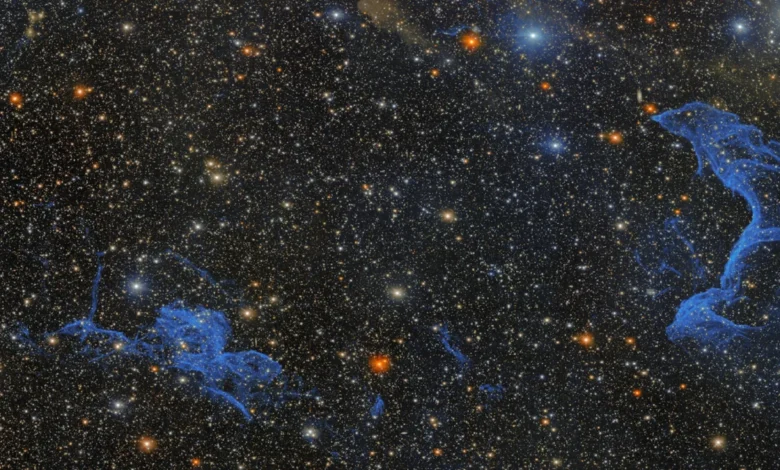
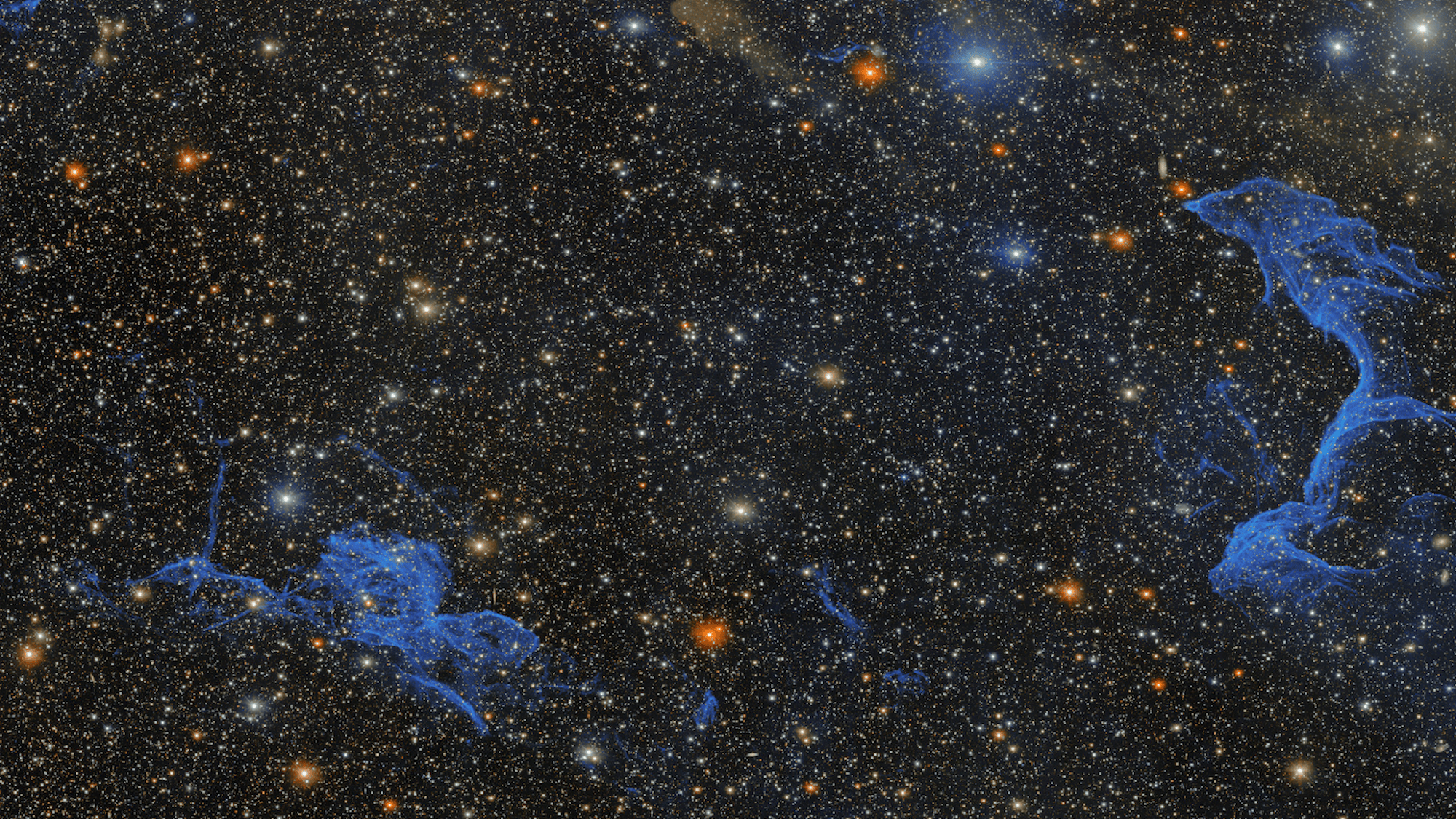
Deep within the constellation of Centaurus, roughly 6,800 light-years from Earth, lie the haunting, bioluminescent-blue filaments of a celestial structure known to astronomers as SNR G295.5+09.7. More colloquially dubbed the "Betta Fish" or "Mermaid" Nebula, this expansive cloud of ionized gas and dust represents the final, lingering breath of a massive star that met a violent end between 6,000 and 10,000 years ago. Recent high-resolution imaging captured by the 570-megapixel Dark Energy Camera (DECam), stationed at the Cerro Tololo Inter-American Observatory (CTIO) in Chile, has provided scientists with an unprecedented look at the complex shockwaves generated by this ancient supernova.
The Anatomy of a Supernova Remnant
A supernova remnant is essentially the cosmic debris field left behind after a massive star—typically one significantly more voluminous than our own Sun—exhausts its nuclear fuel. Without the outward pressure generated by nuclear fusion to counteract the relentless inward pull of its own gravity, the star’s core collapses in a fraction of a second. This collapse triggers a catastrophic explosion, ejecting the star’s outer layers into the surrounding interstellar medium at speeds reaching thousands of kilometers per second.
As this ejected material slams into the cold, sparse gases of the interstellar void, it creates high-temperature shockwaves. These interactions ionize the surrounding gas, causing it to glow with the distinct, ethereal blue hue captured in the latest imagery. SNR G295.5+09.7 is particularly notable for its intricate, wispy morphology. The "Betta Fish" moniker arises from the way these delicate, flowing filaments mimic the elegant fins of the popular ornamental freshwater fish, while the "Mermaid" label speaks to the mythological allure of its sweeping, tail-like structures.
Chronology of a Cosmic Demise
To understand the scale of the event that created this nebula, one must look at the timeline of the progenitor star. For millions of years, the star existed in a state of delicate equilibrium, burning hydrogen and subsequently heavier elements in its core. When it finally reached the iron-core stage, its fate was sealed.
Based on the expansion rate of the current debris field and the density of the surrounding interstellar medium, astrophysicists estimate the explosion occurred roughly 7,000 to 10,000 years ago. In the context of the Milky Way galaxy, this is a relatively recent event. For thousands of years, the shockwave has been expanding, sweeping up local dust and gas, and carving a massive cavity in the space surrounding the initial explosion site. The light from this initial blast would have been visible to early human civilizations in the southern hemisphere, appearing as a "new star" that would have persisted in the night sky for weeks or months before fading into the ghostly remnant we observe today.
The Hidden Heart: A Neutron Star
While the glowing filaments of gas capture the imagination, the true scientific significance of SNR G295.5+09.7 lies at its center. The collapse of the progenitor star did not result in total annihilation; rather, it left behind an ultra-dense relic known as a neutron star.
Neutron stars are among the most extreme objects in the universe. In this instance, the remnant core has compressed approximately 1.4 times the mass of our Sun into a sphere barely 12 miles in diameter. To put this into perspective, the density of this object is so immense that a single teaspoon of its material would weigh billions of tons on Earth. As noted by researchers at the National Science Foundation’s National Optical-Infrared Astronomy Research Laboratory (NOIRLab), this stellar corpse is small enough to fit within the geographic boundaries of a city like Tucson, Arizona, yet its gravitational influence and magnetic field remain profound.
The "What-If" of Stellar Evolution
The existence of a neutron star in the heart of the Betta Fish Nebula highlights the narrow margins of stellar evolution. Had the original star possessed a slightly different mass, or had the dynamics of the core collapse been marginally more asymmetrical, the result might have been entirely different.
If the progenitor star had been just massive enough, the collapse would have bypassed the neutron star stage entirely, resulting in the formation of a black hole. In such a scenario, the gravitational pull of the singularity would have been so intense that the outer layers of the star—those currently forming the beautiful, glowing nebula—would have been pulled back inward, trapped forever behind the event horizon. The fact that we can observe these vast, sprawling filaments suggests that the energy of the explosion was sufficient to overcome the gravitational trap, scattering the star’s heavy elements—the building blocks of future planets—back into the galaxy.
Broader Implications for Galactic Chemistry
Supernovae are the primary "factories" of the universe. It is through these violent events that heavier elements, such as carbon, oxygen, iron, and silicon, are forged and distributed throughout the interstellar medium. The material ejected by SNR G295.5+09.7 is enriched with these elements, which will eventually coalesce to form new generations of stars, planets, and, potentially, the precursors to life.
By studying remnants like the Betta Fish Nebula, astronomers can better map the chemical enrichment of the Milky Way. Each supernova acts as a chemical seeding event. Data from the DECam, which operates as part of the Dark Energy Survey, allows researchers to analyze the light spectra emitted by these remnants. This spectral analysis reveals the composition of the ejected material, helping scientists confirm the types of elements produced by stars of specific masses.

Institutional Perspective and Future Research
The observations released by NOIRLab are part of a larger, ongoing effort to catalog and understand the life cycles of stars in our galactic neighborhood. The collaboration between international observatories, including the CTIO in Chile, ensures that the southern sky—often overlooked in historical northern-hemisphere-centric astronomy—is thoroughly documented.
"The study of supernova remnants provides a vital window into the past," says one researcher familiar with the project. "By analyzing the geometry of the shockwaves and the composition of the ionized gas, we are essentially performing an autopsy on a star that died millennia ago. It allows us to refine our models of how matter is recycled in the galaxy."
As technology advances, researchers hope to utilize next-generation infrared and X-ray telescopes to peer through the thick dust clouds that often obscure these remnants. While the Betta Fish Nebula is visible in optical light via the DECam, infrared imaging may eventually reveal the presence of cooler, denser gas pockets that have not yet been ionized, providing a more complete map of the explosion’s total energy output.
Conclusion: The Legacy of the Betta Fish
The Betta Fish Nebula stands as a testament to the turbulent nature of the universe. It serves as a reminder that the stars we see in the night sky are not static, permanent fixtures, but dynamic, evolving objects that participate in a cycle of birth, destruction, and rebirth. While the progenitor star of SNR G295.5+09.7 is long gone, its legacy endures in the 12-mile-wide neutron star spinning silently in the dark, and in the sprawling, beautiful clouds of gas that continue to expand into the vastness of space. As we continue to refine our understanding of these cataclysmic events, we move one step closer to understanding our own origins, as the very atoms that make up our bodies were once forged in the fires of a star much like the one that gave birth to the Betta Fish.