Jensen Huang Dismisses Succession Planning as He Returns to Nvidia Following Scandal and Dramatic Leadership Reversal

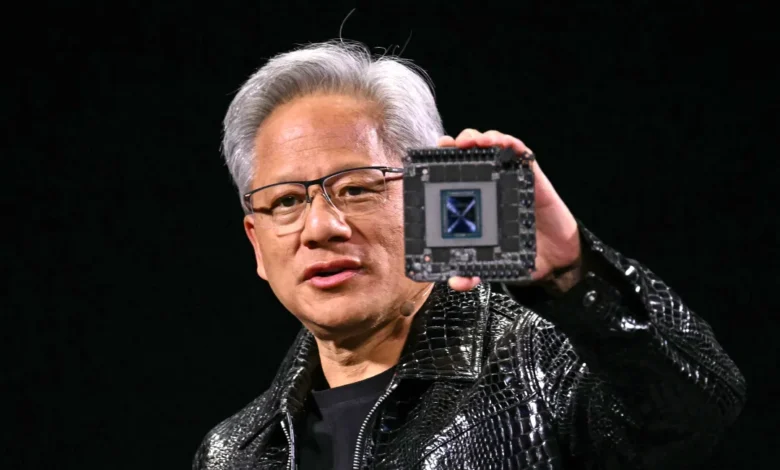
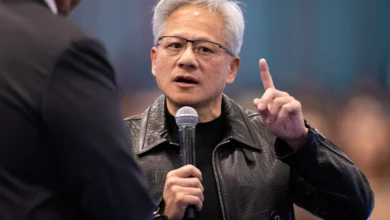
In a high-stakes all-hands meeting that offered a rare glimpse into the internal psychological and operational state of one of the world’s most valuable technology companies, Jensen Huang kicked off his reinstated tenure as CEO of Nvidia by addressing employees on topics ranging from personal remorse and therapy to corporate culture. However, it was his firm stance on succession planning—or rather, the outright rejection of it—that has drawn intense scrutiny from market analysts, governance experts, and investors worldwide.
The gathering marked Huang’s formal return to the helm of the chipmaking giant he co-founded, following a tumultuous two-week period that had temporarily upended the technology sector. According to multiple insiders who spoke to media outlets on the condition of anonymity, Huang argued before the assembled workforce that Nvidia’s exceptionally flat corporate structure and unique operating model obviate the need for a traditional succession plan. Remarkably, even in the wake of the severe governance crisis that prompted his brief departure, the CEO asserted that establishing a formal succession pipeline would introduce unnecessary hierarchy and bureaucracy into a system designed for maximum agility.
This perspective stands in stark contrast to the views held by Wall Street analysts and institutional investors. For the financial community, the events of early November underscored the profound vulnerability of a multi-trillion-dollar enterprise heavily dependent on a single charismatic leader. As Nvidia navigates the delicate intersection of geopolitics, artificial intelligence dominance, and corporate governance, the lack of a clear successor remains a central systemic risk.
The Chronology of a Crisis: From Resignation to Reinstatement
The extraordinary corporate drama began earlier in November when Jensen Huang abruptly tendered his resignation as chief executive officer. The departure was precipitated by Huang’s public admission that he had engaged in extramarital affairs with at least two individuals. Compounding the personal scandal into a matter of acute national and international security was the revelation that one of the individuals involved was suspected by the United States government of acting as a Chinese spy.
The admission sent shockwaves through Washington and Wall Street alike. Given Nvidia’s status as the foundational engine of the global artificial intelligence boom—producing the specialized graphics processing units (GPUs) that power everything from defense applications to consumer tech—any association between its chief executive and a suspected foreign intelligence asset posed immediate regulatory, ethical, and operational concerns.
In the immediate aftermath of Huang’s resignation, the board of directors moved quickly to stabilize the corporation. Chief Financial Officer Colette Kress was appointed interim CEO, steering the company through a pressurized 12-day transition period. During this brief window, Kress managed investor relations, communicated with federal stakeholders, and maintained the continuity of Nvidia’s sprawling supply chain.
However, the board ultimately reversed course. Recognizing Huang’s irreplaceable role in driving Nvidia’s technological vision and maintaining its hyper-competitive edge in the semiconductor market, the leadership cadre orchestrated a rapid reinstatement. Huang returned to his post, capping his comeback with the all-hands meeting where he expressed remorse for his actions, noted that he had sought professional therapy to address personal challenges, and reaffirmed his commitment to the company’s rigorous code of conduct.
Anatomy of a Flat Organization: Nvidia’s Unconventional Structure
To understand Jensen Huang’s aversion to traditional succession planning, one must examine the unconventional architecture of Nvidia’s corporate organization. Unlike legacy conglomerates or peer technology giants that maintain deep benches of executive vice presidents, senior vice presidents, and multi-layered reporting chains, Nvidia operates with radical flatness.
At the apex sits Huang, who reportedly maintains an extraordinary span of control with approximately 60 direct reports. Across the entire enterprise, Nvidia relies on just five designated executive officers to run daily operations. Alongside Huang, this elite group comprises:
- Colette Kress, Chief Financial Officer and the steady hand who served as interim CEO during the leadership crisis.
- Ajay Puri, head of worldwide field operations, responsible for driving the company’s massive global sales and distribution networks.
- Debora Shoquist, executive vice president of operations, overseeing manufacturing logistics and supply chain execution.
- Timothy Teter, executive vice president, chief legal officer, and general counsel, managing complex legal and compliance landscapes.
This lean executive roster is codified in the company’s regulatory filings and has long been championed by Huang as a deliberate strategy to eliminate corporate friction. In a March interview with podcaster Lex Fridman, Huang articulated his philosophy on organizational design, criticizing the homogenization of corporate structures across different industries.
“When you’re designing a company, you should first think about what is it that you want the company to produce,” Huang told Fridman. He lamented that many corporate organization charts mimic one another regardless of whether the business builds hamburgers, software, or automobiles. “And it doesn’t make any sense to me. You know, the goal of a company is to be the machinery, the mechanism, the system that produces the output. And that output is the product that we like to create.”
In Huang’s view, traditional succession planning relies on corporate hierarchies that Nvidia deliberately rejected in favor of speed, direct communication, and a singular, unified mission led by engineering-first principles.
Investor Anxiety and the Governance Dilemma
Despite Huang’s persuasive defense of Nvidia’s operational machinery, institutional investors and corporate governance watchdogs view the absence of succession planning through a lens of acute risk management.
Publicly traded corporations of Nvidia’s immense market capitalization are typically expected by shareholders, proxy advisory firms, and regulatory bodies to maintain comprehensive, transparent plans for executive continuity. The rationale is straightforward: unexpected departures—whether driven by health crises, personal scandals, or regulatory pressure—can wipe out billions of dollars in shareholder value overnight if the market loses confidence in an organization’s ability to seamlessly transition leadership.
The events of November provided a real-world stress test of this vulnerability. While the company successfully weathered a 12-day interregnum under Colette Kress, the episode highlighted how heavily the firm’s strategic momentum relies on Huang’s personal magnetism and engineering foresight. For shareholders, Huang’s insistence during the all-hands meeting that succession planning creates "unnecessary hierarchy" may sound less like visionary management and more like a blind spot regarding basic corporate hygiene.
Broader Implications for the AI Superpower
As Nvidia resumes normal operations under its returning CEO, the broader implications of the crisis and its resolution extend far beyond corporate boardrooms.
First, the U.S. government’s underlying scrutiny regarding national security, supply chain integrity, and foreign influence remains a critical variable. Nvidia’s technology sits at the epicenter of the geopolitical competition between the United States and China over advanced semiconductor manufacturing and artificial intelligence supremacy. That one of Huang’s personal relationships intersected with a suspected foreign intelligence investigation has already drawn quiet concern from policymakers in Washington, who view domestic tech champions as vital national security assets.
Second, the internal culture at Nvidia faces a delicate rehabilitation period. Huang’s transparency during the all-hands meeting—addressing his personal therapy, expressing remorse, and discussing the company’s code of conduct—was reportedly received as an earnest attempt to clear the air. However, maintaining employee morale and retaining top-tier engineering talent while navigating the fallout from executive misconduct requires constant vigilance.
Finally, the board of directors faces mounting pressure to balance Huang’s idiosyncratic management philosophy with the pragmatic demands of institutional accountability. While empowering a visionary founder has undeniably propelled Nvidia to historical heights, the events of recent weeks have demonstrated that unchecked individual authority carries systemic risks that cannot be entirely dismissed by organizational flatness alone.
Whether Huang’s defiant stance on succession planning will satisfy long-term investors or eventually force a reluctant compromise between the board and its visionary CEO remains one of the most compelling questions in the global technology landscape. For now, Nvidia marches forward into the artificial intelligence future with its founding captain back at the wheel—navigating uncharted waters with the same unorthodox playbook that brought it to dominance.
Related posts: