Senator Josh Hawley Calls for Nationwide Data Center Moratorium Amid Surging Energy Demands and Bipartisan Political Backlash

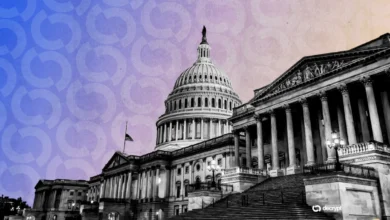
The debate over the rapid expansion of artificial intelligence infrastructure in the United States reached a legislative crossroads as Republican Senator Josh Hawley of Missouri called for a nationwide moratorium on the construction of new data centers. The proposal, introduced as part of a five-point legislative priority list for Senate Republicans, runs counter to ongoing efforts by congressional leadership and the White House to streamline the development of energy projects and transmission lines necessary to support the burgeoning AI sector.
The collision between aggressive technological expansion and growing public concern over utility costs, grid reliability, and environmental impacts has exposed deep divisions within both major political parties. While lawmakers are moving forward with measures to accelerate infrastructure deployment, a rising tide of populist sentiment, driven by voter anxieties and cross-partisan skepticism, threatens to stall the physical foundation of the American tech boom.
The Genesis of the Hawley Proposal
Senator Hawley outlined his legislative agenda for the final six weeks of the congressional term through social media, placing a federal moratorium on data center construction alongside other conservative policy goals, including defunding Planned Parenthood, suspending the federal gas tax, funding rural hospitals, and passing the Save America Act.
According to statements provided by a Hawley spokesperson to political media outlets, the proposed moratorium is intended to serve as a hard stop until Congress can enact a comprehensive consumer protection framework—colloquially described as a "bill of rights"—that guarantees taxpayers will be shielded from utility rate increases. While Hawley has not yet introduced a detailed, standalone statutory bill specifying the exact parameters, duration, or enforcement mechanisms of the proposed freeze, the political signaling marks a significant escalation in the federal policy debate surrounding digital infrastructure.
This move follows earlier legislative efforts by the Missouri senator. In February, Hawley joined forces with Democratic Senator Richard Blumenthal to introduce the GRID Act. That legislation sought to mandate that new data centers secure dedicated, independent electricity sources rather than drawing power from existing municipal and regional grids, thereby preventing commercial operations from inflating residential and small-business utility bills.
By calling for a nationwide freeze, Hawley has aligned himself—at least in principle—with a coalition of progressive lawmakers who have similarly demanded federal intervention to halt data center proliferation. Independent Senator Bernie Sanders and Democratic Representative Alexandria Ocasio-Cortez previously introduced the AI Data Center Moratorium Act, a more expansive bill that seeks to address not only energy consumption and environmental degradation but also the broader implications of automation on the American workforce and public safety.
The Legislative Counter-Current: The Bipartisan American Affordability and Jobs Act
While Hawley and his progressive allies advocate for a temporary halt to construction, the broader apparatus of the United States Senate is moving in the opposite direction. Just days prior to Hawley’s announcement, the Senate voted 73 to 25 to advance debate on the Bipartisan American Affordability and Jobs Act.
The legislation, which enjoys broad support across the political aisle and backing from the administration of President Donald Trump, is designed to overhaul and expedite federal environmental reviews for energy projects, generation facilities, and high-voltage transmission lines. Proponents argue that the current regulatory approval process is antiquated and incapable of keeping pace with the exponential demand for electricity generated by advanced computing clusters.
Crucially, the Bipartisan American Affordability and Jobs Act attempts to address consumer protection concerns without resorting to a moratorium. The bill includes provisions that would legally require data center operators to bear the full financial burden of the grid upgrades and additional generation capacity necessitated by their operations, preventing utility companies from shifting infrastructure costs onto ordinary residential ratepayers.
Proponents of the legislation argue that halting construction would create a catastrophic supply chain and economic bottleneck, whereas reforming the regulatory framework allows for necessary infrastructure growth while safeguarding consumers.
The Scale of the Energy Crisis
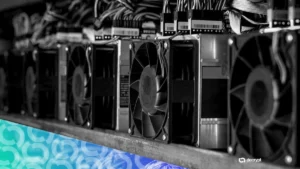
The urgency driving both sides of the debate stems from the staggering scale of electricity consumption required to train and operate modern artificial intelligence models. Data centers—massive industrial warehouses packed with thousands of specialized graphic processing units (GPUs) and servers running services such as OpenAI’s ChatGPT—require unprecedented amounts of electrical power not only for computation but also for complex liquid and air cooling systems.

According to data compiled by the Pew Research Center, U.S. data centers consumed an estimated 183 terawatt-hours of electricity in 2024. Projections indicate that this figure could surge to 426 terawatt-hours by the year 2030, representing more than a doubling of annual power demand within a six-year window. In regions with high concentrations of data centers, such as Northern Virginia’s "Data Center Alley," utility providers have warned of severe strain on local transmission grids, leading to increased reliance on fossil-fuel-fired power plants and prompting concerns about meeting corporate and national carbon-reduction targets.
The environmental footprint extends beyond electricity. Data centers utilize millions of gallons of water daily for cooling towers, raising concerns among local communities regarding municipal water supply sustainability, wastewater management, and the noise pollution generated by banks of industrial cooling fans.
A Cross-Partisan Voter Backlash
The legislative friction in Washington reflects a profound shift in public sentiment. The November 3 midterm elections saw a wave of grassroots resistance, with voters across multiple states approving local ballot measures, municipal zoning restrictions, and moratoriums designed to block or severely restrict data center development in their communities.
A Pew Research Center analysis published concurrently with the Senate debates revealed that 60% of American adults express discomfort with the prospect of a new data center being built in their local area. This skepticism cuts across traditional demographic and political lines, with 54% of Republicans and 68% of Democrats indicating opposition or deep reservations. Furthermore, 58% of surveyed voters reported unfavorable views of political leaders who actively support the construction of data center campuses near residential communities.
In response to mounting public pressure and consumer revolt, major technology firms have begun altering their corporate strategies. OpenAI, for instance, recently committed to directly funding the full cost of electricity generation and grid infrastructure for future proprietary campuses, attempting to appease local stakeholders and avoid municipal regulatory hurdles. Other tech giants have begun exploring investments in nuclear energy, geothermal power, and dedicated solar microgrids to decouple their operations from public utility systems.
Economic Risks and Industry Warnings
While lawmakers and local residents express alarm over utility bills and environmental degradation, leaders in the financial and corporate sectors have issued stark warnings regarding the economic perils of halting infrastructure development.
Speaking at a major economic forum last month, BlackRock CEO Larry Fink cautioned that implementing a federal construction moratorium or halting the buildout of AI infrastructure could trigger a broader economic recession. Fink and other industry analysts point out that a massive percentage of current capital expenditure, corporate investment, and productivity growth projections in the United States are inextricably linked to the technology sector’s expansion.
Proponents of the industry argue that artificial intelligence represents a foundational general-purpose technology comparable to the advent of electrification or the internet. From this perspective, delaying data center construction would not merely slow the adoption of consumer chat applications; it would cede technological leadership to international competitors, particularly China, and stifle productivity gains across healthcare, logistics, manufacturing, and national security sectors.
Implications and Outlook
Senator Hawley’s call for a nationwide moratorium currently functions primarily as a legislative signaling mechanism rather than an enacted statute. No formal bill has been advanced to freeze existing or planned projects, and the Senate remains focused on passing infrastructure acceleration measures rather than prohibitions.
Nevertheless, the alignment of populist conservatives like Hawley with progressive Democrats like Sanders and Ocasio-Cortez signals a potent new political force in American policymaking. The intersection of populist economic nationalism, environmental protectionism, and consumer advocacy has created a formidable roadblock for the tech industry’s traditional trajectory.
As Congress navigates the final weeks of the legislative session, lawmakers are caught between two competing imperatives: the absolute economic and geopolitical necessity of powering the AI revolution, and the immediate political imperative of protecting American households from rising utility costs and localized environmental degradation. Whether the federal government ultimately chooses to regulate the industry through consumer protection mandates or penalize it through construction freezes will shape the trajectory of American technology and energy policy for decades to come.