CoreWeave Stock Skyrockets 24.7% in a Resurgent AI Rally Following Explosive Third-Quarter Earnings and Raised Guidance

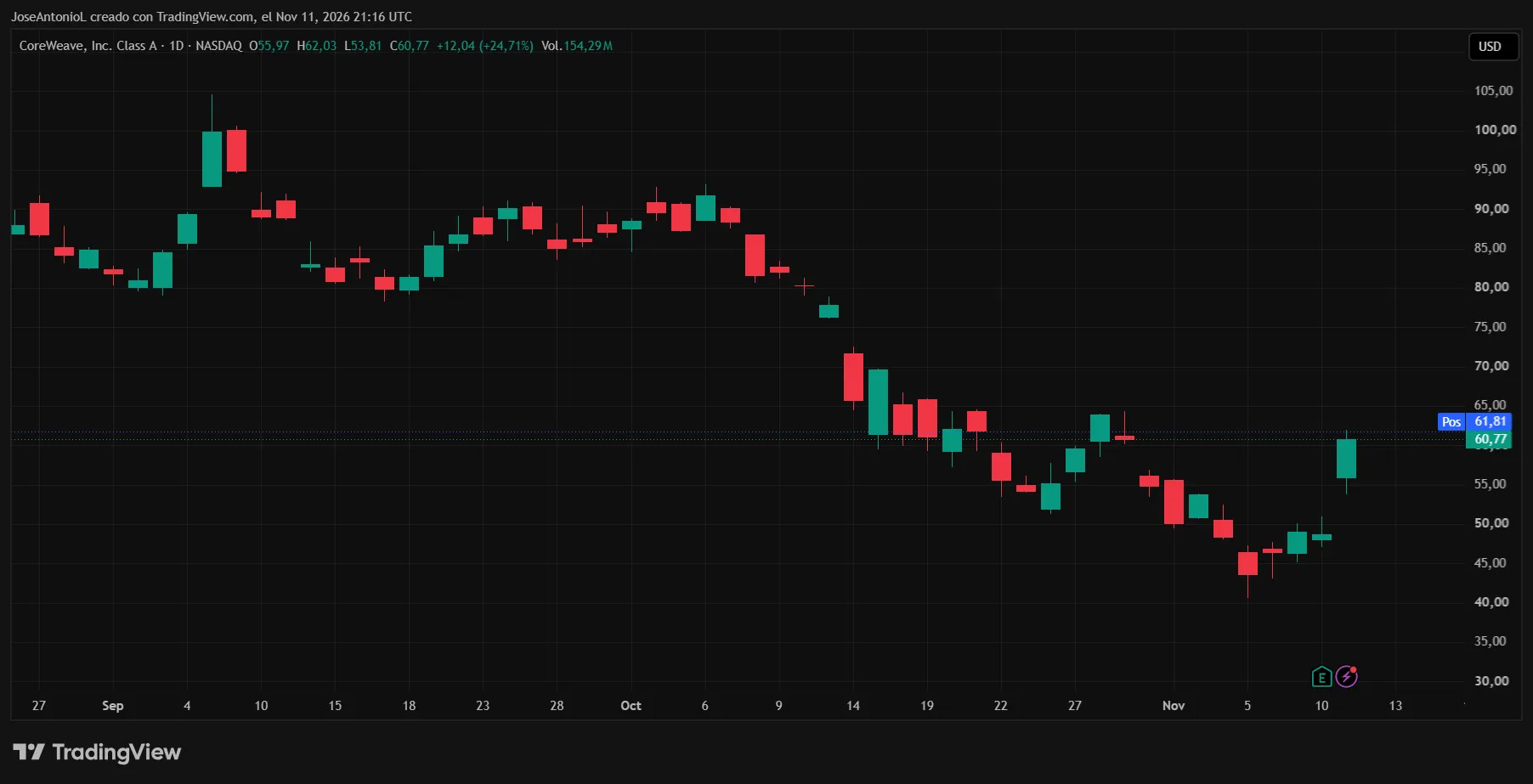
The global artificial intelligence trade received a much-needed and robust injection of confidence on Wednesday when specialized cloud provider CoreWeave experienced a stunning 24.7% surge in its stock price. This dramatic market rebound effectively broke a prolonged period of selling pressure that had plagued the broader technology sector for weeks. The catalyst behind this financial resurgence was the release of CoreWeave’s third-quarter earnings report, which demonstrated astronomical, unabated demand for the advanced computing hardware driving the modern artificial intelligence boom.
As a premier neocloud provider that acts as a vital bridge between semiconductor manufacturers and AI model developers, CoreWeave’s financial performance serves as a vital macroeconomic health check for the entire technology ecosystem. The company’s exceptional performance rippled outward across global financial markets on Wednesday, providing an immediate upward lift to its primary backer, Nvidia, as well as a wide array of specialized AI infrastructure companies, including Nebius, IREN, Oracle, and Applied Digital. The broader Nasdaq index also felt the positive impact, closing up 1.6% as investors reassessed the underlying profitability and structural momentum of the artificial intelligence sector.
Explosive Financial Metrics and Upgraded Long-Term Guidance
For the third quarter, CoreWeave posted an astounding $3.66 billion in revenue, representing a monumental 168% increase compared to the same period during the previous fiscal year. This quarterly figure also marked a sequential revenue increase of more than $1 billion compared to the preceding quarter, a milestone that CEO Michael Intrator characterized during the earnings call as a historic breakout period for the organization.
Fueling this massive top-line expansion is a staggering revenue backlog totaling $132.5 billion. This figure represents legally binding, contracted business that the cloud provider expects to fulfill and recognize over the coming years as it deploys further data center infrastructure. The company’s active power capacity stood at more than 1.7 gigawatts at the close of September, supporting a client roster that features some of the most influential names in generative artificial intelligence, including OpenAI, Cohere, and Perplexity.

Reflecting intense, unyielding customer demand for graphics processing units and high-performance computing clusters, CoreWeave management drastically revised its forward-looking financial targets. The company elevated its full-year sales forecast for 2026 to a range of $13 billion to $13.3 billion. Furthermore, executive leadership noted that the firm anticipates approximately $9 billion in customer prepayments and cash deposits over the upcoming three months. In an economic climate where traditional debt financing for capital-intensive data center construction has become increasingly expensive and difficult to secure, these substantial upfront deposits provide CoreWeave with a distinct financial cushion, minimizing its immediate reliance on commercial credit markets.
The Symbiotic Ecosystem: Nvidia, CoreWeave, and the Rise of the Neoclouds
To fully comprehend the systemic significance of CoreWeave’s financial report, one must examine its unique corporate lineage and its deeply entangled commercial relationship with semiconductor giant Nvidia. Founded originally as a crypto-mining operation that utilized specialized graphical processing hardware, the enterprise made an aggressive and remarkably successful pivot toward high-performance cloud computing as the generative AI revolution began to take shape. This background in cryptocurrency mining uniquely equipped CoreWeave’s engineering teams with the operational expertise required to manage massive, power-hungry clusters of heavy-duty hardware long before traditional enterprise cloud providers recognized the scale of the impending computing shortage.
Today, CoreWeave’s business model is straightforward in concept yet vast in scale: the company purchases massive inventories of advanced Nvidia GPUs, installs them within custom-engineered data centers, and subsequently rents out that raw computing power to organizations developing and training cutting-edge foundational AI models.
However, the partnership between Nvidia and CoreWeave far transcends a traditional vendor-client dynamic. The relationship is characterized by extensive cross-investments and multi-year supply and procurement agreements that have drawn both immense market enthusiasm and sharp scrutiny from financial skeptics. In January, Nvidia deepened its financial commitment to the cloud provider by injecting an additional $2 billion into CoreWeave shares at a price of $87.20 per piece. This transaction was part of a broader, strategic initiative designed to accelerate the construction of global AI data center capacity targeted at reaching more than five gigawatts by the year 2030.
Moreover, the two corporations formalized comprehensive product integration timelines. The agreement mandates the rapid deployment of next-generation Nvidia hardware architecture across CoreWeave’s infrastructure network, including upcoming innovations such as the Rubin platform and Vera central processing units. This positions CoreWeave not merely as a high-volume consumer of current semiconductor technology, but as a critical premier showcase for Nvidia’s future hardware roadmap.

At the time of the expanded January announcement, Nvidia CEO Jensen Huang emphasized the collaborative urgency of the mission, stating publicly that both entities were racing to meet extraordinary, unprecedented global demand for advanced artificial intelligence factories.
The Debate Over Circular Finance and Market Implications
Despite the celebratory market response to Wednesday’s earnings report, the complex financial architecture binding Nvidia, its primary hardware buyers, and downstream AI developers has sparked vigorous debate among financial analysts, institutional investors, and market commentators.
Beyond its direct equity investments, Nvidia maintains a massive initial procurement agreement valued at $6.3 billion to buy back CoreWeave’s unused computing capacity through April 2032, subject to specific contractual conditions. This arrangement provides CoreWeave with a guaranteed revenue floor for capacity that it might otherwise fail to monetize externally, while simultaneously guaranteeing Nvidia direct access to decentralized cloud computing infrastructure optimized specifically for its proprietary chips.
This web of overlapping financial transactions has led critics and market observers to coin terms such as "circular finance." Skeptics frequently point to financial loops—where capital flows from a major semiconductor designer to model developers like OpenAI, who subsequently disburse those funds to cloud rental providers like CoreWeave, who ultimately utilize the capital to purchase more semiconductors from the original chipmaker—as a potential vulnerability. While these agreements represent entirely legal, binding commercial contracts driven by genuine market demand, critics argue they can distort traditional metrics of independent enterprise demand and obscure underlying economic risks.
Prominent financial analysts have weighed in with nuanced assessments of the situation. Equity researchers at Bernstein characterized CoreWeave’s third-quarter performance as virtually ideal, praising the company’s execution and ability to capture record-breaking revenue in a hyper-competitive landscape. Nevertheless, Bernstein’s analysts also issued a pragmatic cautionary note, pointing out that specialized neocloud providers like CoreWeave would likely bear the brunt of any future market correction if the global shortage of AI computing capacity begins to ease or stabilize.
Looking Ahead: Structural Risks and Sector-Wide Rebound
Wednesday’s market action demonstrated conclusively that appetite for AI infrastructure remains robust among institutional and retail investors alike. Beyond CoreWeave and Nvidia, the broader technology sector experienced a synchronized relief rally, indicating that recent market sell-offs were primarily driven by anxiety regarding the astronomical capital expenditure costs required to build out the AI economy, rather than a fundamental contraction in end-user demand.
However, significant structural hurdles remain on the horizon. The long-term viability of the neocloud business model depends heavily on its ability to navigate several volatile risk factors:
- Hardware Obsolescence: Rapid innovation cycles mean that newer semiconductor processors can quickly render previous-generation GPUs less competitive, shortening the profitable lifecycle of expensive hardware investments.
- Infrastructure Constraints: The rapid scaling of data centers remains tethered to physical realities, including regional electricity grid availability, complex municipal zoning approvals, and persistent supply chain bottlenecks in construction.
- Capital Costs: Elevated borrowing rates and the sheer scale of capital expenditure required to construct next-generation facilities place a continuous premium on disciplined financial management.
For now, CoreWeave’s record-breaking third-quarter revenue and massive pre-payment inflows have successfully quieted immediate doubts regarding the near-term trajectory of the AI hardware market. As the industry looks toward 2026 and beyond, the company’s ability to execute its multi-billion-dollar backlog will serve as a definitive litmus test for whether the unprecedented financial boom powering artificial intelligence can successfully transition into sustainable, long-term corporate profitability.